Navigating Market Volatility in US Machinery Sector
Author : Ayesha Diaz | Published On : 17 Aug 2026
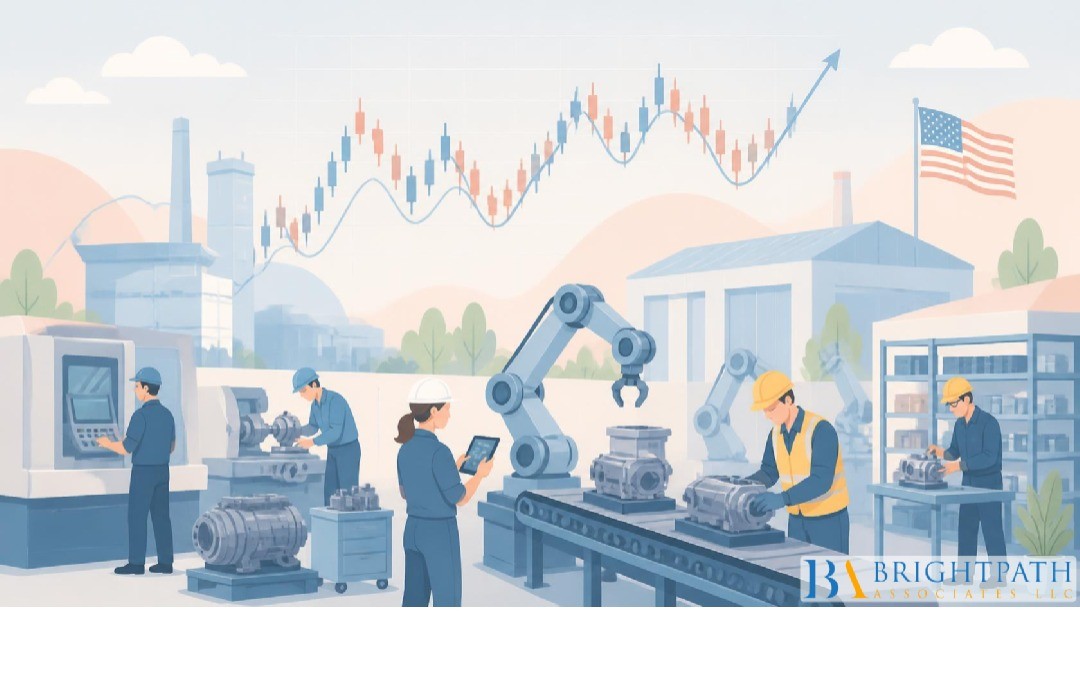
The U.S. machinery sector operates at the center of several critical industries, including manufacturing, construction, agriculture, energy, transportation, and infrastructure. Because machinery represents a significant capital investment for customers, changes in economic confidence, interest rates, commodity prices, industrial output, and business spending can quickly influence equipment demand.
Market volatility does not necessarily eliminate opportunities. Instead, it changes how machinery companies approach investment, production, workforce planning, customer relationships, and technology adoption. Companies that build flexibility into their operations can respond more effectively when demand shifts rather than simply reacting after problems emerge.
For businesses operating across the machinery industry, resilience increasingly depends on the ability to balance short-term financial discipline with long-term investments in technology, talent, customer service, and operational efficiency.
Understanding Sources of Machinery Market Volatility
Machinery manufacturers face volatility from multiple directions. Changes in industrial production can influence factory-equipment demand, while construction cycles affect demand for heavy machinery and specialized equipment. Agricultural conditions, infrastructure spending, energy markets, tariffs, interest rates, and global supply-chain conditions can create additional uncertainty.
Because machinery products are often expensive and have long useful lives, customers may delay purchasing decisions when economic visibility weakens. A manufacturer may postpone replacing aging equipment, while a construction company may defer expansion plans until financing conditions improve.
These decisions can create a ripple effect throughout the machinery ecosystem. Lower orders can influence production schedules, supplier commitments, inventory decisions, and hiring plans. However, demand does not disappear completely. Customers still need equipment maintenance, modernization, replacement parts, automation upgrades, and productivity improvements.
Building Flexible Manufacturing Operations
A machinery manufacturer designed exclusively for high-volume production can face challenges when customer orders become smaller or less predictable. Volatile markets make manufacturing flexibility increasingly valuable.
Companies can improve flexibility by reviewing production layouts, reducing changeover times, strengthening supplier relationships, and designing product configurations that can accommodate different customer requirements.
Forecasting should also extend beyond historical sales data. Management teams can monitor customer inquiries, quote activity, order cancellations, lead times, inventory movements, and sector-specific indicators to identify changes earlier. The objective is not to predict the future perfectly. Instead, it is to create an operating model capable of responding quickly when conditions change.
Industrial Automation as a Resilience Strategy
Market uncertainty often forces manufacturers to accomplish more with existing resources. Industrial automation solutions can help address this challenge by improving throughput, repeatability, quality, and production visibility.
Robotic material handling, automated inspection, CNC integration, machine monitoring, and connected production systems can reduce reliance on repetitive manual activities while creating more consistent processes.
However, automation should not be adopted simply because it is technologically advanced. Companies need to identify specific operational problems and determine whether automation can produce measurable returns. During uncertain economic conditions, investments with clear productivity benefits may be more attractive than large technology projects with unclear outcomes.
Maintaining Existing Equipment During Uncertain Markets
When capital budgets tighten, companies may postpone purchasing new equipment. This makes machinery maintenance particularly important. Well-maintained equipment can remain productive longer and reduce the risk of unexpected breakdowns. Preventive maintenance can identify wear before it develops into a major production disruption, while predictive maintenance can use sensors, equipment data, and analytics to identify potential failures.
For machinery manufacturers, maintenance can also become a source of recurring revenue. Service agreements, replacement parts, technical support, refurbishment, modernization, and equipment upgrades can strengthen customer relationships while generating revenue beyond the original machinery sale.
Leadership Becomes Critical During Volatility
Technology, equipment, and processes matter, but leadership ultimately determines how effectively a machinery company responds to uncertainty. Executives must decide when to conserve cash, when to invest, when to expand capacity, and which technologies deserve priority. They must also communicate these decisions effectively to employees, customers, suppliers, and investors.
Market volatility requires discipline, but excessive cost-cutting can weaken long-term competitiveness. Similarly, continuing every planned investment without reconsidering market conditions can increase unnecessary financial risk.
The strongest leaders understand how to prioritize. They protect investments that improve productivity, customer relationships, technology capabilities, and critical talent while evaluating lower-priority expenditures carefully.
Executive Search Recruitment as a Strategic Advantage
Volatility can expose leadership gaps that were previously difficult to see. A machinery company expanding into automation may need an operations executive with advanced manufacturing experience. A manufacturer entering a new geographic market may require a commercially focused leader with sector knowledge. A company modernizing legacy equipment may need an engineering executive capable of managing complex technology investments.
This is where Executive Search Recruitment becomes strategically important. Executive search is not simply about replacing vacant positions. It can help companies identify leaders with the technical knowledge, operational experience, commercial judgment, and adaptability needed to navigate uncertain markets. For small and mid-sized machinery businesses, the right executive can influence decisions across manufacturing, finance, technology, supply chains, workforce planning, and customer strategy.
Conclusion: Turning Volatility Into Opportunity
The U.S. machinery sector will continue to experience periods of uncertainty. Customer demand will fluctuate, financing conditions will change, technology will advance, and supply-chain pressures will continue to evolve.
The companies best prepared for these changes will not necessarily be those that spend the most. They will be organizations that understand where investment creates lasting value and where flexibility can protect the business when conditions change.
For business leaders, the next phase of competitiveness will depend on connecting these investments with the right people. As machinery companies become more technologically sophisticated, experienced executives and specialized technical professionals will play an increasingly important role in translating strategy into measurable performance.
