NAS Cloud Storage: Simplifying Digital Storage for Growing Businesses
Author : 10petabyte 10PB | Published On : 15 Oct 2026
Businesses depend on digital information to manage everyday activities. Documents, customer records, financial reports, presentations, images, and project files all contribute to daily operations. As organizations grow, the volume of information they handle can increase considerably. Without an effective storage strategy, keeping these files organized and accessible becomes a challenge.
Employees may save multiple copies of the same document, search through different folders to locate information, or rely on colleagues to share files stored on individual devices. These problems can slow down collaboration and make information management unnecessarily complicated.
NAS cloud storage is one approach organizations can consider when they need a centralized way to manage files and support flexible access. Understanding its capabilities can help businesses determine whether a cloud-based storage arrangement suits their operational needs.
Understanding NAS Cloud Storage
NAS stands for network-attached storage. A traditional NAS system connects to a network and provides a shared location for storing and retrieving files. Multiple authorized users can access information from connected devices without requiring separate copies on every computer.
Cloud storage uses remote infrastructure to store and manage data. Depending on the provider, users may access files through supported applications, interfaces, or network connections.
NAS cloud storage can refer to several configurations. Some businesses connect existing NAS systems to cloud platforms, while others choose cloud-based services that support centralized file management.
Because these implementations can differ, organizations should examine the specific features of a service before adopting it. Access methods, supported applications, security controls, storage limits, and backup capabilities may vary between providers.
The Importance of Centralized File Management
Disorganized files can create problems throughout an organization. Employees may struggle to find current documents, accidentally maintain outdated versions, or spend time transferring files between different systems.
A centralized storage environment can help establish consistent procedures for organizing and accessing information.
Businesses can structure folders around departments, projects, clients, or business functions. Naming conventions can make documents easier to identify, while access permissions help determine which users can view or modify specific files.
Potential advantages include:
- Better organization: Maintain a consistent structure for shared information.
- Simplified collaboration: Provide authorized employees with access to relevant files.
- Convenient retrieval: Reduce the effort needed to locate important documents.
- Administrative oversight: Manage permissions through defined procedures.
- Flexible planning: Evaluate storage options as business requirements change.
These benefits depend on proper configuration and consistent working practices. A storage platform is most effective when employees understand where files belong and how shared information should be managed.
Supporting Remote Work and Collaboration
Many organizations now have employees working from different offices, homes, and customer locations. Team members may need to access the same project files even when they are not physically present in the office.
Cloud-enabled storage can support these workflows when the service provides suitable remote access capabilities.
For example, a marketing team may need shared access to campaign materials, while an operations department may rely on reports and internal documentation. A centralized environment can help make these resources available to authorized users through supported devices and applications.
Businesses should consider internet connectivity, file sizes, network performance, and application compatibility when evaluating a storage solution. These factors can influence how easily employees work with shared information.
Access policies are equally important. Remote access should be configured according to business requirements, with appropriate authentication and permissions to protect confidential information.
Protecting Important Business Data
Storage convenience should never come at the expense of data protection. Business information can include customer details, contracts, financial records, and confidential internal documents.
Organizations should assess the security features provided by a storage service and determine whether they meet internal requirements.
Important considerations include authentication methods, encryption practices, permission controls, monitoring capabilities, and recovery options.
Businesses can strengthen their approach by following several practices:
- Use strong passwords and multifactor authentication where available.
- Assign file permissions according to employee responsibilities.
- Review access rights periodically.
- Remove inactive accounts and unnecessary permissions.
- Maintain independent backups of critical information.
- Test recovery procedures to confirm that files can be restored.
It is also important to understand the difference between synchronization and backup. Synchronization can replicate unwanted changes or deletions across locations. A separate backup may provide an additional recovery option when information is lost or corrupted.
A well-planned strategy combines appropriate technology with clear policies for protecting and recovering important files.
Planning for Changing Storage Requirements
Business storage requirements evolve as organizations add employees, launch projects, and collect more digital information.
A company that currently stores mostly office documents may later need to manage large media files, application data, or extensive project archives. Each workload can have different capacity, access, and performance requirements.
Before choosing a solution, businesses should estimate their current storage usage and forecast future growth.
They should also review storage limits, supported access methods, upload and download requirements, compatibility, backup features, service support, and pricing.
Planning for these factors can help prevent unexpected limitations and provide a clearer understanding of the solution's long-term suitability.
How 10PB Fits Into a Storage Strategy
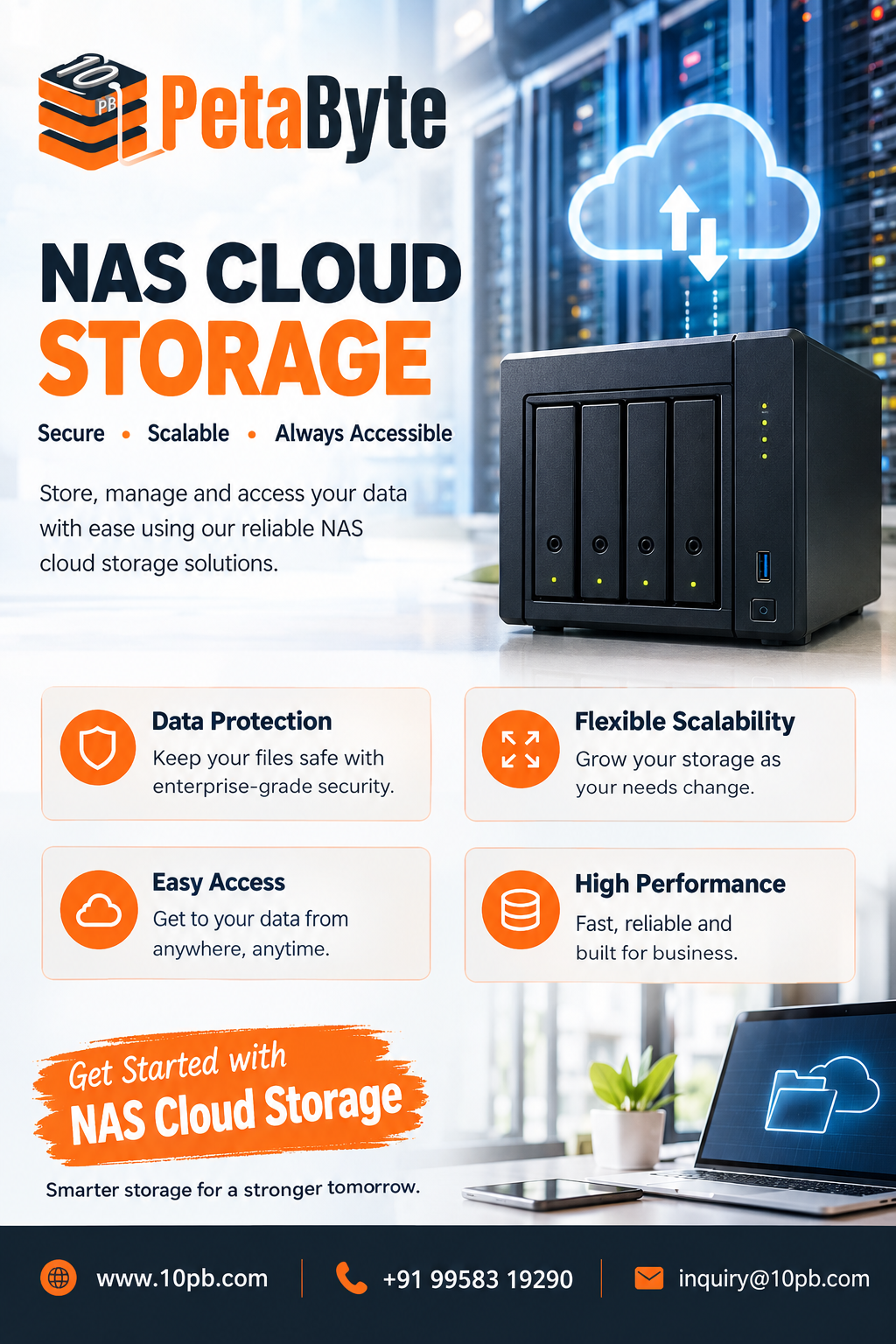
10PB offers cloud storage solutions for organizations exploring ways to manage their digital information. Its Cloud NAS offering is an option for businesses evaluating centralized file storage and cloud-based access.
Organizations considering NAS cloud storage should compare the service's capabilities with their actual requirements. Storage capacity, supported access methods, security controls, compatibility, backup arrangements, and overall costs are all important considerations.
Businesses should also evaluate implementation requirements. Depending on their existing systems, they may need to transfer files, reorganize folders, update permissions, or adjust internal workflows.
Taking time to assess these factors can help organizations make informed decisions about incorporating cloud storage into their operations.
Establishing Better Storage Practices
Successful data management involves more than selecting a storage service. Organizations also need clear procedures for organizing information and maintaining appropriate access.
Teams can begin by establishing consistent folder structures, document naming conventions, and responsibilities for managing shared files.
Administrators should periodically review permissions, monitor storage consumption, and identify unnecessary duplicate information. Employees should understand how to handle confidential documents and where to save resources used by multiple teams.
Regular reviews can reveal outdated access rights, inefficient folder structures, and opportunities to simplify workflows.
These practices help ensure that storage technology remains useful as an organization grows and its information requirements change.
Conclusion
Managing growing volumes of digital information requires a practical approach to organization, accessibility, and protection. NAS cloud storage can support centralized file management, collaboration, and flexible access when the chosen service provides the necessary capabilities.
By evaluating capacity, security, compatibility, backup arrangements, and long-term costs, businesses can select a storage approach suited to their needs.
10PB's Cloud NAS offering is worth evaluating as part of a broader strategy for managing business information efficiently.
