Multi-Dimensional Sustainability: Balancing Profit and Social Capital
Author : Alyssa Miller | Published On : 18 Aug 2026
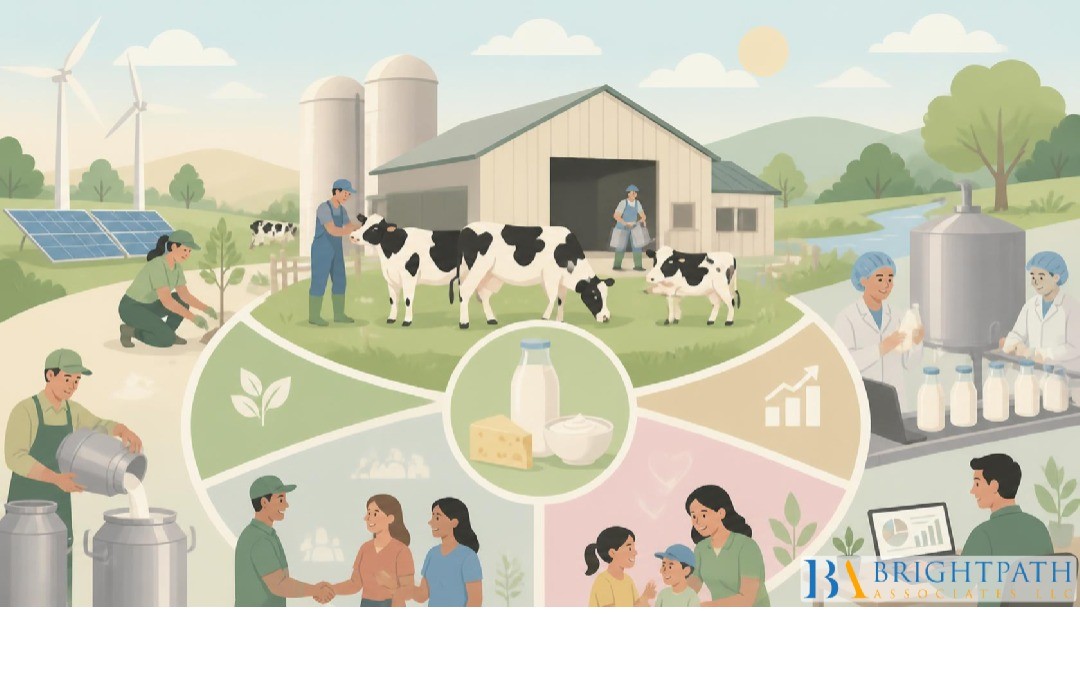
Sustainability in the dairy industry is no longer limited to environmental reporting or reducing emissions. For modern dairy businesses, sustainability increasingly means creating a business model that can remain profitable while protecting natural resources, supporting employees and communities, and building resilience across the supply chain.
This broader approach is particularly important for small and mid-sized dairy companies. These businesses often operate with tighter margins and fewer resources than large corporations, yet they face many of the same pressures: changing consumer expectations, rising input costs, workforce shortages, environmental concerns, technology investments, and increasing demands for transparency.
Across the Dairy Industry, leaders are therefore beginning to view sustainability as a multi-dimensional business strategy rather than a separate corporate initiative.
Sustainability Must Go Beyond Environmental Metrics
Environmental performance remains an important component of dairy sustainability. Water consumption, energy use, greenhouse-gas emissions, manure management, animal welfare, and waste reduction can all influence the industry's long-term environmental footprint.
A dairy business also depends on its people, suppliers, customers, surrounding communities, and financial strength. If a sustainability program reduces environmental impact but significantly increases operating costs without generating long-term value, its ability to remain viable may be limited.
Similarly, a highly profitable company that neglects employee welfare, community relationships, or resource conservation may eventually face reputational and operational risks. Multi-dimensional sustainability attempts to balance these competing priorities.
The Business Case for Sustainable Dairy Operations
Sustainability and profitability are sometimes presented as opposing objectives. In reality, they can reinforce each other when initiatives are carefully designed. Energy efficiency provides a straightforward example. Investments in efficient refrigeration, processing equipment, lighting, heat recovery, or renewable energy may reduce environmental impact while lowering operating expenses over time.
Water efficiency can provide a similar opportunity. Dairy processing requires significant water for cleaning and sanitation. Improving water-use efficiency can reduce both resource consumption and associated treatment costs.
Waste reduction can also create financial value. Better production planning, inventory management, and process controls can reduce material losses while improving productivity. The strategic question for executives is therefore not simply, "How much will sustainability cost?" It is also, "Where can sustainability improve operational performance?"
Technology Is Changing the Sustainability Equation
Technology is becoming increasingly important in helping dairy businesses manage sustainability more effectively. Modern milk production technologies can provide greater visibility into production performance, animal health, resource consumption, and operational conditions.
Similarly, dairy automation technologies can help companies monitor equipment, standardize processes, reduce unnecessary resource use, and identify inefficiencies. Data can transform sustainability from a broad aspiration into something that can be measured and managed.
For example, digital monitoring systems can help organizations compare energy or water consumption across facilities and identify unusual patterns. Managers can then investigate the underlying causes and determine whether corrective action is necessary. This creates a feedback loop between data, decision-making, and performance improvement.
People Are a Critical Part of Sustainability
A sustainable business cannot be built without a sustainable workforce. Dairy companies depend on employees with expertise across production, maintenance, quality, food safety, animal care, engineering, logistics, sales, finance, and management.
Yet attracting and retaining skilled workers remains a challenge for many organizations. Companies that focus exclusively on technology while neglecting their workforce may struggle to capture the full value of their investments.
Employees need training to operate new systems, understand changing procedures, and develop the skills required by modern dairy operations. When employees see opportunities to learn and progress within an organization, they may be more likely to remain engaged over the long term.
Turning Sustainability Into Long-Term Business Value
The central lesson of multi-dimensional sustainability is that environmental responsibility, social value, and profitability do not have to exist in separate categories.
When integrated effectively, they can reinforce one another.
Energy efficiency can reduce costs. Employee development can strengthen retention. Strong supplier relationships can improve resilience. Digital technologies can increase visibility. Responsible environmental practices can strengthen customer trust.
The challenge is connecting these individual initiatives into a coherent business strategy.
As explored in BrightPath Associates' Multi-Dimensional Sustainability Balancing Profit, dairy businesses have an opportunity to rethink sustainability as a broader measure of organizational resilience and long-term value.
Conclusion: Building a Dairy Business That Can Thrive for the Long Term
The future of the dairy industry will require more than increased production or lower costs. Companies will need to balance profitability with environmental responsibility, workforce development, community relationships, technology adoption, and supply-chain resilience.
For small and mid-sized dairy businesses, this transition may initially appear challenging. Yet it can also create opportunities to differentiate, improve efficiency, attract talent, strengthen stakeholder relationships, and build more resilient operations.
The leaders who succeed will be those who understand that sustainability is not simply about protecting resources. It is about building an organization capable of creating value for customers, employees, communities, and shareholders over the long term.
