Missing a Tooth? Here’s How the Right Implant Timing Can Protect Your Smile
Author : Dr Mrunal SEO | Published On : 12 Aug 2026
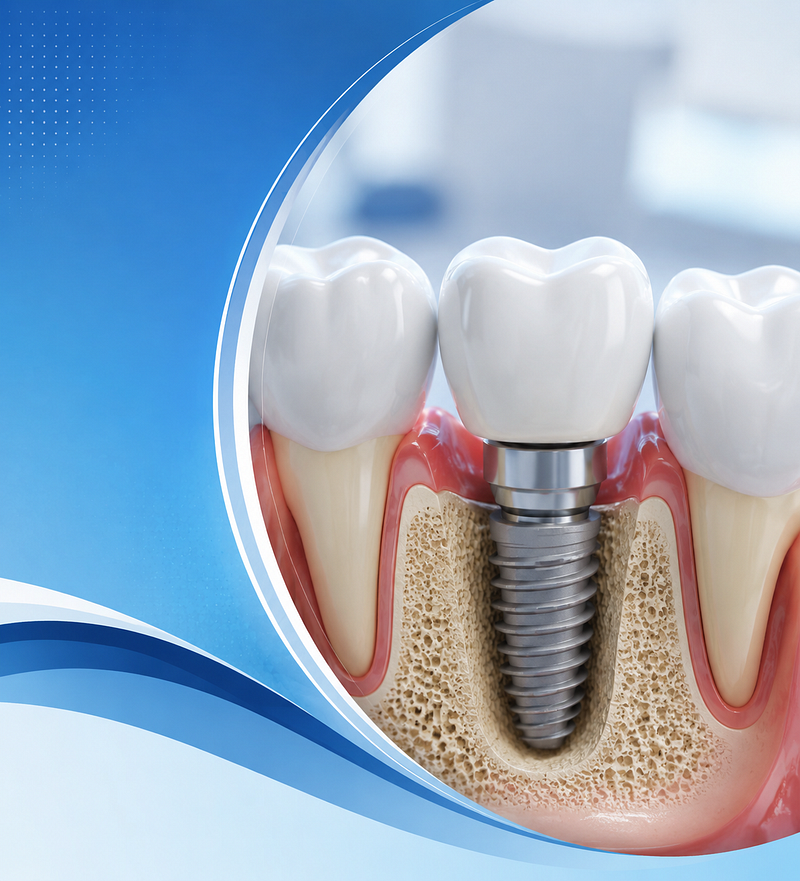
A missing tooth can seem like a small problem, especially when there is no pain. But beneath the surface, tooth loss can gradually affect the jawbone, neighbouring teeth and the way your teeth come together.
This is why one of the most important questions in dental implant treatment is not simply “Can I get an implant?” but “When is the right time to get one?”
The answer is different for every patient.
Some people may be suitable for an implant immediately after a tooth is removed. Others may benefit from waiting for the area to heal. Patients with bone loss, gum disease or infection may need additional treatment before implant placement.
If you are considering dental implants in Pune or Pimpri Chinchwad, understanding these differences can help you make a more informed decision.
At Burute Dental — Full Mouth Dental Implant Center & Dental Clinic, implant treatment is planned after assessing the patient’s individual dental and oral health requirements.
What Happens to the Jaw After Tooth Loss?
The root of a natural tooth provides stimulation to the surrounding jawbone.
Once the tooth is removed or lost, that stimulation is reduced. The body can gradually remodel the bone in the area.
Over time, this may contribute to:
- Reduced bone volume
- Changes in gum shape
- Movement of neighbouring teeth
- Changes in the bite
- Difficulty achieving adequate implant support
The extent and speed of these changes vary between individuals.
This is one reason why an early dental evaluation can be useful after tooth loss.
Does a Missing Tooth Need to Be Replaced Immediately?
Not necessarily.
Although early assessment is valuable, the implant itself should be placed only when the treatment site is suitable.
The dentist may recommend one of several approaches depending on the condition of the tooth socket, bone and gums.
Immediate Implant
The implant is placed during the same appointment as tooth extraction.
Early Implant
The area is allowed to heal for a period before implant placement.
Delayed Implant
The dentist waits until the site has healed adequately or until necessary preparatory procedures have been completed.
There is no single approach that is best for every patient.
When Can an Immediate Implant Work?
Immediate implant placement may be considered when the extraction site has favourable conditions.
The dentist may evaluate whether:
- Adequate bone is available
- The implant can achieve sufficient initial stability
- The surrounding soft tissues are suitable
- Infection is appropriately controlled
- Important anatomical structures can be safely avoided
If these conditions are present, immediate placement may be an option.
However, the decision should be based on clinical findings rather than the desire to shorten treatment time.
When Is Waiting a Better Choice?
There are several situations where delayed placement may be recommended.
1. Infection
If the area has an infection that requires treatment, the dentist may recommend managing the infection and allowing the tissues to heal before implant placement.
2. Bone Loss
An implant needs adequate bone support.
When the jawbone is too narrow or insufficient in volume, bone grafting or another augmentation procedure may be required.
3. Gum Disease
Active gum disease should be addressed before implant placement.
Healthy periodontal tissues are important for the long-term maintenance of an implant.
4. Poor Oral Hygiene
Good oral hygiene is an important part of both implant preparation and long-term implant care.
Your dentist may recommend improving oral hygiene before proceeding with implant treatment.
What If the Tooth Has Been Missing for a Long Time?
Many patients assume that an implant is no longer possible if a tooth has been missing for several years.
That is not necessarily true.
The important question is whether enough suitable bone remains or whether the site can be prepared for implant treatment.
A detailed assessment may identify options such as:
- Bone grafting
- Ridge preservation
- Guided bone regeneration
- Other site-development procedures
The treatment required depends on the amount and location of bone loss.
Why Bone Health Is Important
A dental implant is placed into the jawbone and depends on the surrounding bone for stability.
Before treatment, your dentist may therefore evaluate:
- Bone height
- Bone width
- Bone quality
- Available implant space
- Nearby anatomical structures
This information helps determine the appropriate implant position and treatment approach.
The Role of CBCT Scanning
In many implant cases, three-dimensional imaging can provide valuable information about the treatment area.
A CBCT scan may help the dentist assess:
- The dimensions of the available bone
- The location of nerves
- The position of the sinus
- Adjacent teeth
- The shape of the implant site
Not every patient requires the same imaging. The dentist decides which diagnostic tools are appropriate for the individual case.
Can Gum Disease Affect Implant Treatment?
Yes.
Patients with periodontal disease may have inflammation and loss of supporting tissues around their natural teeth.
If gum disease is active, it may need to be treated before implant placement.
Maintaining healthy gums after implant treatment is also important because the tissues around implants require regular care and professional monitoring.
Does Your Overall Health Matter?
Dental implant treatment is not considered separately from your general health.
Your dentist may ask about:
- Medical conditions
- Medications
- Previous surgeries
- Smoking
- Diabetes
- Healing-related concerns
Some medical conditions may require additional management before treatment.
This is why providing a complete medical history is important during an implant consultation.
Does Age Affect Dental Implant Eligibility?
Age by itself does not determine whether someone can receive an implant.
Instead, the dentist considers factors such as:
- Jawbone condition
- Gum health
- General health
- Oral hygiene
- Healing ability
- Ability to maintain regular dental care
Older adults may also be suitable candidates when their individual clinical condition allows.
What If You Have Several Missing Teeth?
Dental implants can be used in different treatment situations.
Depending on the patient’s needs, options may include:
Single-Tooth Implant
Used to replace an individual missing tooth.
Multiple Implants
Several implants may support multiple restorations or an implant-supported bridge.
Full-Mouth Implant Treatment
Patients with extensive tooth loss may be evaluated for full-mouth rehabilitation.
All-on-4, All-on-5, All-on-6 and All-on-X
These full-arch treatment concepts may be considered depending on bone availability, anatomy and restoration requirements.
The appropriate approach should be determined after individual assessment.
What About Patients With Unstable Dentures?
Conventional dentures can become loose in some patients, particularly as the underlying jawbone changes.
In suitable cases, implants can be used to improve denture stability.
Implant-supported dentures may help provide:
- Greater stability
- Improved chewing ability
- Better comfort
- Improved confidence while speaking
The number and position of implants depend on the patient’s anatomy and treatment goals.
How Long Does the Implant Process Take?
The overall timeline varies.
Some cases involve only implant placement and restoration, while others may require additional stages.
Treatment may take longer when patients need:
- Tooth extraction
- Bone grafting
- Gum treatment
- Multiple implants
- Full-mouth rehabilitation
The surgical appointment itself may be relatively short, but the implant needs adequate biological healing before the final restoration is completed.
What Is Osseointegration?
After an implant is placed, the surrounding bone gradually develops a stable connection with the implant surface.
This biological process is called osseointegration.
The healing period varies between patients and depends on factors such as the treatment site, bone condition and individual healing response.
Your dentist determines when the implant is ready for the next stage based on clinical assessment.
How Do You Maintain an Implant?
Dental implants still require regular care.
Patients should:
- Brush thoroughly
- Clean between teeth
- Follow recommended oral hygiene practices
- Attend regular dental examinations
- Maintain healthy gums
- Follow post-treatment instructions
- Avoid unnecessary excessive forces on the restoration
Professional follow-up is useful for monitoring the implant and surrounding tissues.
Why Proper Planning Matters
An implant is not simply a replacement tooth placed into an empty space.
Successful treatment involves planning the entire restoration around:
- Bone anatomy
- Gum condition
- Implant position
- Bite
- Adjacent teeth
- Final crown or prosthesis
- Long-term maintenance
This is why detailed evaluation before surgery is an important part of implant dentistry.
Dental Implant Options at Burute Dental
At Burute Dental — Full Mouth Dental Implant Center & Dental Clinic, patients can be evaluated for different implant treatment options based on their individual requirements.
These may include:
- Single-tooth dental implants
- Immediate dental implants
- Same-day dental implant treatment where clinically appropriate
- Multiple dental implants
- Full-mouth dental implants
- All-on-4
- All-on-5
- All-on-6
- All-on-X
- Bone grafting for dental implants
The appropriate option depends on clinical examination, imaging and treatment planning.
When Should You Book an Implant Consultation?
You do not need to wait until a missing tooth starts causing discomfort.
An earlier assessment can help identify:
- Current bone condition
- Gum health
- Possible changes caused by tooth loss
- Whether immediate placement is an option
- Whether bone preservation may be useful
- Whether additional procedures are required
Even if you are not ready to start treatment immediately, an evaluation can help you understand your options.
Final Thoughts
The best time for a dental implant is determined by your individual oral condition rather than by a fixed number of days or months.
For some patients, immediate placement may be appropriate. Others may need to treat infection, improve gum health, allow healing or rebuild deficient bone first.
And if your tooth has been missing for years, it is still worth having the area evaluated. Long-standing tooth loss may involve bone changes, but additional treatment can sometimes make implant placement possible.
If you are considering dental implants in Pimpri Chinchwad or Pune, a detailed consultation can help you understand whether immediate, early or delayed treatment is appropriate for your situation.
Burute Dental — Full Mouth Dental Implant Center & Dental Clinic
🌐 Website: https://burutedental.in/
📞 Phone: 7020968702
📍 Google Business Profile: https://share.google/lXuzN2bF9MED6RlRM
#AllOn4 #AllOn5 #DentalImplants #AllOn4CostIndia #DentalImplantCost #FullMouthDentalImplants #DentalImplantPune #DentalImplantPCMC #DentalImplantSpecialist #SameDayDentalImplants #AllOnX #ToothReplacement #BuruteDental #PimpriChinchwad #Wakad #Nigdi #Ravet #Akurdi #Pune
All-on-4 Dental Implants Cost in India, All-on-4 Cost India, Full Mouth Dental Implants Cost, Dental Implant Cost in Pune, Dental Implant in Pimpri Chinchwad, Dental Implant Near Me, All-on-5 Dental Implants, All-on-6 Dental Implants, All-on-X, Same-Day Dental Implants, Immediate Dental Implants, Single Tooth Implant, Implant Dentistry, Burute Dental, Dr. Mrunal Burute.
