Micro-Fulfillment Strategies for Regional Paper Distributors
Author : Kabir Pathan | Published On : 19 Aug 2026
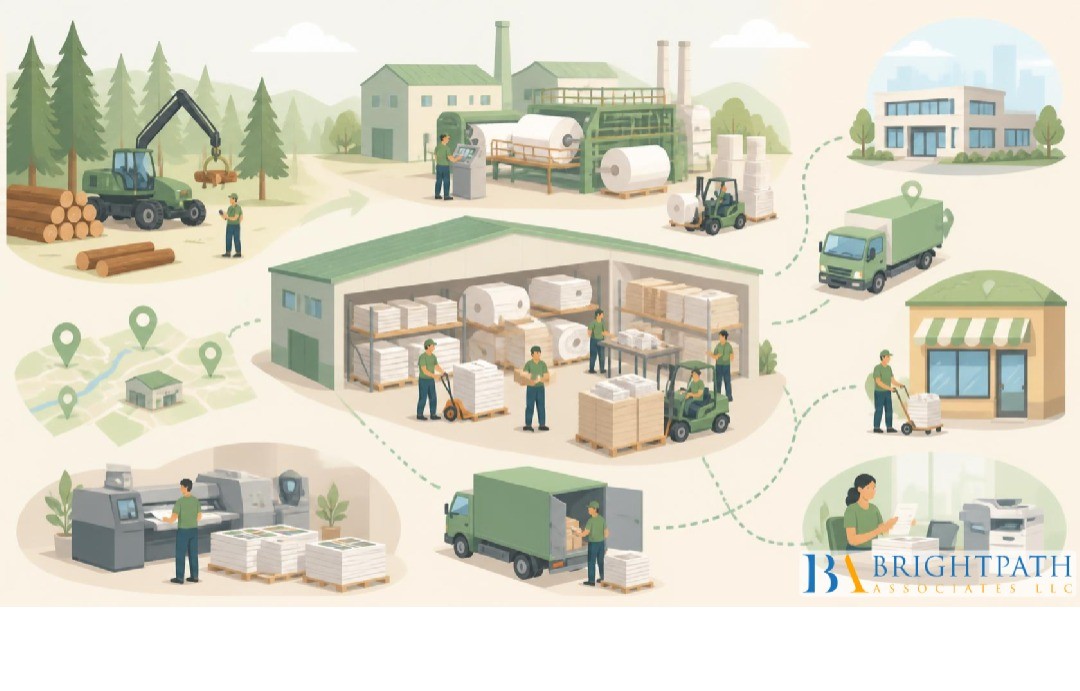
Regional paper distributors are facing a significant transformation in the way customers expect products to be stored, processed, and delivered. For years, distribution models were built around centralized warehouses, large inventories, scheduled deliveries, and relatively predictable demand. Today, e-commerce growth, shorter customer lead times, product diversification, transportation challenges, and increasing expectations for service are changing that equation.
For small and mid-sized distributors, the challenge is particularly significant. They need to improve delivery speed and inventory responsiveness without making the enormous capital investments associated with large national distribution networks.
This is where micro-fulfillment can become a strategic opportunity. Across the Paper and Forest Products Industry, regional distributors can use smaller, strategically positioned fulfillment operations to bring inventory closer to customers, improve order responsiveness, and create greater supply-chain flexibility.
Why Regional Paper Distribution Is Changing
Paper distribution has traditionally relied heavily on scale. Large warehouses could consolidate inventory, reduce handling costs, and support broad product portfolios. However, customer expectations have evolved.
Commercial printers, packaging companies, offices, educational institutions, retailers, and other customers increasingly want faster delivery and greater product availability. At the same time, distributors must manage transportation expenses, labor availability, inventory costs, and unpredictable demand.
Holding every product in one large facility may no longer provide the best balance between cost and responsiveness. Micro-fulfillment offers another model. Instead of depending entirely on one centralized distribution center, companies can establish smaller fulfillment locations closer to important regional markets.
What Micro-Fulfillment Means for Paper Distributors
Micro-fulfillment generally involves smaller, strategically located facilities designed to process and dispatch orders rapidly. These facilities do not necessarily need to replace a company's primary warehouse.
Instead, they can complement existing infrastructure. A regional distributor might maintain its main inventory at a centralized location while positioning fast-moving products in smaller facilities near high-density customer markets.
This hybrid structure can shorten delivery distances and reduce the time required to fulfill frequently ordered products. The objective is not simply to create more warehouses. It is to position inventory intelligently.
Inventory Placement Becomes a Strategic Decision
The success of a micro-fulfillment strategy depends heavily on determining which products should be stocked at each location. Not every paper product needs to be available everywhere.
Regional demand patterns can differ significantly based on customer industries, local business activity, seasonal requirements, and market specialization. Distributors can analyze historical orders to identify products with consistent local demand.
Fast-moving items can be positioned closer to customers, while slower-moving or highly specialized products can remain at centralized facilities. This approach can reduce unnecessary duplication of inventory while improving service levels for important products.
Leadership Is Critical to Successful Transformation
Moving from a traditional warehouse model to a micro-fulfillment network involves more than selecting locations. Leadership must evaluate inventory strategy, technology, workforce requirements, transportation, financial investment, customer expectations, and long-term growth.
This requires cross-functional decision-making. Operations executives need to understand logistics. Finance leaders must evaluate capital requirements. Technology leaders must assess systems integration. Commercial leaders need to understand customer expectations.
The organization also needs executives capable of managing change. As distribution models become more technology-driven, the demand for leaders with supply-chain, digital transformation, operations, and analytics expertise is increasing. Specialized Executive Search Recruitment can help companies identify leadership talent capable of managing this transition.
Preparing Regional Paper Distribution for the Future
Micro-fulfillment represents a broader shift in supply-chain thinking. The objective is no longer simply to store as much inventory as possible in the largest facility available. Instead, companies are asking where inventory should be positioned, how quickly it should move, which products deserve local availability, and how technology can support these decisions.
As explored in BrightPath Associates' Micro-Fulfillment Strategies for Regional Paper Distributors, regional distributors have an opportunity to rethink fulfillment around customer proximity, data, flexibility, and operational efficiency.
Conclusion: Smaller Facilities, Smarter Distribution
The future of regional paper distribution may not depend on building increasingly large warehouses. It may depend on creating smarter networks that combine centralized scale with localized responsiveness.
Micro-fulfillment can help regional distributors position high-demand products closer to customers, improve delivery speed, strengthen inventory management, and potentially reduce transportation inefficiencies. But success requires careful planning.
Companies must understand demand patterns, evaluate facility economics, invest appropriately in technology, develop capable employees, and establish leadership structures that can manage increasingly complex supply chains.
