Mens Leather Puffer vs Nylon: Choose Without Guesswork
Author : erika john | Published On : 04 Nov 2026
Choosing a winter puffer can get tricky when one option has a leather shell and the other uses technical nylon. For shoppers in the United States, the right choice depends on more than appearance: winter conditions range from dry cold to wet snow, and your coat has to suit the way you actually travel and dress. A mens leather puffer can offer a distinctive look, while a nylon puffer may have different weight, care, and weather specifications.
Neither material guarantees a certain level of warmth or protection. Compare the details listed for each garment, then weigh them against your routine. The checks below can help you avoid buying based on a material label alone.
Mens leather puffer vs. technical nylon: what changes?
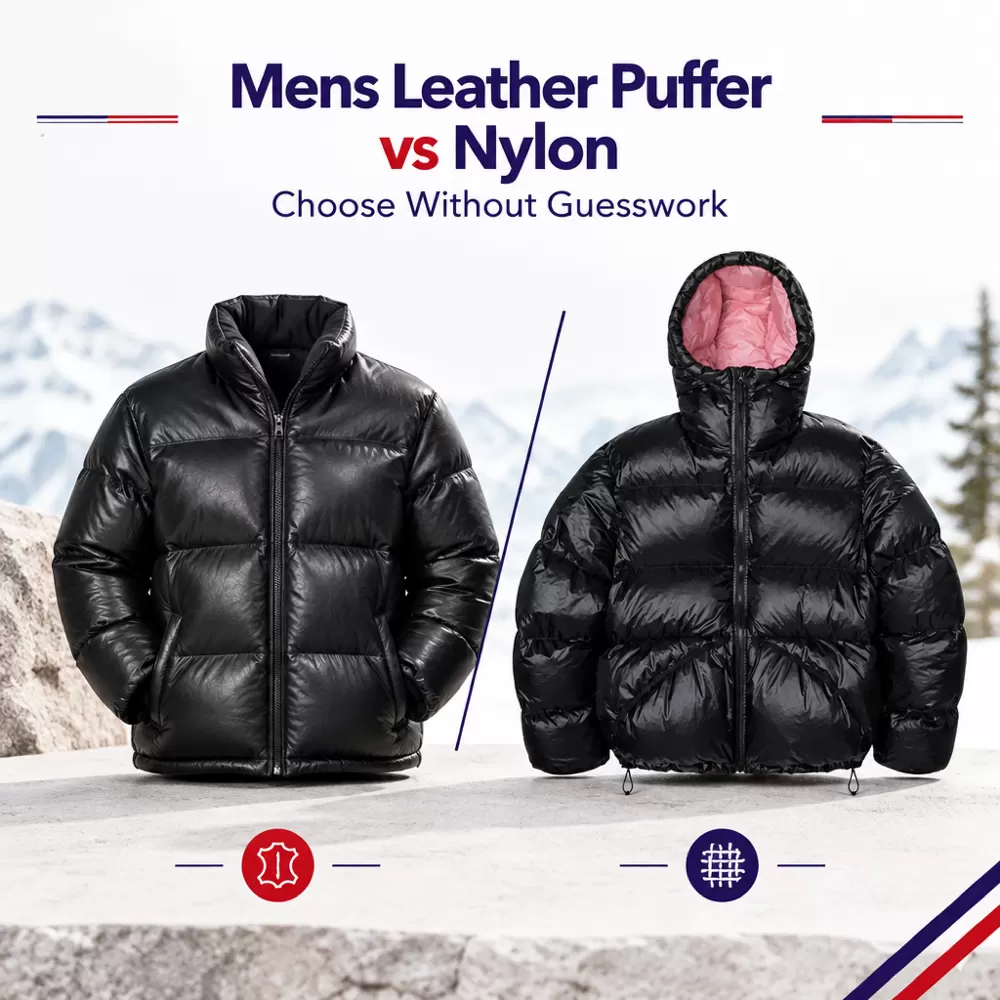
A puffer is built with a quilted shell and insulation inside its sections. The shell material is only one part of the system. Insulation type and amount, construction, lining, closures, and fit all affect how a specific jacket feels and performs. That is why a leather puffer is not automatically warmer, heavier, or more weather-resistant than a nylon one.
Leather gives a jacket a different surface and visual character from technical nylon. It may suit someone who wants a puffer that reads as a more styled outfit piece, rather than a purely utilitarian layer. Nylon is commonly used for technical outerwear, but the word itself does not tell you whether a jacket is lightweight, breathable, or suited to rain. Those properties depend on the individual fabric and garment design.
Start with your main use. For a short commute, errands, or evenings out, appearance and ease of pairing with everyday clothes may carry more weight. For long periods outdoors or a packed travel day, you may care more about garment weight, mobility, and the stated weather details. In either case, consider what you will wear underneath. A close-fitting puffer can feel restrictive over a sweater, while an oversized fit may let cold air in around openings if the design does not adjust.
Check the listed weight, insulation, care, and water resistance
Product specifications give you a better basis for comparison than assumptions about leather or nylon. Look for the garment's stated weight, insulation description, care instructions, and water-resistance details. If a listing does not provide one of these, treat it as unknown rather than guessing from the material or product photos.
- Weight: Check whether the listing gives a garment weight, and confirm the unit if it does. If weight is not stated, compare the overall design and fit, but do not assume which jacket will feel lighter. A thick-looking shell or a technical label alone is not enough to determine the finished garment's weight.
- Insulation: Look for the type of fill and any available construction details. Insulation is what helps retain warmth, while the shell and fit influence how the jacket covers and feels. If the listing does not specify the fill or its amount, you cannot make a reliable warmth comparison from the product name alone.
- Care: Read the care label or product instructions before buying. Leather may require care that differs from machine-washable nylon, but instructions vary by garment and finish. Do not put a jacket in a washer or dryer unless its specific care directions allow it. If the instructions are unclear, ask the seller or a qualified cleaner before treating the material.
- Water resistance: Look for an explicit statement about water resistance, water repellency, or waterproof construction. These terms are not interchangeable. A claim about one fabric treatment also may not describe seams, zippers, or the whole jacket. If no claim is stated, do not count on the puffer for wet-weather protection.
When checking a leather puffer's listed specifications, compare the details on the product page with your needs instead of relying on the word “leather” to fill in gaps. The mens leather puffer guide is a useful place to review the available men's puffer options and check what each listing actually says. Confirm the details for the individual jacket you are considering, since collection pages and product specifications can change.
Think through a real day, too. If you walk several blocks, take public transit, and then spend most of the day indoors, bulk and temperature swings may matter more than standing outside for hours. If your routine includes wet sidewalks or snow, check for a stated weather rating and follow the care instructions that preserve the shell. Neither scenario has one universal winner; the listed construction and your comfort decide.
Choose the puffer that fits your routine, not just the photo
Before ordering, use a short comparison checklist. It makes it easier to spot missing information and compare two jackets fairly:
- Does the size chart match your usual layering plan? Check garment measurements when available, not just the letter size.
- Is the insulation described clearly enough for your intended use, or are key details missing?
- Do the care directions fit how you are willing and able to maintain the jacket?
- Is water resistance stated, and does the wording describe the whole garment or only a feature of its shell?
- Does the listed weight or construction give you enough information to judge comfort for your commute or travel?
Fit deserves a practical check. If returns are available, review the terms before ordering and try the jacket over the layer you expect to wear most often. Raise your arms, sit down, and close the jacket fully. Look for pulling across the shoulders, tightness around the chest, or sleeves that ride up. These quick checks help you distinguish a sharp fit from one that will be uncomfortable after an hour.
Common mistakes are easy to avoid. Do not equate leather with warmth, assume nylon means waterproof, or treat a styled product image as proof of insulation or weather performance. Do not overlook care requirements either. A jacket that suits your look but needs maintenance you will not follow may be a poor match for regular wear.
Choose by the garment's stated construction and care needs, then match those details to your actual winter routine. Material names are a starting point, not a performance guarantee.
If the listing leaves an important question unanswered, pause and ask for clarification rather than filling in the blanks yourself. For a leather puffer, verify the care method and any water-resistance statement especially carefully. For a technical nylon puffer, look for the same specifics instead of assuming a technical fabric provides a particular level of protection. The better choice is the one whose fit, upkeep, and documented features make sense for how you plan to wear it.
