Medical Laboratory Technician Course for Healthcare Careers in 2026
Author : DPMI Institute | Published On : 08 Jun 2026
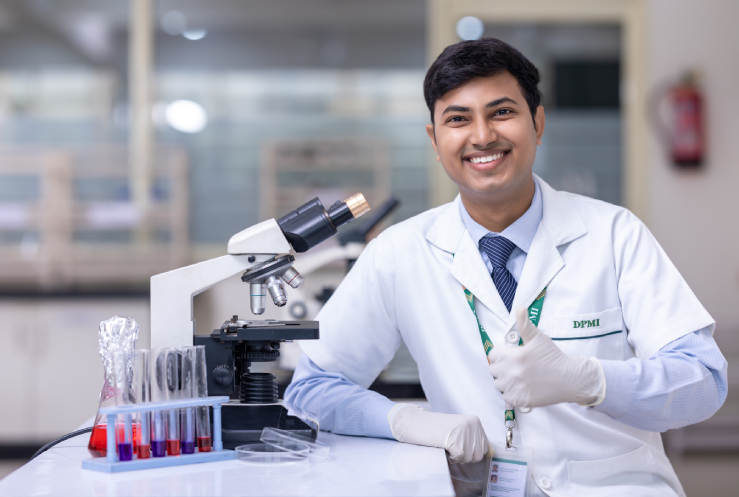
A few years back, most students looking at healthcare careers had only two options in mind, doctor or nurse. That mindset has changed. Quietly, though.
Diagnostic labs have grown into one of the busiest parts of healthcare, and trained lab professionals are now harder to find.
Every blood report, diabetes test, infection screening, or pathology result depends on somebody working carefully behind the scenes. Labs are no longer tucked away corners inside hospitals. They are at the centre of treatment decisions now.
That shift is exactly why the medical laboratory technician course has started attracting students who want a practical healthcare career without spending nearly a decade in medical school.
Healthcare Runs on Accurate Testing
Doctors can only make decisions based on what they see in reports. If the testing goes wrong, chances of misdiagnoses and consequently wrong treatment is obvious.
That pressure lands directly on medical lab technicians. Day after day, they handle samples, perform tests, manage equipments, and make sure results are processed correctly before they reach a doctor’s desk.
The work sounds technical, and parts of it definitely are, but healthcare today depends heavily on diagnostics. Hospitals are expanding testing departments faster than before.
Private labs keep opening. Even smaller clinics now rely on advanced diagnostic support instead of basic manual testing.
Naturally, institutes offering healthcare-focused vocational training are seeing a stronger demand from students planning stable careers.
The Course Is More Practical Than Most Students Expect
A lot of students assume laboratory programs involve endless theory. In reality, most of the learning happens during practical sessions.
Inside a medical laboratory technician MLT program, students usually spend time understanding basics of Pathology, Anatomy, Hematology, Biochemistry, Microbiology, Blood Bank and Histopathology.
Handling specimens properly sounds simple until you actually enter a lab environment. Students learn standard operating procedures of the laboratories. That is why practical exposure changes everything.
DPMI Vocational Institute has placed a big emphasis on practical training in healthcare in its vocational training. The emphasis is not just on classroom explanations, but also on the learning of the laboratory, technical knowledge and real world diagnostic procedures in line with employer expectations.
Career Options Open Up Faster Than Expected
Students are surprised at one thing after completion of a medical laboratory technician's course, that the field is much wider than they initially thought.
Hospitals employ trained Medical Lab Technicians on a regular basis, but it's not all. Other areas like diagnostic centres, blood banks, pathology laboratories, pharmaceutical industries and research laboratories are also in need of well-trained Allied Healthcare professionals who are familiar with the working of laboratory systems.
A few graduates go into further study and are headed towards specialization in diagnostics. Others start working after training, and acquire experience on the job.
Training Quality Shapes Career Confidence
Students usually notice the difference between average training and industry-focused learning once internships begin. Real labs move quickly.
Confidence does not come from reading notes alone. The stronger programs tend to combine theory with supervised lab sessions so students feel prepared before stepping into professional healthcare settings.
DPMI Vocational Institute offers Certificate, Diploma, and Vocational pathways in Medical Laboratory Technician MLT training with a structure designed around practical healthcare education. That approach helps students become comfortable inside laboratory environments instead of feeling overwhelmed during their first job.
Conclusion
Diagnostics will keep growing because healthcare cannot function without accurate testing. That part is unlikely to change anytime soon.
Students planning careers in healthcare now have more options than previous generations did, and laboratory technology has become one of the practical routes for those who want skill-based medical training with steady long-term opportunities.
DPMI offers practical, technical and industry-focused programs in the healthcare field that align directly with current diagnostic careers for students interested in the Medical Laboratory Technician course in 2026.
