Medical Device Market Disruption: Strategies for Staying Ahead
Author : Peter Thompson | Published On : 28 Jul 2026
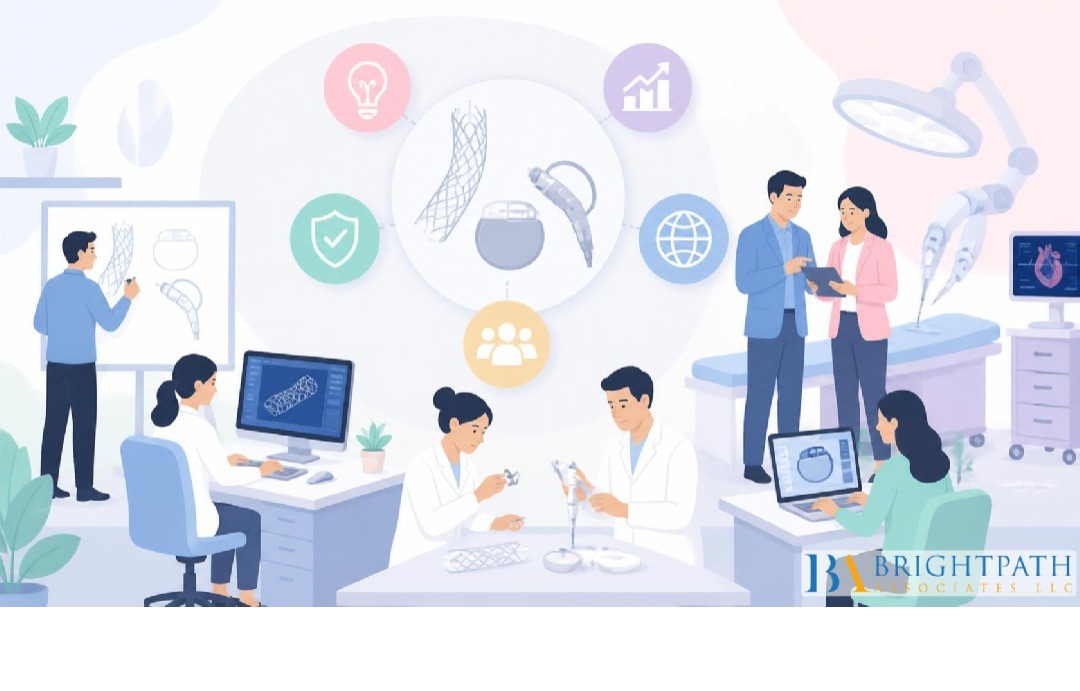
The medical device industry is experiencing one of the most transformative periods in its history. Rapid technological innovation, changing healthcare delivery models, evolving regulatory expectations, digital health adoption, and increasing competition are reshaping how medical devices are designed, manufactured, and brought to market. While disruption presents significant challenges, it also creates unprecedented opportunities for small and mid-sized medical device manufacturers willing to adapt quickly. Companies that embrace innovation, strengthen operational agility, and invest in the right talent are positioning themselves to outperform competitors and achieve sustainable growth in an increasingly dynamic marketplace. Industry experts note that digital transformation, portfolio innovation, and strategic partnerships are becoming essential differentiators for medical device manufacturers.
Unlike previous decades, market leadership is no longer determined solely by engineering excellence or manufacturing scale. Today's healthcare providers, patients, and regulators expect connected devices, data-driven insights, improved patient outcomes, cybersecurity, faster product development, and seamless integration with digital healthcare ecosystems. These expectations require organizations to think beyond traditional product development and embrace comprehensive business transformation. Companies that continue relying on conventional business models risk falling behind competitors that leverage artificial intelligence, cloud computing, predictive analytics, and connected healthcare technologies to create additional value for customers.
One of the primary drivers of disruption is the rapid growth of digital health technologies. Connected medical devices now provide continuous patient monitoring, remote diagnostics, predictive maintenance, and real-time clinical data that support better healthcare decisions. Rather than functioning as standalone products, many devices have become integral components of larger digital healthcare platforms. Manufacturers capable of integrating hardware, software, analytics, and secure data management create more comprehensive solutions that improve both clinical outcomes and customer satisfaction. As healthcare systems increasingly prioritize value-based care, intelligent devices capable of delivering actionable insights will continue gaining competitive importance.
Artificial intelligence (AI) has emerged as another powerful force reshaping the medical device landscape. AI enables manufacturers to optimize product design, automate quality control, improve manufacturing efficiency, enhance predictive maintenance, and support clinical decision-making. Machine learning algorithms can analyze vast amounts of operational and clinical data to identify trends that improve product performance while accelerating research and development. For small and mid-sized organizations, cloud-based AI solutions have significantly reduced implementation costs, making advanced analytics accessible without requiring enterprise-level technology investments.
Regulatory complexity also continues influencing competitive strategy. Medical device manufacturers must navigate evolving compliance requirements, quality management standards, cybersecurity regulations, and clinical validation processes across multiple markets. Rather than viewing compliance as an administrative burden, forward-thinking companies integrate regulatory planning into product development from the earliest design stages. Early collaboration between engineering, quality assurance, regulatory affairs, and manufacturing teams reduces approval delays while improving overall product quality and market readiness. Organizations that build compliance into their innovation strategy often reach customers faster while minimizing costly redesigns.
Supply chain resilience has become another defining competitive advantage. Recent global disruptions demonstrated how vulnerable medical device manufacturers can be to component shortages, logistics interruptions, and supplier instability. Successful companies are diversifying supplier networks, implementing digital supply chain visibility, improving inventory forecasting, and strengthening risk management capabilities. Advanced analytics now enable organizations to anticipate disruptions, optimize procurement decisions, and maintain production continuity despite changing market conditions. A resilient supply chain not only protects operational performance but also strengthens customer confidence through consistent product availability.
Innovation speed has become equally important. Healthcare providers increasingly seek technologies that improve efficiency, reduce costs, and enhance patient outcomes. Companies capable of accelerating research, development, testing, and commercialization gain significant competitive advantages. Agile product development methodologies, digital simulation tools, rapid prototyping, and collaborative innovation ecosystems allow manufacturers to shorten development cycles without compromising quality or regulatory compliance. Faster innovation enables organizations to respond more effectively to emerging healthcare needs while maintaining relevance in rapidly evolving markets.
Customer expectations are also changing significantly. Hospitals, healthcare systems, clinicians, and patients increasingly evaluate medical devices based not only on technical performance but also on user experience, interoperability, cybersecurity, post-market support, and long-term value. Manufacturers that actively engage customers throughout product development gain valuable insights into unmet clinical needs while building stronger market relationships. Continuous customer feedback supports iterative innovation, ensuring products remain aligned with real-world healthcare challenges.
Cybersecurity has become an essential consideration as connected devices generate and transmit increasing amounts of sensitive healthcare data. Healthcare organizations require assurance that connected medical technologies protect patient information while maintaining reliable system performance. Manufacturers that prioritize cybersecurity during product development strengthen customer trust while meeting evolving regulatory expectations. Secure software architecture, continuous monitoring, risk assessment, and timely software updates are now fundamental components of successful product strategies rather than optional enhancements.
Digital manufacturing is transforming production operations as well. Automation, robotics, Industrial Internet of Things (IIoT), predictive maintenance, and real-time production monitoring improve manufacturing efficiency while reducing operational costs. Smart factories generate valuable production data that enables continuous process improvement, higher product quality, reduced waste, and better resource utilization. Small and mid-sized manufacturers adopting these technologies can compete more effectively with larger organizations by improving flexibility and responsiveness without dramatically increasing operating expenses.
Perhaps the most important competitive differentiator remains talent. As medical devices become increasingly sophisticated, organizations require professionals with expertise spanning biomedical engineering, software development, artificial intelligence, cybersecurity, quality assurance, regulatory affairs, manufacturing engineering, clinical research, and digital transformation. Attracting and retaining multidisciplinary talent has become critical for organizations seeking sustainable innovation. Companies looking to strengthen their workforce with experienced professionals can explore BrightPath Associates' Medical Device Manufacturing Industry, where specialized executive recruitment solutions help organizations build high-performing leadership and technical teams.
Leadership also plays a defining role during periods of market disruption. Successful executives foster cultures that encourage innovation, cross-functional collaboration, continuous learning, and calculated risk-taking. Rather than resisting disruption, resilient organizations proactively identify emerging technologies, evaluate market trends, invest in workforce development, and adapt business strategies before competitive pressures force reactive decisions. Leaders who embrace change position their organizations for long-term success despite ongoing industry transformation.
For additional insights into navigating today's rapidly evolving medical technology landscape, explore BrightPath Associates' blog, Medical Device Market Disruption Strategies. Ultimately, disruption should not be viewed as a threat but as an opportunity to innovate, differentiate, and grow. Medical device manufacturers that combine technological advancement, operational excellence, regulatory expertise, digital transformation, and exceptional talent will be better equipped to meet the evolving needs of healthcare providers and patients alike.
