Manufacturing Translation Services Singapore: Compliance, GHS & Technical Manuals for 2030
Author : Letter crafts | Published On : 05 Mar 2026
Translation Services in Singapore: Supporting Manufacturing Safety, Compliance, and Global Expansion
Translation services in Singapore have become an essential component of the country’s rapidly evolving manufacturing sector. As Singapore advances toward its Manufacturing 2030 strategy, which aims to increase manufacturing value by 50%, businesses are increasingly operating across borders, technologies, and languages. In this environment, technical documentation, safety instructions, and regulatory materials must be accurately translated to ensure operational continuity and legal compliance. Translation is no longer just a communication tool; it is a strategic function that supports safety, regulatory requirements, and international market access.
Singapore’s Manufacturing Growth and Global Collaboration
Singapore has long been recognized as a global hub for advanced manufacturing, with industries ranging from electronics and chemicals to aerospace and biomedical production. With the government’s Manufacturing 2030 initiative, the nation is accelerating investment in automation, robotics, and smart factory technologies.
As manufacturing becomes more connected and international, companies regularly collaborate with suppliers, engineers, and regulators from multiple countries. This creates a growing need for accurate multilingual documentation. Technical manuals, compliance paperwork, and operational guidelines must be translated precisely so that workers and partners across different regions can understand them clearly.
In this environment, reliable translation services ensure that complex technical instructions remain consistent across languages while maintaining the integrity of engineering information.
Regulatory Requirements and Safety Compliance
A major factor driving demand for professional translation services in Singapore is regulatory compliance. Government authorities have strengthened safety documentation requirements, particularly in sectors dealing with chemicals and hazardous materials.
One key regulation is the adoption of the Globally Harmonized System (GHS) for chemical classification and labeling. Singapore implemented the SS 586 GHS 7th Edition, which updated standards for Safety Data Sheets (SDS) and hazard communication labels.
The transition period ended in February 2025, meaning companies must now fully comply with the updated requirements. Businesses must ensure that their safety documentation includes:
-
Accurate hazard classifications
-
Clearly translated safety instructions
-
Correct chemical terminology
-
Standardized labeling and pictograms
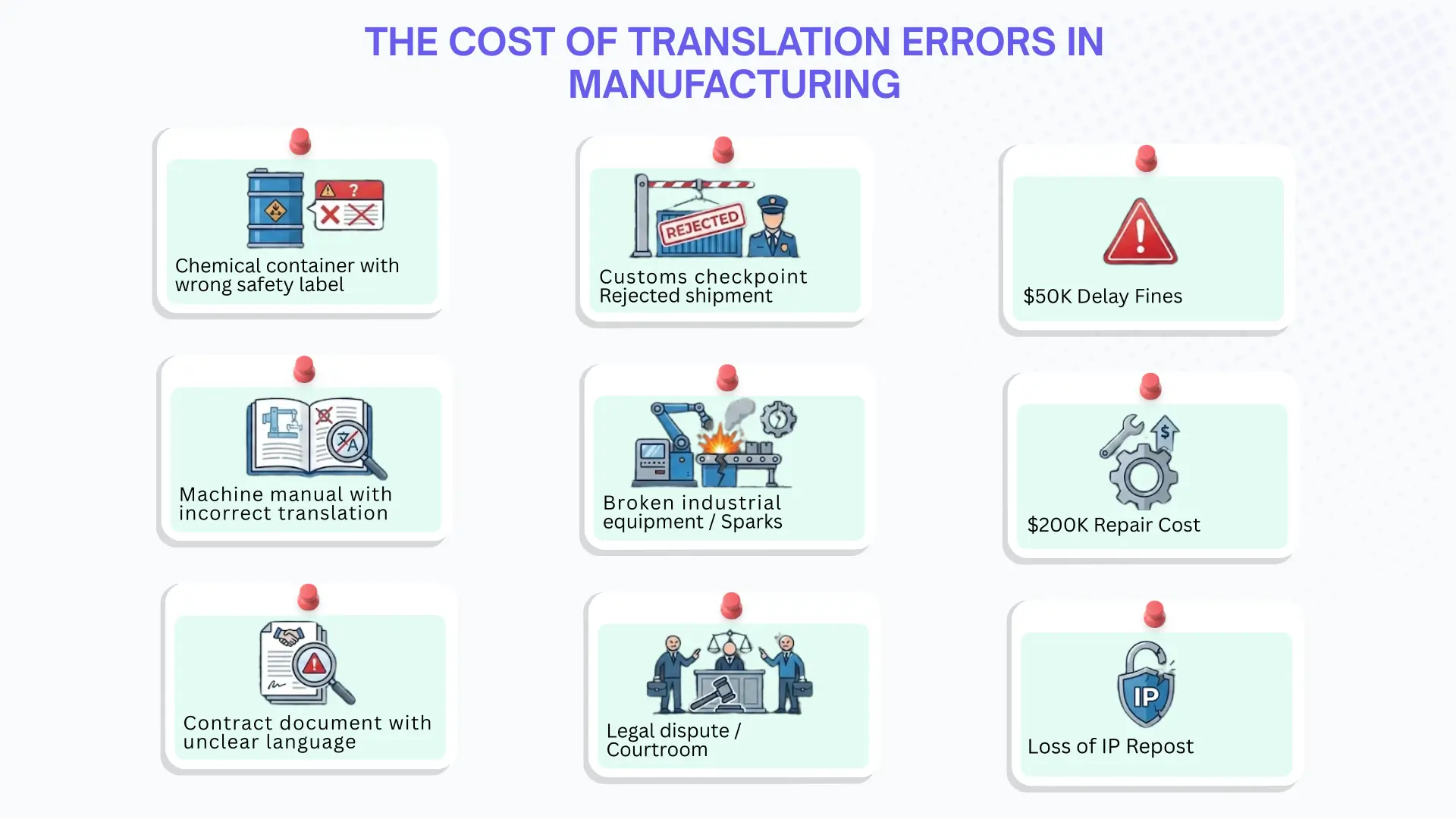
If documentation fails to meet these standards, shipments may be rejected at logistics hubs such as Tuas and Jurong Island. For export-oriented manufacturers, accurate translation is therefore crucial to maintaining compliance and avoiding operational disruptions.
Why Technical Translation Requires Specialized Expertise
While automated translation tools are widely available today, manufacturing documentation demands far greater accuracy than general content. Technical manuals often contain precise measurements, engineering terminology, and operational instructions that directly impact machinery and worker safety.
For example, a small translation error in a torque specification, temperature limit, or emergency shutdown instruction could lead to equipment damage or safety incidents. These risks demonstrate why technical translation must go beyond literal word replacement.
Professional translation services in Singapore often rely on engineer-linguists—specialists who combine technical knowledge with linguistic expertise. These professionals understand the context behind technical terms, ensuring that translated documents maintain the exact meaning and operational intent of the original content.
The Role of Translation Memory Technology
Modern translation services also rely on advanced technology to improve efficiency and consistency. One of the most important tools used in professional translation is Translation Memory (TM).
Translation Memory systems store previously translated sentences and technical phrases in a database. When the same content appears again in new documents, the system automatically suggests the approved translation.
This technology provides several important benefits:
Consistency Across Documentation
Manufacturers often produce hundreds of manuals and product guides. Translation Memory ensures that terminology remains consistent across all documents.
Cost Efficiency
Because repeated content does not need to be translated again, companies can reduce long-term translation costs.
Faster Project Delivery
Previously translated segments allow translators to complete projects more quickly while maintaining high accuracy.
For organizations producing large volumes of technical documentation, Translation Memory has become an essential quality control tool.
Types of Manufacturing Documents That Require Translation
Manufacturing companies in Singapore produce a wide range of documents that must be translated accurately for global operations. These documents include:
-
Equipment operation manuals
-
Installation instructions
-
Maintenance guides
-
Safety Data Sheets (SDS)
-
Hazard communication labels
-
Engineering specifications
-
Compliance documentation
-
Industrial training materials
Each document must retain the original formatting, diagrams, and measurement units to ensure clarity. Even small formatting errors can create confusion or lead to misinterpretation during equipment operation.
Professional translation services ensure that both the language and structure of technical documents remain accurate and easy to understand.
Supporting Global Trade and Export
Singapore serves as a strategic export gateway for high-tech manufacturing products. Local companies frequently export machinery, electronics, chemicals, and advanced components to markets across Europe, the United States, and Asia.
Each export destination often has specific documentation requirements. For instance:
-
European markets may require multilingual CE documentation.
-
Asian markets may require localized safety manuals and compliance records.
-
International distributors often request translated installation guides.
Accurate translation helps ensure that documentation meets regulatory requirements in each destination country. This reduces the risk of shipment delays, rejected products, or compliance investigations.
In this way, translation services directly support Singapore’s role as a global manufacturing and export hub.
Risk Management Through Professional Translation
Technical translation also plays a vital role in risk management. Manufacturing environments involve complex machinery, hazardous materials, and strict safety protocols. Clear documentation helps prevent accidents and operational mistakes.
Professional translation helps companies reduce several types of risk:
Operational Risk
Accurate instructions ensure machinery is used correctly.
Safety Risk
Clear warnings and safety guidelines protect workers from potential hazards.
Legal Risk
Proper documentation supports compliance with international regulations.
Financial Risk
Correct translations help avoid shipment rejections, fines, or product recalls.
For companies operating in high-stakes industrial environments, translation accuracy is a key part of maintaining operational stability.
Selecting the Right Translation Provider
With growing international collaboration, choosing the right translation partner has become a strategic decision for manufacturers.
A reliable translation provider should offer:
Technical Expertise
Translators who understand engineering terminology and manufacturing processes.
Regulatory Knowledge
Familiarity with safety standards such as GHS and global compliance frameworks.
Advanced Translation Tools
Use of Translation Memory and terminology management systems.
Quality Assurance Processes
Multi-step review procedures to ensure linguistic and technical accuracy.
These capabilities help ensure that translated documents maintain both clarity and compliance.
Translation in the Era of Industry 4.0
As manufacturing enters the Industry 4.0 era, documentation is becoming increasingly digital. Smart factories rely on software-based interfaces, automated systems, and digital training platforms.
As a result, translation now extends beyond traditional manuals to include:
-
Machine interface text
-
Software localization
-
Digital maintenance platforms
-
Online training modules
Professional translation services must ensure that translated content integrates smoothly into these digital environments while remaining clear and functional for global users.
Conclusion
Singapore’s manufacturing sector is evolving rapidly, driven by automation, digital technologies, and global collaboration. As businesses expand into international markets, the demand for accurate and reliable technical communication continues to grow.
Professional translation services in Singapore play a critical role in ensuring that manufacturing documentation meets regulatory requirements, supports worker safety, and enables global trade. From Safety Data Sheets and engineering manuals to compliance documents and training materials, precise translation helps businesses maintain quality and operational efficiency.
As Singapore moves closer to its Manufacturing 2030 goals, translation will remain a vital strategic tool—bridging languages, industries, and international markets while ensuring that innovation can be understood and implemented around the world.
