Low-Code Revolution: Empowering Non-Tech Staff to Optimize Production Workflows
Author : Ayesha Diaz | Published On : 05 Oct 2026
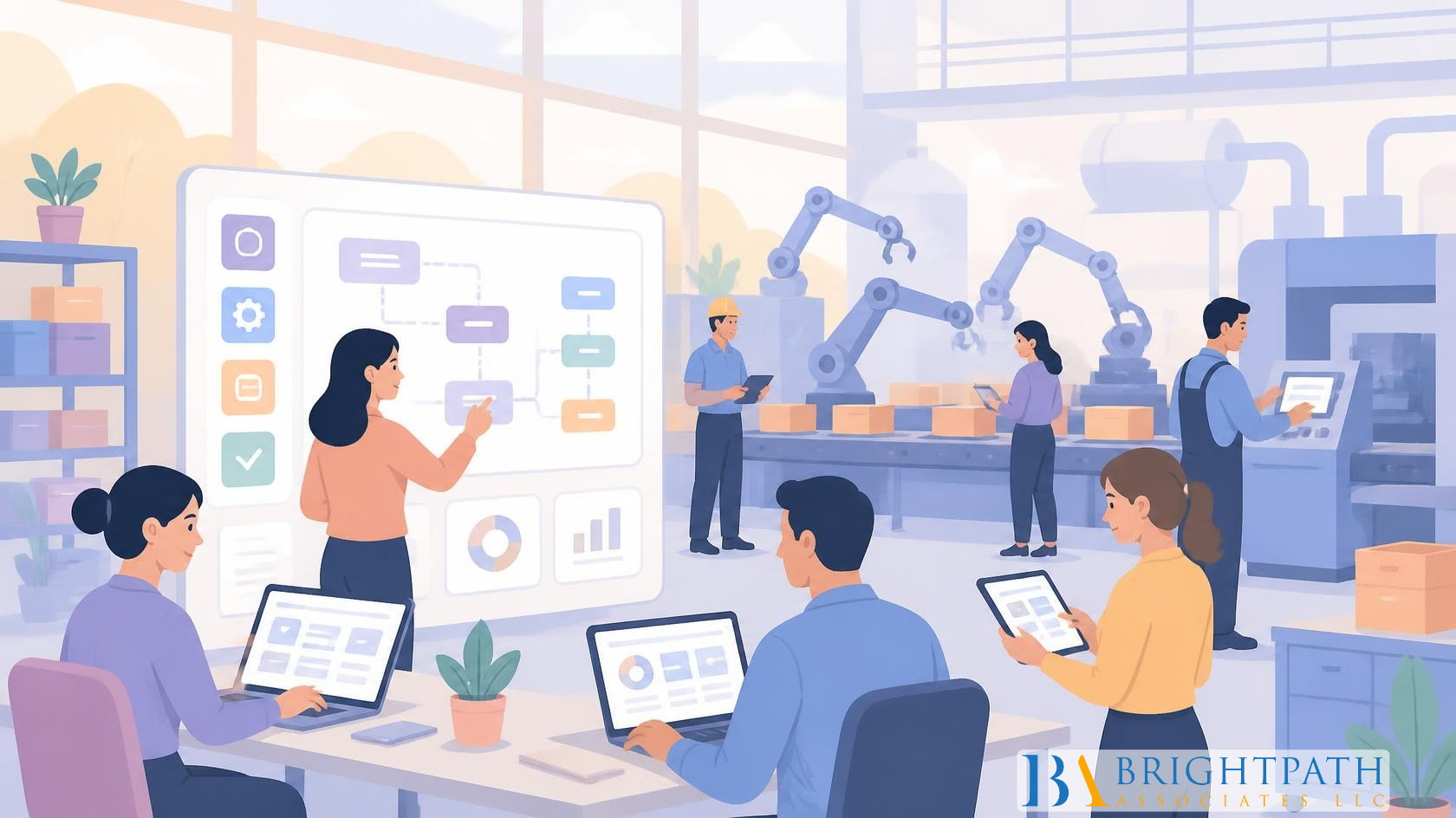
Manufacturing has never been short of operational challenges. Machinery companies must continuously balance production speed, equipment reliability, quality requirements, workforce availability, and changing customer expectations. Yet one of the most important transformations taking place today is happening somewhere less obvious: software development is moving closer to the production floor.
For decades, improving a manufacturing workflow often meant submitting an IT request, waiting for developers, and navigating lengthy implementation cycles. That model is increasingly being challenged by low-code and no-code technologies. These platforms allow engineers, supervisors, technicians, and other operational employees to create applications, automate repetitive processes, and improve workflows without requiring traditional software-development expertise.
For small and mid-sized manufacturers in particular, this shift could have significant implications. When the people who understand production problems best can participate directly in solving them, organizations may be able to turn operational knowledge into measurable improvements much faster.
Why Low-Code Matters on Manufacturing Floor
A production environment generates countless small problems that may not justify a major software-development project individually. A supervisor might need a better way to record downtime. A quality engineer may want a digital inspection form. A maintenance technician could benefit from an automated equipment-check workflow. A production manager may need a dashboard that consolidates information currently scattered across spreadsheets and paper records.
Low-code platforms change the equation by providing visual interfaces, prebuilt components, workflow automation, database connections, and reusable templates. Instead of building every application from scratch, employees can assemble solutions around specific operational requirements.
The value is not simply faster software development. It is the ability to capture frontline knowledge and convert it into practical digital tools. This approach is particularly relevant to the broader Machinery Industry, where companies increasingly need to combine mechanical expertise with automation, data, connectivity, and software capabilities.
Turning Frontline Employees Into Problem Solvers
The strongest argument for low-code manufacturing may be its ability to empower employees who are already closest to operational problems. These examples demonstrate an important principle: the person experiencing the problem often understands the workflow better than the person developing the software.
Consider a machine operator who notices that certain production interruptions repeatedly occur during shift changes. Instead of simply reporting the issue, that employee could potentially participate in developing a digital workflow that records downtime reasons, alerts supervisors, and creates a standardized handoff process.
Similarly, a maintenance team could create a simple application for recording inspection results and automatically escalating recurring equipment problems. A quality department could digitize inspection procedures and route exceptions to the appropriate decision-maker.
The Hidden Advantage: Faster Continuous Improvement
Manufacturers frequently talk about continuous improvement, but the process can become difficult when every improvement requires substantial technical resources. Low-code introduces the possibility of smaller, faster improvement cycles.
Rather than launching a major digital transformation project, a company can identify one inefficient process, build a focused solution, test it with employees, measure the results, and then expand if the outcome is positive.
For mid-sized machinery businesses with limited technology budgets, that distinction matters. They may not need to replace every legacy system immediately. Instead, they can use low-code applications to address specific workflow gaps while gradually modernizing their broader technology environment.
What Should Machinery Leaders Ask Next?
The low-code revolution raises a strategic question for executives: How many operational improvements are currently waiting simply because the people who understand the problems cannot easily build the solutions?
Leadership teams should examine repetitive administrative tasks, manual reporting processes, disconnected spreadsheets, paper-based inspections, maintenance workflows, and other areas where employees regularly create workarounds.
The goal is to identify where giving employees better digital tools can eliminate friction, improve visibility, accelerate decisions, and allow skilled workers to spend more time on higher-value activities.
Technology may make application development easier, but successful implementation still depends on people who understand operations, change management, data, cybersecurity, and leadership. For a deeper look at how low-code technology can empower non-technical employees and optimize production workflows, explore Low-Code Revolution: Empowering Non-Tech Staff to Optimize Production Workflows.
The Next Competitive Advantage May Be Organizational
Low-code is unlikely to eliminate the need for professional developers, automation engineers, IT specialists, or technology leaders. Instead, it may change how these professionals work with the rest of the organization.
For machinery manufacturers, that could become a meaningful competitive advantage. When operational expertise and digital capability come together, small improvements can accumulate into significant gains in productivity, quality, responsiveness, and employee engagement.
For machinery-industry leaders, those questions may be worth exploring now—before competitors turn frontline digital empowerment into their next source of operational advantage.
