Long Range RFID Scanner for Toll Roads: How RFID Automates Vehicle Identification
Author : Jaming Wong | Published On : 16 Sep 2026
Toll roads need to identify vehicles quickly.
When a vehicle approaches a toll point, the system may need to recognize the vehicle, check its account or authorization, record the passage, and then trigger the next step in the process.
A long range RFID scanner can help with this by identifying an RFID tag attached to a vehicle without requiring the driver to stop and manually scan a card.
The interesting part is that the RFID reader is only one piece of the system.
The antenna, vehicle tag, lane layout, vehicle speed, sensors, barrier controller, and software all affect whether the system works reliably.
Vehicle tag → RFID antenna → RFID reader → identification data → toll software
An RFID tag is attached to the vehicle or placed in a suitable position.
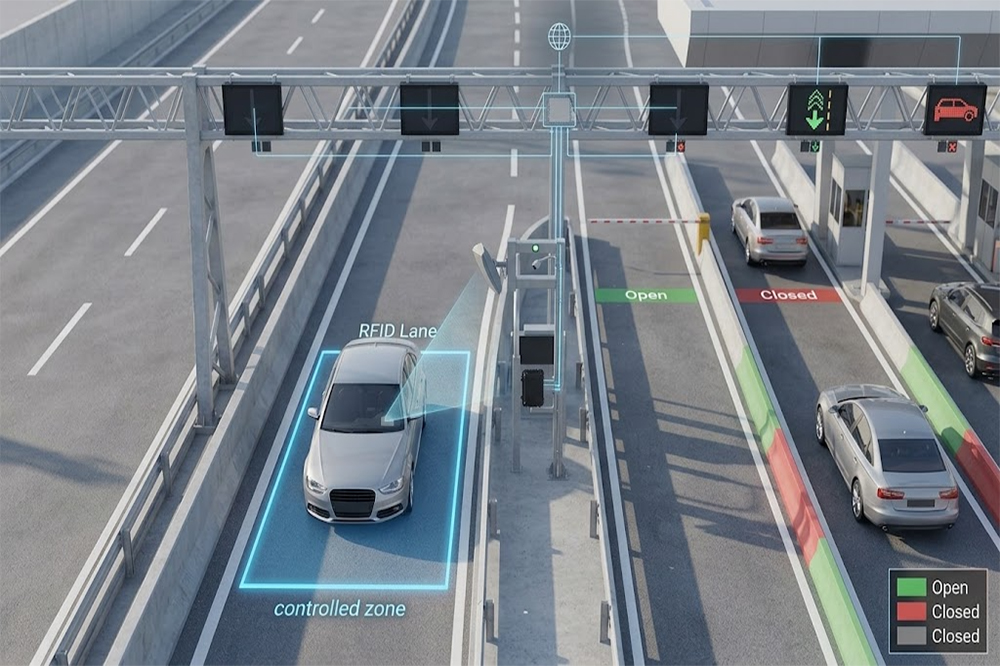
As the vehicle approaches the toll checkpoint, the long range UHF RFID reader detects the tag through its antenna.
The reader receives the tag ID and sends it to the toll management system.
The software can then determine what should happen next.
For example:
RFID offers another approach.
The vehicle does not necessarily need to stop and present a barcode to a scanner. A fixed RFID reader can detect the tag as the vehicle passes through a defined reading area.
This can be useful when many vehicles need to pass through the same checkpoint.
For example, a private road may have hundreds or thousands of registered vehicles using the same entrance every day.
Instead of requiring each driver to interact with a terminal, RFID can make the identification process more automatic.
Of course, RFID is not always the only technology required. Cameras, vehicle sensors, barriers, and other systems may still have important roles.
Some buyers think a longer reading distance is always better.
For a toll road application, that is not necessarily true.
The system normally needs to know when the vehicle reaches a specific checkpoint.
If the reader detects a vehicle too early, the software may record the event before the vehicle actually reaches the toll point.
A very wide reading zone can also create problems when multiple lanes are close together.
For this reason, antenna direction and reading-zone control are extremely important.
A good RFID toll installation aims for a stable detection area rather than simply the maximum possible reading distance.
Depending on the road layout, an antenna may be installed beside the lane or positioned above the vehicle path.
The installation needs to consider:
A small private toll entrance may need a very different antenna arrangement from a multi-lane transportation checkpoint.
This is one reason field testing matters before selecting the final hardware configuration.
A windshield-mounted RFID tag may work well for some systems.
Other applications may require a tag designed for mounting on or near metal surfaces.
The tag’s orientation also matters.
A vehicle does not always approach the antenna at exactly the same angle. Different vehicle models may also have different windshield angles, mounting heights, and structures around the tag.
For a supplier or system integrator, testing several vehicle types can reveal problems that a single laboratory test will not show.
A reader may detect a loose tag very easily, while the same tag performs differently after installation on a real vehicle.
When a vehicle approaches a toll point, the system may need to recognize the vehicle, check its account or authorization, record the passage, and then trigger the next step in the process.
A long range RFID scanner can help with this by identifying an RFID tag attached to a vehicle without requiring the driver to stop and manually scan a card.
The interesting part is that the RFID reader is only one piece of the system.
The antenna, vehicle tag, lane layout, vehicle speed, sensors, barrier controller, and software all affect whether the system works reliably.
How RFID Vehicle Identification Works on Toll Roads
A basic RFID toll identification process looks like this:Vehicle tag → RFID antenna → RFID reader → identification data → toll software
An RFID tag is attached to the vehicle or placed in a suitable position.
As the vehicle approaches the toll checkpoint, the long range UHF RFID reader detects the tag through its antenna.
The reader receives the tag ID and sends it to the toll management system.
The software can then determine what should happen next.
For example:
- Identify the vehicle
- Check the vehicle account
- Record the checkpoint
- Record the passage time
- Check access permissions
- Associate the vehicle with a transaction
- Trigger a barrier or traffic-control device
Why Use RFID for Vehicle Identification?
Traditional vehicle identification can rely on tickets, manual cards, QR codes, license plate recognition, or other technologies.RFID offers another approach.
The vehicle does not necessarily need to stop and present a barcode to a scanner. A fixed RFID reader can detect the tag as the vehicle passes through a defined reading area.
This can be useful when many vehicles need to pass through the same checkpoint.
For example, a private road may have hundreds or thousands of registered vehicles using the same entrance every day.
Instead of requiring each driver to interact with a terminal, RFID can make the identification process more automatic.
Of course, RFID is not always the only technology required. Cameras, vehicle sensors, barriers, and other systems may still have important roles.
Long Range Does Not Mean Unlimited Coverage
There is a common misunderstanding with the term “long range RFID scanner.”Some buyers think a longer reading distance is always better.
For a toll road application, that is not necessarily true.
The system normally needs to know when the vehicle reaches a specific checkpoint.
If the reader detects a vehicle too early, the software may record the event before the vehicle actually reaches the toll point.
A very wide reading zone can also create problems when multiple lanes are close together.
For this reason, antenna direction and reading-zone control are extremely important.
A good RFID toll installation aims for a stable detection area rather than simply the maximum possible reading distance.
Controlling the RFID Reading Zone
The antenna creates much of the practical reading behavior.Depending on the road layout, an antenna may be installed beside the lane or positioned above the vehicle path.
The installation needs to consider:
- Lane width
- Vehicle height
- Antenna angle
- Reading distance
- Tag location
- Reader output power
- Road direction
- Vehicle speed
- Adjacent lanes
- Metal structures
- Weather and environmental conditions
A small private toll entrance may need a very different antenna arrangement from a multi-lane transportation checkpoint.
This is one reason field testing matters before selecting the final hardware configuration.
RFID Tags on Vehicles
Vehicle tags can be installed in different locations depending on the application.A windshield-mounted RFID tag may work well for some systems.
Other applications may require a tag designed for mounting on or near metal surfaces.
The tag’s orientation also matters.
A vehicle does not always approach the antenna at exactly the same angle. Different vehicle models may also have different windshield angles, mounting heights, and structures around the tag.
For a supplier or system integrator, testing several vehicle types can reveal problems that a single laboratory test will not show.
A reader may detect a loose tag very easily, while the same tag performs differently after installation on a real vehicle.
