Long Range RFID Reader SDK: A Practical Development Guide for Java, C#, Android and Linux
Author : Jaming Wong | Published On : 14 Jul 2026
When people search for a Long Range RFID Reader SDK, they usually aren’t looking for another hardware brochure. More often, they’re already working on a warehouse, logistics, manufacturing or asset tracking project and need to connect an RFID reader with their own software.
That sounds straightforward, but the development work often becomes more complicated than expected.
One customer we worked with had already finished the warehouse management system. The only missing part was reading RFID tags automatically at the dock door. Their biggest concern wasn’t the reading distance—it was finding an SDK that could communicate reliably with their existing Java application.
Situations like this are actually very common.
A practical RFID SDK should support the operating systems developers already use, including Windows, Linux and Android, while also providing libraries for Java and C#. That saves plenty of time during integration because developers don’t have to build the communication layer from scratch.
Communication methods matter just as much.

Some logistics systems prefer TCP Socket because readers are connected through Ethernet. Others still use Serial (RS232/RS485), especially when upgrading older factories where existing controllers remain in service. In newer cloud-based projects, a REST API often makes integration with ERP, WMS or MES systems much easier.
Instead of worrying about low-level commands, developers can simply send HTTP requests and receive tag data in a familiar format.
Another detail that often gets overlooked is sample code.
A complete SDK shouldn’t stop at documentation. Developers usually expect working demos showing how to connect, configure antennas, start inventory scanning and process EPC data. Having ready-to-run examples can shorten development from several days to only a few hours.
Java developers normally focus on backend integration with warehouse management systems. C# is still widely used for Windows desktop applications in factories. Android SDKs are common for handheld terminals used in inventory counting or receiving operations.
Because every project looks a little different, it’s useful when the SDK follows the same communication logic across all platforms. That way, moving from Windows testing to Linux deployment doesn’t require learning a completely different interface.
GitHub examples are another feature many engineers search for. Before selecting hardware, developers often want to review the project structure, communication methods and API design. Even a simple inventory demo helps them estimate the integration workload before purchasing equipment.
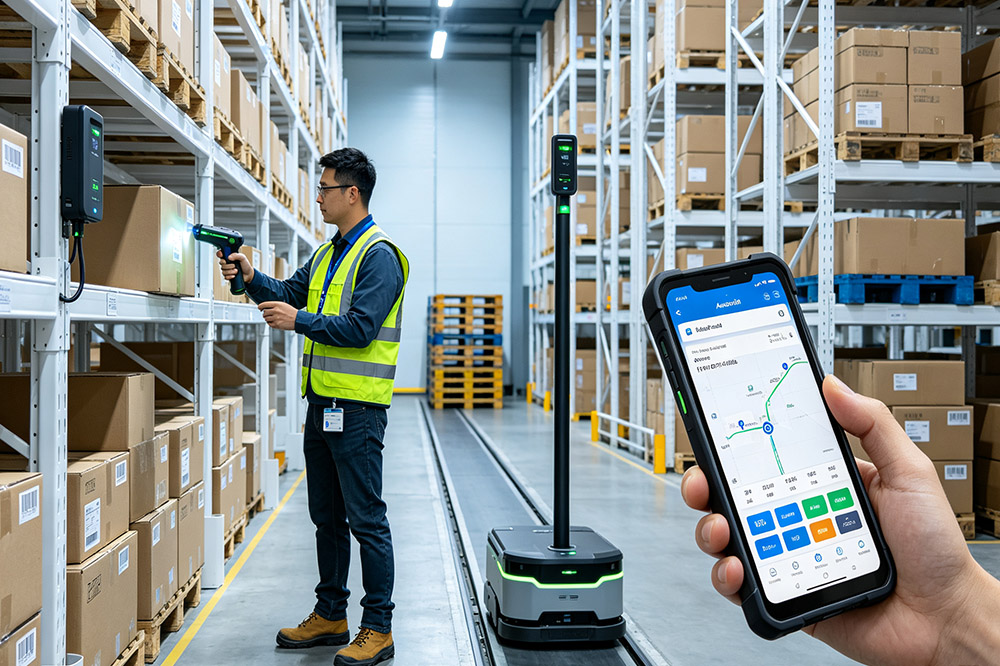
In logistics environments, RFID readers rarely work alone. They usually interact with barcode scanners, conveyor systems, PLC controllers, traffic lights or warehouse software. The SDK should therefore expose clear APIs for reading tag IDs, controlling GPIO, configuring antennas and monitoring reader status in real time.
From our experience, developers generally don’t ask for dozens of advanced functions on the first day. What they really want is stable communication, readable documentation and code examples that can be adapted without spending days decoding proprietary commands.
CYKEO long range RFID readers are designed with this in mind. The SDK supports Java, C#, Android, Linux and Windows, together with TCP, Serial and REST API communication. Demo programs and development documents are available to help software teams connect RFID readers with WMS, ERP, logistics and industrial automation systems more efficiently.
If you’re developing a logistics platform, warehouse management solution or industrial tracking system, choosing an SDK that’s easy to understand can save far more time than simply choosing the reader with the longest detection range.
