Coolant Balls for CNC Machines: Complete Guide to Types, Applications & Selection
Author : Surya makeyoueasy | Published On : 14 Oct 2026
Introduction
Effective coolant delivery is essential for maintaining cutting-tool performance, controlling heat, and removing chips during CNC machining. Even when a machine has a reliable coolant pump, poor coolant direction can prevent the cutting fluid from reaching the cutting zone.
Coolant balls for CNC machines help solve this problem by allowing operators to adjust the direction of coolant flow. These adjustable nozzle components can be positioned to direct coolant toward the cutting edge, workpiece, or chip evacuation area.
Choosing the right coolant ball helps improve coolant placement, simplify machine setup, and support consistent machining operations.
What Are Coolant Balls for CNC Machines?
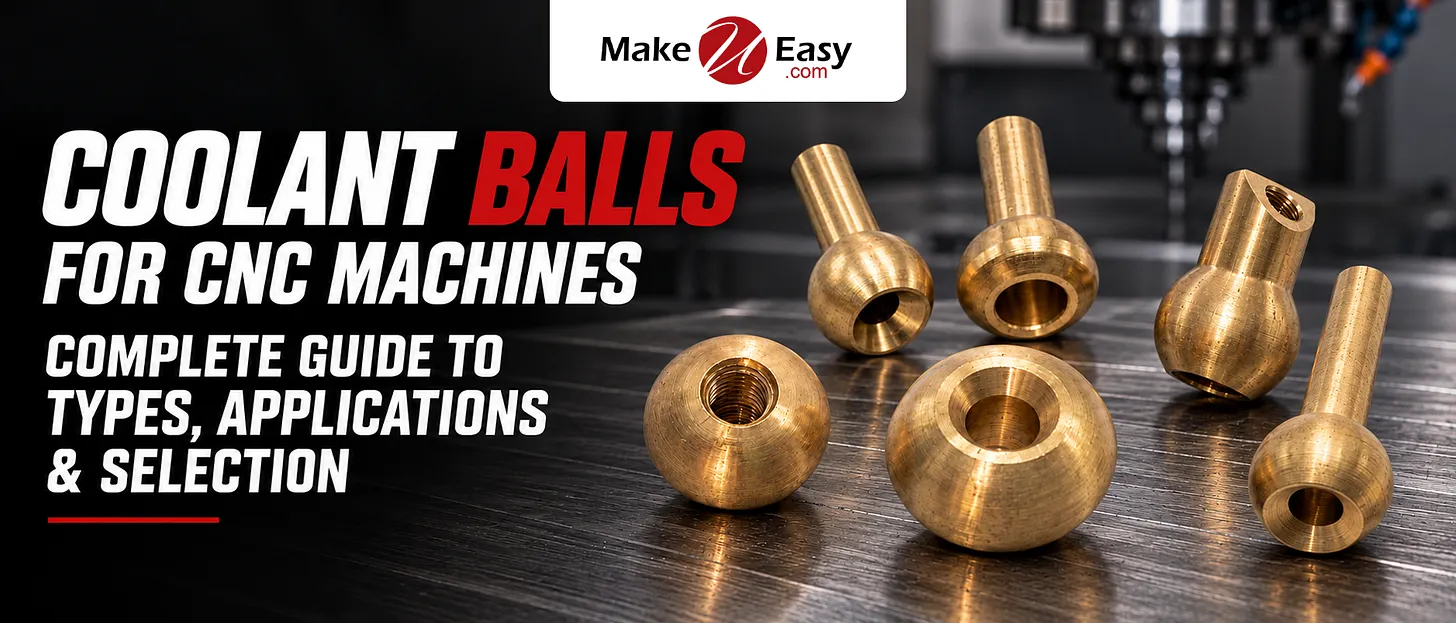
Coolant balls are adjustable, ball-shaped nozzle components or ball-and-socket fittings used in machine-tool coolant delivery systems. They allow the coolant outlet to swivel or change direction without requiring the entire connection to be removed.
Depending on the design, a coolant ball may connect directly to a threaded port, fit into a compatible socket, or form part of an adjustable nozzle assembly.
These components are commonly used on CNC lathes, vertical machining centers (VMCs), milling machines, and other machine tools that use liquid coolant.
Types of Coolant Balls for CNC Machines
Different designs suit different mounting arrangements, coolant requirements, and machining operations.
1. Adjustable Ball Coolant Nozzles
Adjustable ball nozzles allow the operator to change the coolant direction by swiveling the nozzle.
Key benefits:
-
Flexible coolant positioning.
-
Easy adjustment when changing tools or workpieces.
-
Improved ability to direct coolant toward the cutting zone.
Applications: CNC turning, milling, drilling, and general-purpose machining.
2. Ball-and-Socket Coolant Nozzles
These designs use a ball-and-socket connection that allows the nozzle to pivot into the required position. Some systems snap into a compatible machine-mounted socket.
Key benefits:
-
Convenient directional adjustment.
-
Secure positioning when properly fitted.
-
Quick installation and repositioning on compatible systems.
Applications: CNC machines with matching ball-socket coolant ports or nozzle holders.
3. Threaded Coolant Ball Nozzles
Threaded coolant nozzles connect to compatible threaded ports or adapters. The ball-shaped adjustment mechanism allows coolant direction to be changed while the assembly remains mounted.
Key benefits:
-
Direct installation on compatible connections.
-
Stable mounting when correctly fitted.
-
Suitable for installations requiring a compact nozzle assembly.
Applications: CNC turning centers, machining centers, and machine tools with threaded coolant outlets.
4. Single-Outlet Coolant Balls
Single-outlet designs direct coolant through one nozzle opening. They are useful when a concentrated stream is required at a specific cutting location.
Applications: Turning inserts, drilling operations, and individual cutting zones.
5. Multi-Outlet Coolant Ball Nozzles
Multi-outlet designs distribute coolant through two or more openings, depending on the model.
Key benefits:
-
Wider coolant coverage.
-
Multiple delivery directions from one assembly.
-
Potentially better coverage for suitable cutting setups.
Applications: Selected milling, turning, and drilling operations where more than one coolant stream is useful.
Note: Product terminology varies between manufacturers. Confirm the actual nozzle design, connection type, and pressure rating before ordering.
Benefits of Coolant Balls in CNC Machining
1. Improved Coolant Direction
Adjustable positioning helps direct coolant toward the cutting edge instead of allowing it to spray into an ineffective area.
2. Better Chip Removal
Correctly aimed coolant can help flush chips away from the cutting zone, reducing chip accumulation and the risk of recutting.
3. Support for Tool Life
Suitable coolant delivery can help control cutting temperatures and friction, supporting tool life when the cutting tool and process benefit from coolant.
4. Improved Machining Consistency
A stable coolant stream helps maintain consistent delivery during repeated operations, provided the nozzle remains correctly positioned.
5. Faster Setup Adjustments
Operators can reposition adjustable nozzles when changing tools, workpieces, or machining operations without rebuilding the entire coolant line.
6. Reduced Coolant Waste
Accurate coolant targeting can reduce unnecessary spraying outside the cutting zone. Actual savings depend on the machine’s coolant system and operating conditions.
Applications of CNC Coolant Balls
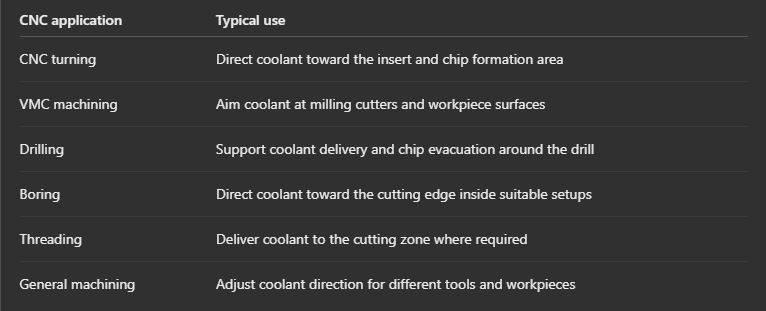
The best nozzle position depends on the tool geometry, cutting direction, workpiece material, and coolant delivery method.
How to Choose the Right Coolant Ball for a CNC Machine
Selecting a suitable coolant ball requires more than matching its external appearance.
1. Check the Connection Type
Identify whether the machine uses a ball-socket fitting, threaded port, or adapter. Confirm the thread standard and size, such as the applicable metric, NPT, or BSP connection.
2. Confirm the Coolant Pressure Rating
Choose a nozzle designed for the machine’s actual operating pressure. Standard adjustable nozzles and high-pressure coolant nozzles are not interchangeable unless their specifications permit the application.
3. Select the Correct Outlet Size
The outlet diameter influences flow rate and stream characteristics. Choose an opening that matches the pump capacity, coolant pressure, and required coverage.
4. Consider the Material
Coolant balls may use engineering plastics, metals, or combinations of materials. Select a construction compatible with the coolant chemistry, operating temperature, and workshop conditions.
5. Check Adjustment and Holding Strength
The joint should hold its position during machining. Excessive looseness can cause the coolant stream to drift, while an incompatible or overly tight connection may be difficult to adjust.
6. Consider the Machining Operation
A single outlet may suit a specific turning insert, while a multi-outlet arrangement may be useful for selected milling or drilling setups.
7. Verify Machine Clearance
Make sure the nozzle does not interfere with the tool, workpiece, chuck, turret, or machine enclosure throughout the programmed movement.
Common Coolant Ball Problems and Solutions
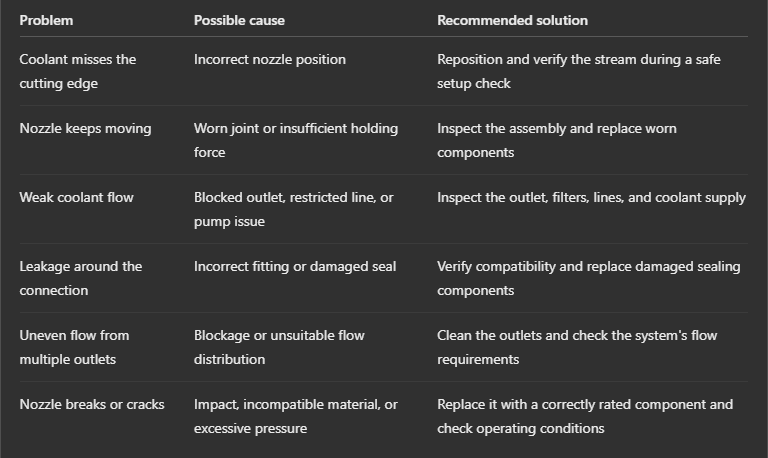
Always isolate the machine and follow the manufacturer’s safety procedure before removing, cleaning, or replacing a coolant nozzle.
Maintenance Tips for CNC Coolant Balls
-
Inspect the nozzle regularly for cracks, wear, and damaged connections.
-
Clean blocked outlets using an appropriate method that will not damage the nozzle.
-
Check for leakage around threads, seals, and ball-socket joints.
-
Confirm that the nozzle maintains its position during normal operation.
-
Keep the coolant supply clean and maintain filtration as specified by the machine manufacturer.
-
Replace damaged components rather than relying on temporary repairs.
-
Verify that the nozzle’s pressure and temperature ratings match the operating conditions.
Regular inspection helps maintain reliable coolant delivery and reduces avoidable setup interruptions.
Coolant Balls vs. Fixed Coolant Nozzles
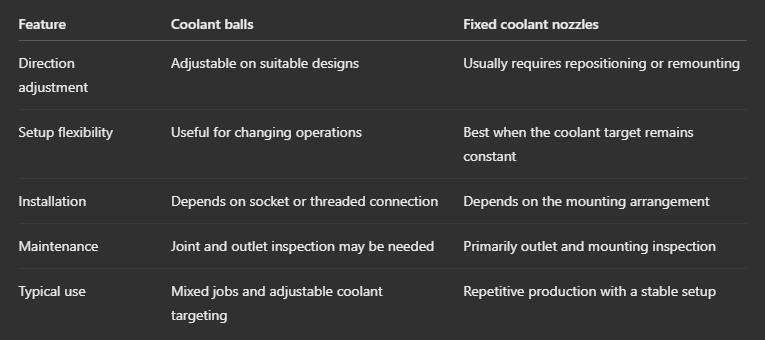
Neither design is universally better. A fixed nozzle may be ideal for a repeat production process, while an adjustable coolant ball can be more convenient when tool positions or machining requirements change frequently.
Why Choose MakeYouEasy?
MakeYouEasy supports manufacturing professionals with CNC cutting tools, tool holders, machining accessories, and technical resources for workshop requirements.
Selecting suitable accessories alongside the correct tooling and coolant setup can help manufacturers improve machining consistency and simplify routine operations.
Explore products and resources at MakeYouEasy.com.
Conclusion
Coolant balls are useful CNC machine accessories for directing coolant toward the cutting zone. Adjustable, ball-and-socket, threaded, single-outlet, and multi-outlet designs offer different installation and coolant-delivery options.
For the best results, verify the connection type, pressure rating, outlet size, material compatibility, and required coolant coverage before purchasing. Correct positioning and regular maintenance help maintain reliable coolant flow and support efficient machining.
Frequently Asked Questions
1. What is a coolant ball used for in a CNC machine?
A coolant ball allows the operator to adjust the direction of coolant flow toward the cutting tool or workpiece.
2. Are CNC coolant balls adjustable?
Yes, adjustable designs use a swivel or ball-and-socket mechanism to change the coolant direction.
3. Can coolant balls be used on CNC lathes and VMCs?
Yes, provided the nozzle’s mounting connection, dimensions, and operating ratings are compatible with the machine.
4. How do I choose the correct coolant ball size?
Check the mounting connection, outlet diameter, required coolant flow, operating pressure, and available clearance.
5. Can a coolant ball improve tool life?
It can support tool life when better coolant targeting improves temperature control, lubrication, or chip removal for the operation.
Popular Search Keywords
coolant balls for CNC machines, CNC coolant ball nozzle, adjustable coolant nozzle, ball-and-socket coolant nozzle, CNC lathe coolant nozzle, VMC coolant nozzle, CNC coolant accessories, threaded coolant nozzle, multi-outlet coolant nozzle, CNC coolant delivery system, machine tool coolant nozzle, coolant nozzle selection guide.
