Lathe Sleeve: Complete Guide to Types, Sizes, Applications & Selection
Author : Surya makeyoueasy | Published On : 26 Oct 2026
Introduction
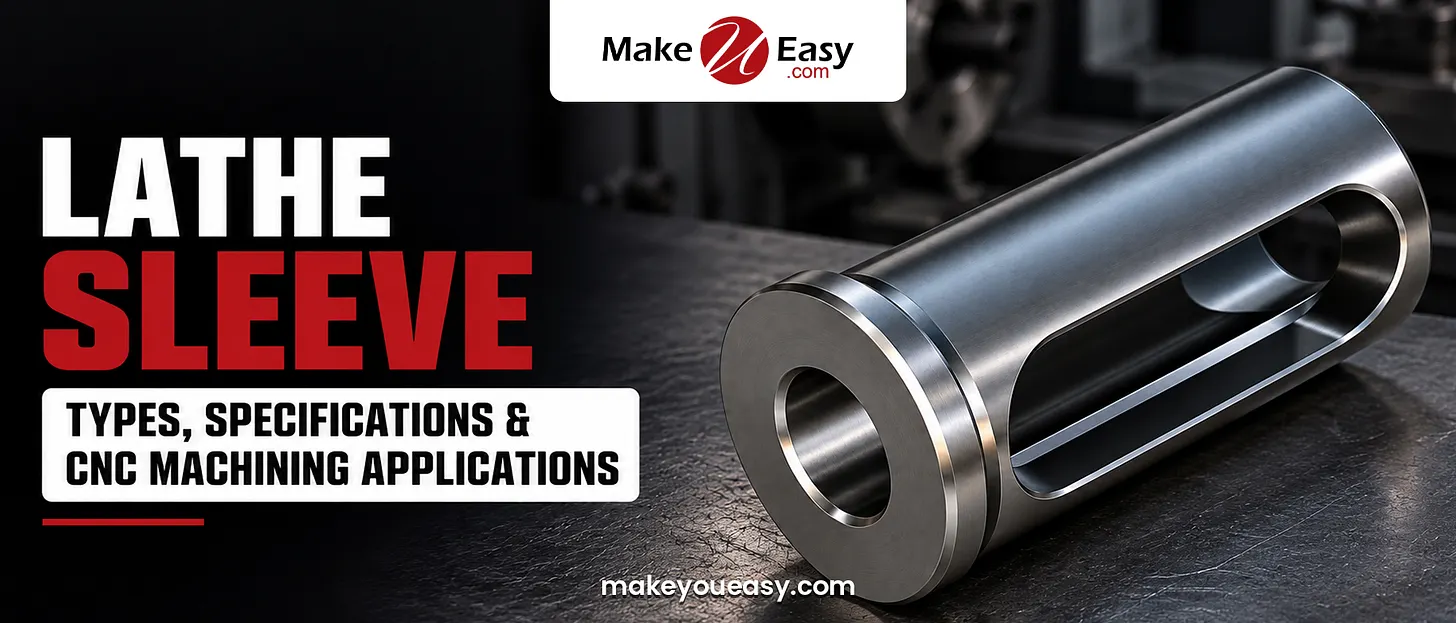
A lathe sleeve is a precision component used to adapt tool sizes, support bar stock, or connect compatible tooling interfaces in conventional and CNC lathe machines. The correct sleeve helps maintain tool alignment, improve stability, and expand the range of tools a machine can accommodate.
Lathe sleeves are available in different designs, materials, and dimensions depending on their purpose. Some fit smaller boring bars into larger turret bores, while others adapt Morse tapers or support bar stock passing through a spindle.
Understanding the types, sizes, and applications of lathe sleeves helps machinists select the right component for reliable machining performance.
What Is a Lathe Sleeve?
A lathe sleeve is a cylindrical or tapered component installed between compatible machine parts, tools, or workholding systems. Its exact function depends on its design.
Common purposes include:
-
Adapting a smaller tool shank to a larger toolholder bore.
-
Fitting a smaller Morse taper into a larger taper socket.
-
Supporting bar stock inside a CNC lathe spindle.
-
Improving tool positioning and reducing unwanted movement.
-
Allowing existing toolholders to accommodate different tool sizes.
Important: A turret reducing sleeve and a spindle liner serve different purposes. Always identify the sleeve’s intended application before selecting its dimensions.
Types of Lathe Sleeves
1. CNC Turret Sleeve
A CNC turret sleeve, also called a toolholder sleeve or bushing, fits into a turret station or compatible toolholder bore. It allows tools with smaller shanks to be mounted in larger standard bores.
Applications:
-
Holding boring bars and drills.
-
Adapting straight-shank tools.
-
Supporting tool changes across different machining jobs.
-
Maintaining suitable tool positioning in CNC turning centers.
Turret sleeves are commonly made from hardened steel and precision-ground to provide an accurate fit and durability.
2. Reducing Sleeve
A reducing sleeve adapts a larger internal bore to a smaller tool diameter. Depending on its design, it may use clamping screws, slots, or a split body to secure the tool.
For example, a sleeve with a 40 mm outside diameter and a 25 mm inside diameter can adapt a compatible 40 mm holder bore to a 25 mm tool shank.
Applications: boring bars, straight-shank drills, reamers, and other compatible tools.
The sleeve must match the holder and tool dimensions, clamping arrangement, and required center height.
3. Morse Taper Sleeve
A Morse taper sleeve adapts two compatible Morse taper sizes. It typically has a male external taper that fits the machine socket and a female internal taper that accepts the tool.
Examples include MT4-to-MT3 and MT3-to-MT2 reducing sleeves.
Applications:
-
Mounting taper-shank drills.
-
Adapting compatible taper-shank tools.
-
Using smaller taper tools in larger taper sockets.
Check the exact taper sizes, sleeve length, and removal method before installation.
4. Spindle Sleeve or Spindle Liner
A spindle liner is installed inside the spindle bore of a CNC lathe to support bar stock as it passes through the machine. It reduces excessive clearance between the bar and the spindle bore.
Applications:
-
Bar-fed CNC turning.
-
Automatic lathe production.
-
Long-bar machining.
-
Reducing bar vibration and improving machining consistency.
Spindle liners may be manufactured from engineered polymers, metal, or other application-specific materials. Their suitability depends on the machine, bar diameter, spindle speed, and liner design.
5. Eccentric Sleeve
An eccentric sleeve has an offset internal bore that allows limited adjustment of the tool axis relative to the sleeve’s outside diameter.
Applications:
-
Correcting certain tool alignment differences.
-
Adjusting the position of compatible drills in a turret.
-
Supporting specific setup and alignment requirements.
Eccentric sleeves have limited adjustment ranges and must be installed according to the manufacturer’s instructions.
Lathe Sleeve Sizes and Dimensions
Lathe sleeves do not follow one universal size chart. Dimensions depend on the sleeve type, machine interface, and manufacturer.
For CNC turret sleeves, common outside diameters include 20 mm, 25 mm, 32 mm, 40 mm, and 50 mm. Compatible inside diameters may include 6 mm, 8 mm, 10 mm, 12 mm, 16 mm, 20 mm, 25 mm, 32 mm, and 40 mm, depending on the product range.
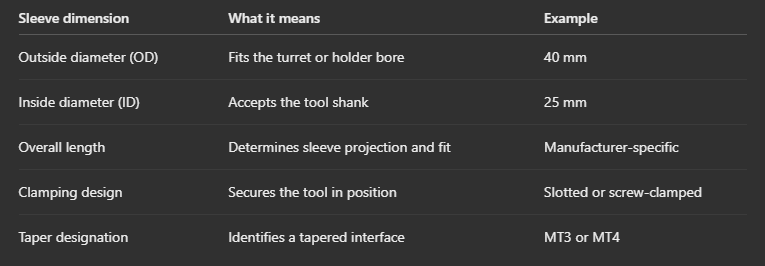
These are illustrative examples, not universal specifications. Confirm the exact dimensions and tolerances using the machine and sleeve manufacturer’s documentation.
Applications of Lathe Sleeves
CNC Turning
Turret sleeves allow compatible tools of different shank diameters to be used in existing turret stations, reducing the need to purchase separate holders for every tool size.
Internal Boring
Reducing sleeves help fit smaller boring bars into larger compatible holder bores. Correct fit and secure clamping are especially important because excessive movement can affect bore accuracy and surface finish.
Drilling Operations
Morse taper sleeves allow compatible taper-shank drills to fit larger taper sockets. Straight-shank drills may instead require a suitable chuck or shank sleeve.
Bar-Fed Machining
Spindle liners support bar stock passing through the spindle, helping limit vibration caused by excessive clearance. Correct sizing is particularly important for long bars and high-speed production.
How to Select the Right Lathe Sleeve
Step 1: Identify the application. Decide whether you need a turret sleeve, reducing sleeve, Morse taper sleeve, or spindle liner.
Step 2: Measure the interface. Confirm the holder bore or machine socket and the tool shank or bar diameter.
Step 3: Check the sleeve length. Ensure that the sleeve fits the available space and does not create unnecessary tool projection.
Step 4: Verify clamping compatibility. Check whether the sleeve requires set screws, a split clamping arrangement, a taper lock, or a dedicated adapter.
Step 5: Consider precision requirements. Inspect dimensional tolerances, concentricity, surface finish, and material specifications for demanding machining operations.
Step 6: Check machine compatibility. For spindle liners, verify the lathe model, liner adapter, bar diameter, rotational speed, and manufacturer’s installation requirements.
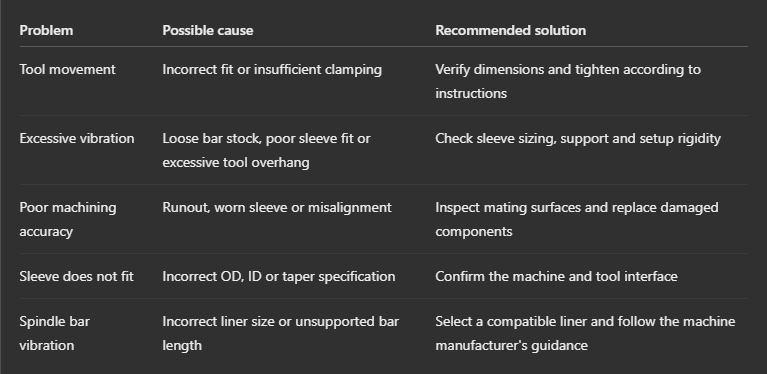
Common Lathe Sleeve Problems and Solutions
Why Choose MakeYouEasy?
MakeYouEasy provides CNC tooling information and machining resources to help manufacturing professionals understand toolholding components and select suitable equipment for their applications.
Understanding sleeve dimensions, tool compatibility, and machining requirements helps reduce setup errors and supports consistent production.
Explore machining resources at MakeYouEasy.com.
Conclusion
Lathe sleeves help adapt tool sizes, connect compatible taper interfaces, and support bar stock in CNC turning applications. Turret sleeves and reducing bushings are useful for toolholding; Morse taper sleeves adapt taper-shank tools, and spindle liners support bar-fed machining.
The correct selection depends on the application, outside and inside diameters, length, clamping design, and machine compatibility. Always verify the manufacturer’s specifications before installation.
Frequently Asked Questions
1. What is a lathe sleeve used for?
A lathe sleeve adapts tool sizes or interfaces or supports bar stock inside a lathe spindle, depending on its design.
2. What is the difference between a lathe sleeve and a spindle liner?
A lathe sleeve may adapt a tool or taper, while a spindle liner supports bar stock passing through the spindle bore.
3. What are common CNC turret sleeve sizes?
Common outside diameters include 20, 25, 32, 40, and 50 mm, although availability and compatible inside diameters vary by manufacturer.
4. How do I choose the correct lathe sleeve size?
Match the sleeve’s outside diameter to the holder bore and its inside diameter or taper to the tool interface.
5. Can a lathe sleeve improve machining accuracy?
A correctly fitted sleeve can support proper alignment and reduce unwanted movement, but accuracy also depends on tool condition, clamping, machine rigidity, and setup quality.
Popular Search Keywords
lathe sleeve, CNC lathe sleeve, lathe sleeve types, lathe sleeve sizes, CNC turret sleeve, lathe reducing sleeve, boring bar sleeve, Morse taper sleeve, lathe toolholder bushing, lathe sleeve selection guide
