Key Factors to Consider When Buying Fiber Network Equipment
Author : HitokaCece HitokaCece | Published On : 17 Sep 2026
Start With the Network Architecture
The first step is to understand where the equipment will be installed and what role it will perform.
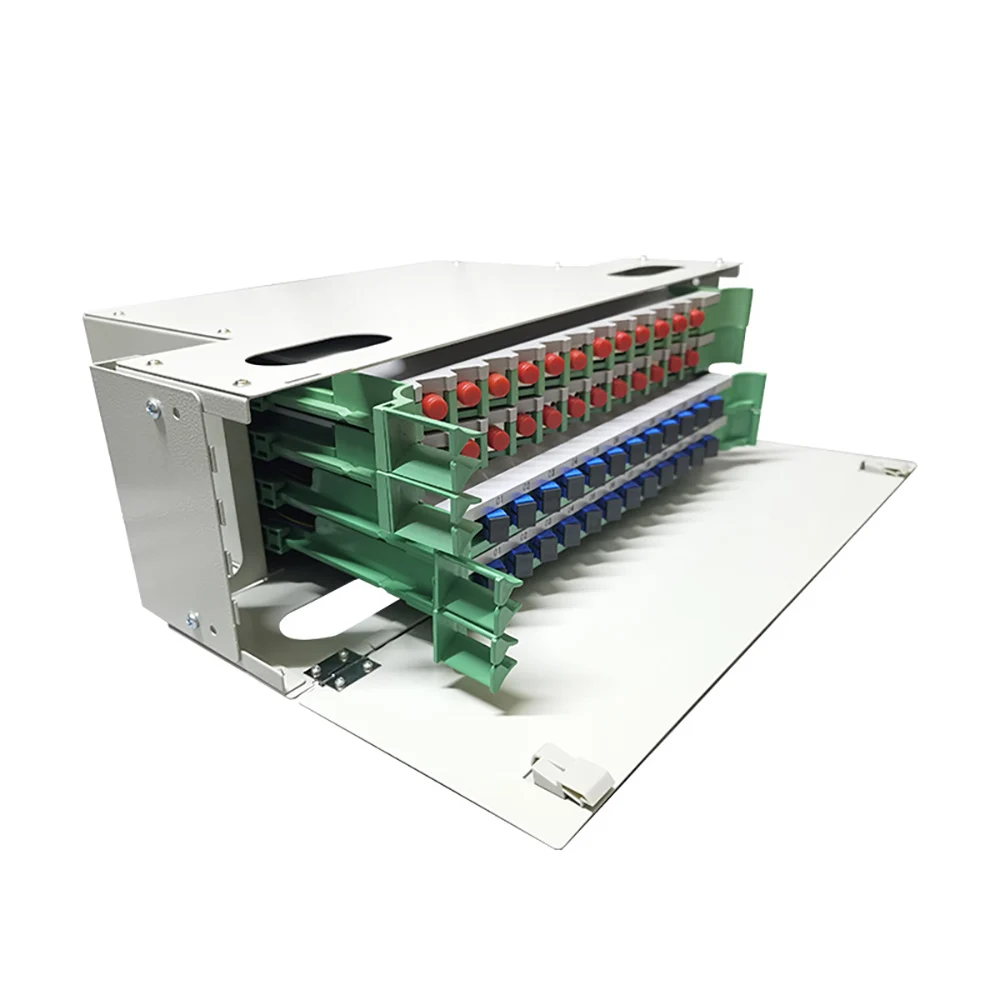
A centralized telecom facility may require an ODF or larger fiber cabinet, while a field access point may require a compact distribution box or access terminal.
Outdoor network nodes can introduce additional environmental requirements.
Defining the equipment's position within the network helps narrow down the appropriate product category.
Determine Fiber Capacity
Fiber count is one of the most important procurement specifications.
Buyers should determine how many fibers need to be terminated, spliced, distributed, or connected. Future expansion should also be considered where appropriate.
The objective is to provide sufficient capacity without unnecessarily increasing equipment size and cost.
Consider the Installation Environment
Indoor and outdoor equipment may have very different requirements.
Outdoor installations can face moisture, dust, temperature changes, sunlight, and physical exposure. Indoor equipment may place greater emphasis on rack compatibility, accessibility, and cable management.
Procurement specifications should therefore clearly describe the installation environment.
Review Cable Management
Fiber cables require careful handling. Excessive bending, poor routing, and difficult access can complicate maintenance.
Buyers should review how cables enter the enclosure, how fibers are routed internally, and how technicians can access connection or splice areas.
Good cable organization can be especially valuable in large installations where many connections are managed simultaneously.
Think About Maintenance
The initial installation is only one part of the equipment lifecycle. Technicians may need to test connections, replace components, add new fibers, or troubleshoot network problems later.
Equipment should therefore be selected with maintenance access in mind.
Clear labeling and organized internal layouts can reduce the time required for future work.
Evaluate Suppliers Carefully
B2B buyers should compare suppliers using both commercial and technical criteria.
Relevant factors may include product specifications, drawings, customization capabilities, quality-control processes, lead time, packaging, communication, and order requirements.
Instead of sending only a product name, buyers can provide detailed project requirements to obtain more useful quotations.
Companies researching optical network equipment suppliers can also review GLGW Network as part of their supplier evaluation process.
Avoid Choosing Equipment Based Only on Price
The cheapest initial quotation may not necessarily provide the most practical solution for the entire project.
Buyers should consider installation effort, maintenance requirements, expected expansion, compatibility, delivery, and long-term usability.
A slightly different configuration may sometimes provide better practical value if it reduces installation complexity or provides more appropriate capacity.
Conclusion
Buying fiber network equipment requires a clear understanding of network architecture, fiber capacity, installation conditions, cable management, maintenance, and supplier capabilities.
Whether a project requires a Fiber Distribution Box, ODF, Fiber Cabinet, Fiber Access Terminal, Fiber Splice Closure, Outdoor Fiber Cabinet, or Network Cabinet, procurement teams can make better decisions by defining the application before comparing individual products.
A structured purchasing process helps ensure that the selected equipment matches the physical and operational requirements of the network while leaving room for practical future development.
