Janmashtami Décor at Home: A Spiritual Styling Edit
Author : Aakriti Art Creations | Published On : 24 Aug 2026
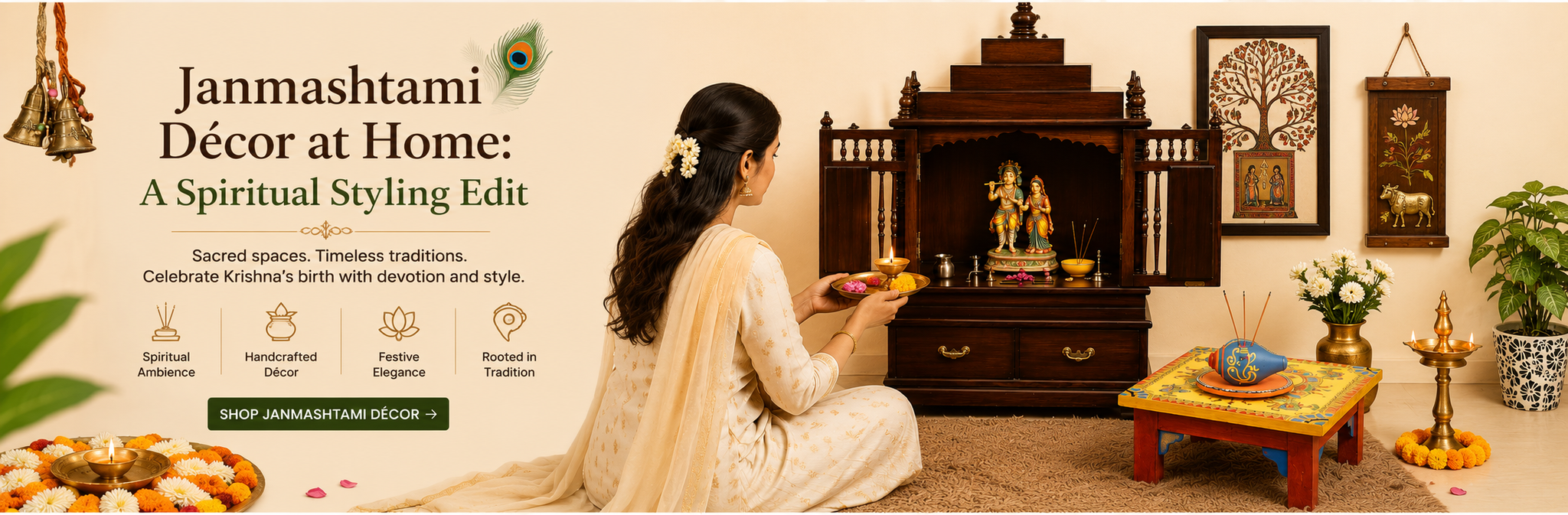
Janmashtami is the quietest of the big festivals. There are no fireworks on the street, no crowd gathered outside. The celebration happens indoors: the small brass jhula for baby Krishna, the diya lit at midnight, the sweets shaped like his favourites arranged on a plate.
This guide is for anyone looking to buy spiritual items online for a proper Janmashtami, the kind of pieces that make the pooja corner feel like Krishna has actually come home, and that stay part of the household long after the festival.
The Krishna Iconography in Indian Homes
The image of Krishna is one of the most widely loved in the Indian household. The baby Krishna reaching for butter. The young Krishna with a flute. Radha and Krishna together. The Krishna with peacock feather in his crown.
Each carries a different mood, and homes tend to choose the one that reflects their own relationship with him. For Janmashtami specifically, baby Krishna, known as Bal Gopal, is the traditional focal point. A small brass or silver Bal Gopal idol, placed at the pooja corner or in a small jhula, becomes the household's centre for the day.
A Small Jhula for Baby Krishna
The small painted jhula, usually 8 to 14 inches wide, is the visual heart of a Janmashtami home.
Choose a jhula with cushioned interior and a small idol platform. Traditional jhulas come in brass or hand-painted wood; both work beautifully. The larger household swings that carry adults are a separate thing entirely. The Janmashtami jhula is small, meant for the deity alone.
Rock the jhula gently through the day. It is one of the small rituals that makes Janmashtami feel present rather than performed. When you buy spiritual items online for the festival, the small jhula is the single piece worth prioritising above all else.
Brass Diyas and Tealights for the Pooja Corner
The pooja corner is the second focal point. Light layers here matter.
Around the Bal Gopal idol or jhula, arrange a set of small brass diyas, three to five at floor and low-shelf level. Add a single larger brass lamp for a continuous flame through the evening, and a set of tealight holders for lower ambient light. The multi-height flame arrangement is the visual language of a considered Indian pooja corner.
Any thoughtful janmashtami decoration begins with getting the light right, since every other element reads better once the flame is settled. For lighting the corner beyond the diyas, choose a warm pendant or a small wall lamp, never overhead or cool white. Warm 2,700K light supports the ritual mood, and it's the single most cost-effective spiritual home decor online purchase you can make for the corner.
Wall Art Featuring Krishna
The wall behind the pooja corner is the third opportunity.
Traditional Krishna paintings, Pichwai in particular, belong in Janmashtami-ready homes. Pichwai are cloth paintings from Nathdwara depicting scenes from Krishna's life, and they're among the most collectable Indian devotional art forms.
For those without a Pichwai, a smaller Madhubani depicting Krishna, a hand-drawn Radha-Krishna print, or a brass Krishna wall medallion all work well. Frame the piece so it sits at eye level when you're standing before the pooja corner, roughly 60 inches off the floor. Beyond Janmashtami, this Krishna wall art becomes part of your krishna decor for home year-round. It doesn't need to come down after the festival.
Sweets-Ready Dining and Platters
The Janmashtami sweet plate is its own small aesthetic.
Peda, laddoo, misri (rock sugar), and shrikhand are the traditional offerings. Serve them on a brass thali or a small wooden platter at the pooja corner as bhog for Krishna first, then to the household after midnight.
Beside the platter, place a small silver or brass tumbler of milk, Krishna's favourite, and a bowl of butter for the traditional touch. Keep the platter simple. The Janmashtami sweet plate reads best when it looks like a family offering, not a display. Bring the same feel to the main dining table for the pre-fast or post-fast meal: simple linen runners, brass bowls for the traditional dishes, a small diya at the centre.
Storing Festive Décor with Care
Janmashtami décor comes out once a year. Storing it well ensures it looks fresh next August.
Brass items: wipe clean of any wax or ash, wrap in soft cotton cloths and store in dry cupboards. A light beeswax polish before packing prevents tarnish through the monsoon-adjacent months. The small jhula: dust carefully, remove the cushion for separate storage, wrap the wooden or brass frame in soft cloth. Store upright to avoid crushing the frame.
Idols: wrap each individually in soft cotton, store in a padded box. Silver and brass idols benefit from a light polish before packing. Paintings: keep flat, out of direct light, in a dry cupboard. Never roll a valuable painting for storage. Good pooja room decor pieces are heirlooms. Handle the storage as carefully as the display.
Frequently Asked Questions
What is the significance of a Krishna jhula?
The jhula (or hindola) represents the swing on which mother Yashoda rocked baby Krishna in Gokul. Placing a jhula for baby Krishna at Janmashtami and rocking it through the day recreates that maternal gesture, one of the most intimate rituals in Indian devotional practice.
Which idol material is auspicious?
Silver, brass and eight-metal (ashtadhatu) idols are all considered auspicious for Krishna. Silver is the most traditional; brass is the most practical for daily care; ashtadhatu is the rarest and most collected. Avoid iron and cheap plated metals for pooja use.
How do I light a pooja corner safely?
Keep the diya on a heat-safe surface, a brass tray or ceramic tile works well. Never place the flame directly beneath a wooden shelf or fabric hanging. Keep at least 12 inches of clear space above the flame. Extinguish with a snuffer rather than blowing out, since blowing out is considered inauspicious in most traditions.
Can I use brass and silver together in the pooja corner?
Yes. Mixing brass and silver is traditional and visually rich, and the warm brass plays beautifully against the cool silver. Copper works with both as a third accent. Avoid mixing steel or aluminium into the pooja arrangement, since the industrial finishes read against the ritual.
How long does the décor stay up?
The Janmashtami-specific pieces (the jhula, the Bal Gopal on the swing) typically stay up for the day of Janmashtami and the following day, then are ceremonially wrapped and stored. Year-round pieces, like the pooja corner brass, Krishna paintings and the temple, stay in place. The rhythm is deliberate: festival intensity, then quiet return.
Shop Janmashtami décor at Aakriti. Discover the spiritual collection, our temples, swings and lighting, handcrafted Indian pieces designed for the pooja corner that welcomes Krishna every August. When you buy spiritual items online with Aakriti, you're choosing pieces that carry the ritual forward, year after year, generation after generation.
