Inverter Testing Services in India for Efficiency, Harmonics and Abnormal Operation
Author : acetest acetest | Published On : 09 Oct 2026
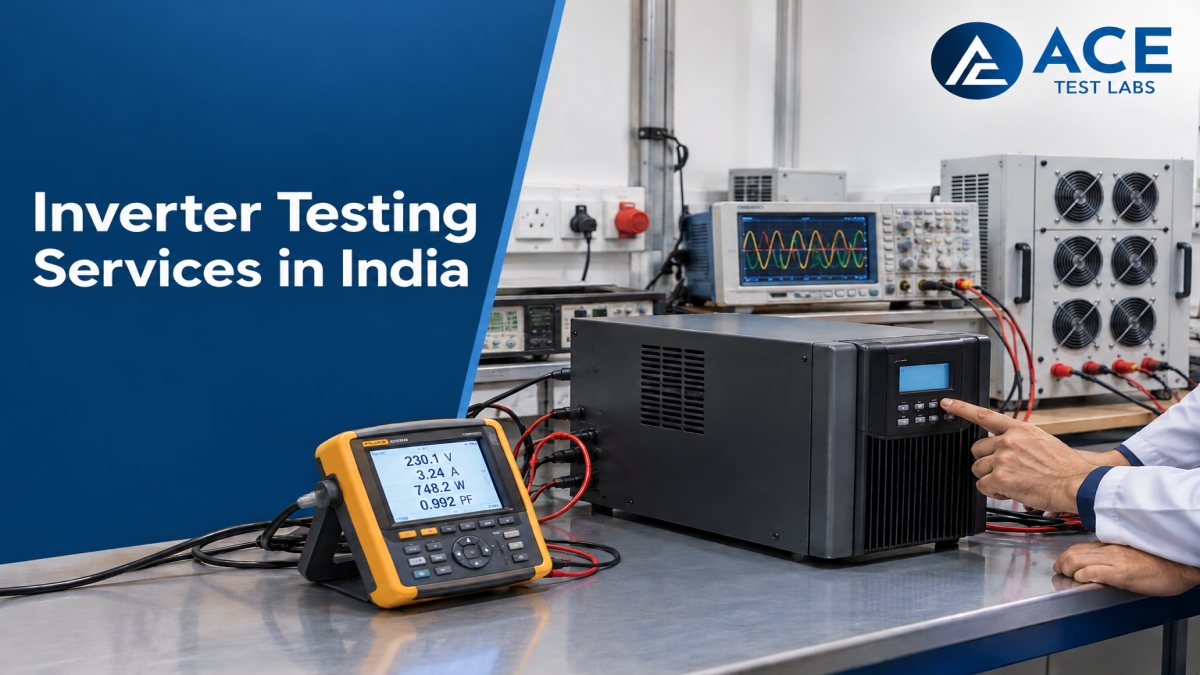
An inverter that looks fine on a datasheet can still fail when it sees real loads and an unstable grid. Inverter testing services check that gap before the product gets to a buyer, including conversion efficiency, what distortion gets fed into connected equipment, and behaviour when something goes wrong.
For Indian manufacturers of household, solar or industrial inverters, this evaluation answers three questions: does the unit perform as claimed, is it safe under fault conditions and does it meet the applicable regulatory expectations. Independent inverter testing services provide that answer, before a regulator, installer or customer learns the hard way.
What Does Inverter Testing Check Under Abnormal Operating Conditions?
A well-designed inverter will be predictable under normal load. The harder question is what it does when things stop being normal: a downstream short circuit, a sudden loss of grid supply, or an overload that runs longer than the design anticipated. For manufacturers seeking inverter testing services in India, the inverter abnormal operation test helps determine whether the unit isolates the fault safely or continues to draw current in a way that may cause damage.
This is more important for solid state inverter testing than for simpler equipment because semiconductor switching components can fail in ways not obvious from the outside. A part that is suffering from thermal degradation may still pass a basic functional test and carry a latent flaw.
How Is Inverter Efficiency and Harmonic Distortion Tested?
Inverter efficiency testing measures how much of the input power is converted to usable electricity on the output and how that varies over the load range. A single efficiency figure does not tell the whole story. An inverter may perform well at one load level but lose efficiency when the load becomes very light or very heavy.
Inverter harmonics testing, which tests the cleanness of the output waveform. Switching rapidly from DC back to AC can cause distortion that heats connected motors and transformers, interferes with sensitive electronics, and, in grid-tied systems, creates compliance problems with the utility. Together with wider energy efficiency testing services, this gives a fuller picture than either figure in isolation.
How Do Testing Requirements Differ for Home, Solar and Industrial Inverters?
Not all inverters do the same job, so testing priorities will change. The main criteria for a home backup inverter, normally used in conjunction with a battery to keep Household Appliances running during a power cut, are safety, reliable switchover and stable output, and household appliances testing services help verify each of these before the product reaches the market.
Grid-connected solar inverters are scrutinised more closely as they are directly linked to the utility network. Therefore, the assessment is based on conversion efficiency under varying sunlight, harmonic behaviour and grid-disturbance response. For industrial inverters, which are typically larger and often operate continuously, the thermal performance is evaluated over time with almost constant duty.
Which BIS Standards Apply to Inverter Testing in India?
Before the testing begins, it is good to know which Indian Standard applies, as not all inverters are covered under the same. IS 16242 (Part 1) generally covers household and commercial UPS-type inverters and addresses general and safety requirements under BIS's Compulsory Registration Scheme. Grid-connected solar inverters are different, safety is based on the IS 16221 series, and energy performance is measured against IS 17980, in line with IEC 62891. The picture has been changing as well: reports say grid connected solar units up to a specified capacity were put under mandatory BEE labelling from January 2026, in addition to existing BIS obligations, though manufacturers should check the current applicability with BEE and BIS directly.
Testing the inverter BIS, an applicable IS registration and a formal certification are two different stages and not one combined step, and considering the stages as interchangeable is a common cause of delay. Since a report from an unrecognised source will not support a registration application it is worth confirming the testing facility works within a recognised, BIS approved testing lab framework for the product category.
What Should You Check Before Choosing an Inverter Testing Lab?
There are a few things to consider before deciding where to test:
- Whether the accreditation actually covers the specific inverter category and rating.
- Confirmation that the applicable Indian Standard and its latest revision have been identified correctly
- The speed of delivery of draft reports and non-conformance findings to the design team
- whether the efficiency and safety tests can be performed under one contract
Why Choose Ace Test Labs for Inverter Testing?
Ace Test Labs is an independent laboratory that supports manufacturers through this evaluation, with the test reporting based on the laboratory’s NABL accreditation and ISO/IEC 17025 alignment. It is at the testing stage: telling a manufacturer where a design meets the relevant efficiency, safety and abnormal-operation parameters, and where it does not, before it becomes a market problem. Household, solar and industrial manufacturers can contact the lab to find out which standards apply before settling on a timeline.
Conclusion
An inverter can meet its specifications on paper and still behave differently once it is installed and exposed to real operating conditions. Testing helps identify those gaps in efficiency, harmonic performance and abnormal-operation response before they become a problem. The time is now to get the applicable standard right, and to choose a lab that separates testing from registration and certification. This will save time later.
Request inverter testing from Ace Test Labs.
