Into the Land That Time Forgot: A Trek Journal from the Heart of Dolpo
Author : Places Nepal | Published On : 11 Jun 2026
Friends had warned me that western Nepal was "too remote," that the flights were unreliable, that the trails were rough and the teahouses sparse. One well-meaning colleague even printed out a map and circled Dolpo with a red pen, as if marking forbidden territory. I studied that map for weeks before my departure, tracing the thin pencil lines of trails that wound through valleys with names I couldn't yet pronounce. Suligad. Phoksundo. Ringmo. They sounded less like places and more like incantations.
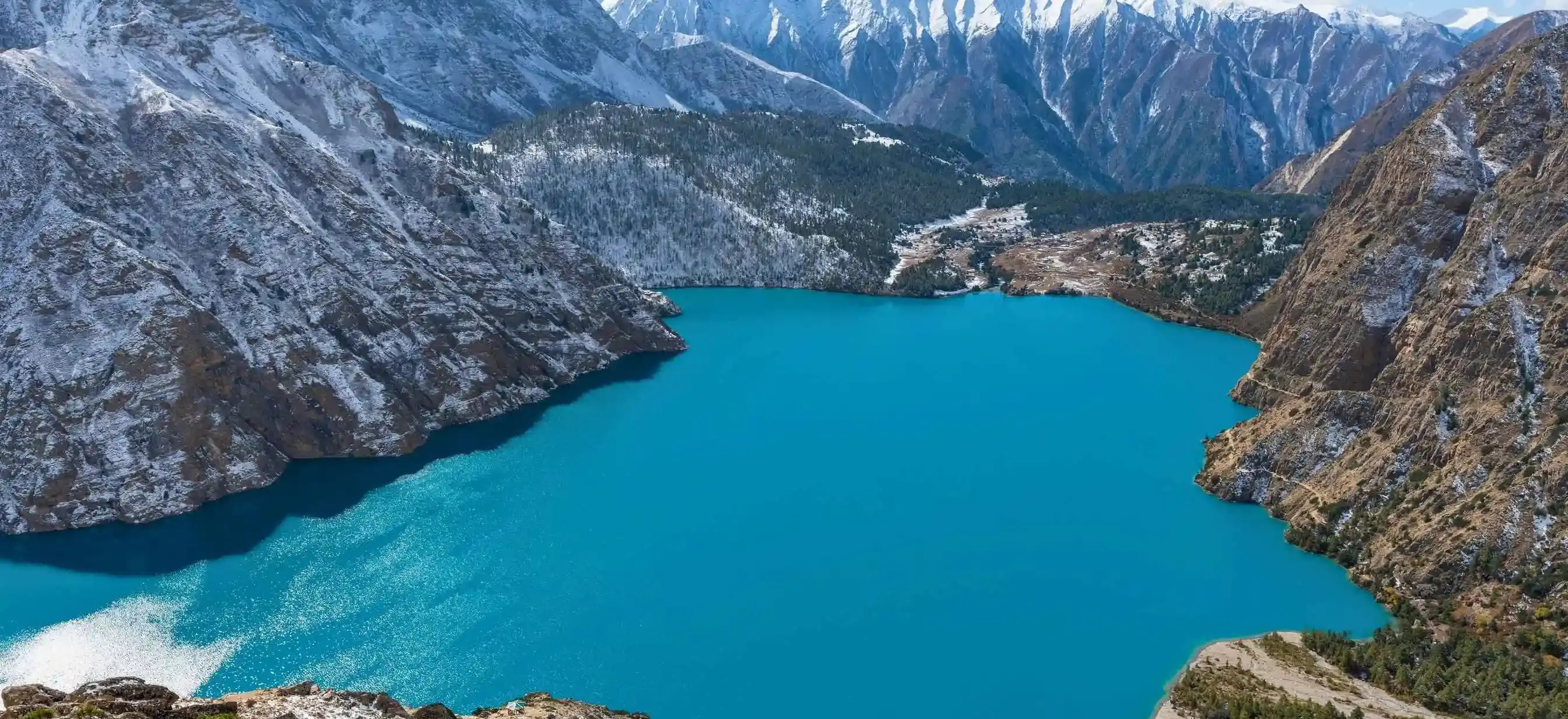
Standing now on the rocky shore of a lake so impossibly turquoise it looks like something a painter invented on a good day, I am deeply grateful I ignored every word of that advice.
Day Zero: The Night Before in Nepalgunj
Nepalgunj is not the kind of city that appears on inspirational travel posters. It is flat, warm, and bustling in the particular chaotic way of Terai towns — motorcycle horns, the smell of frying oil, stray dogs navigating between food carts with more grace than most pedestrians. I arrived on an evening flight from Kathmandu, and our small group gathered over dinner at the hotel. There were five of us: a retired schoolteacher from Edinburgh named Harriet, two German engineers on holiday, a quiet New Zealander called Marcus who said almost nothing over food but laughed frequently, and me.
Our guide, Lakpa, joined us for dinner and spread a hand-drawn map across the table. "We fly to Juphal tomorrow," he said, tapping the paper. "Then we walk into Dolpo." He said it plainly, as if we were commuting to an office. But the way his eyes lit up told a different story.
That night I lay on top of the hotel bedsheet in the heat, reading what I could about the Bon-Po faith — the pre-Buddhist spiritual tradition that still pulses through Dolpo's villages like an underground river. I fell asleep with the book on my chest and dreamed of mountains I had not yet seen.
Day One: The Flight to Juphal and the First Steps
The mountain flight to Juphal is not for the faint-hearted. The Twin Otter bounced between ridgelines like a stone skipping across water, and when we dropped suddenly into a valley, Harriet grabbed my forearm hard enough to leave a mark. Then the plane levelled, the clouds parted, and below us spread a landscape so vast and vertical it seemed to belong to a different planet entirely.
Juphal's airstrip is a single narrow gash in the hillside at 2,475 metres. The moment you step off the plane, the air feels different — thinner, yes, but also cleaner, as though it has been scrubbed by altitude and distance from anything urban. We shouldered our daypacks while the porters organized the duffel bags, and Lakpa led us down the first switchback toward the Bheri River valley.
The descent to Dunai takes roughly two to three hours. The trail drops through terraced farmland, past stone houses with flat roofs strung with drying chillis and prayer flags. Children ran alongside us for brief stretches before peeling off into doorways. A woman carrying a basket of firewood paused to watch us pass, not with the curiosity reserved for rare sightings, but with the quiet acknowledgment of someone accustomed to the occasional outsider moving through her landscape.
I wrote in my journal that first evening: "Dunai feels like a town at the edge of a sentence that hasn't been finished yet."
Day Two: Entering the National Park
Crossing into Shey Phoksundo National Park means crossing a suspension bridge over the Thuli Bheri River — a moment that felt deliberately ceremonial, even if it wasn't. The roar of the river below, the slight sway of the bridge underfoot, the rock walls of the gorge rising on either side. You feel the threshold of something.
The forest on the other side changed the quality of the air again. Blue pine and spruce closed over the trail, and the light shifted from the flat clarity of open hillsides to something more dappled and mysterious. We passed through the gorge near Byasgad, where the trail narrows to a ledge carved into the cliff face and the river churns white far below.
Marcus, who had barely spoken since Nepalgunj, suddenly said: "I feel like we've been swallowed by something."
He was right. The landscape wasn't scenic in the way that postcards are scenic. It was immersive in a way that made the outside world feel genuinely distant — not as an escape fantasy, but as a simple geographic fact. We were, by any practical measure, a long way from anywhere else.
We reached Chhepka by mid-afternoon, a small settlement where our teahouse was run by a woman named Diki who served us sweet milk tea and a plate of potatoes fried with turmeric. I ate two helpings and sat outside watching the valley shadows lengthen until Lakpa called us in for dinner.
Day Three: The Waterfall and the Climb Toward the Lake
The third day of walking brought the waterfall — Jharana, a dramatic cascade that drops hundreds of metres off a cliff face and fills the valley with a constant low roar. We stopped there for lunch, spreading out on flat rocks in the spray-mist while Harriet photographed it from every possible angle and declared it the most beautiful thing she had seen in thirty years of travel.
I believed her.
The afternoon climb toward the lake's altitude passed through winter pastureland belonging to Ringmo's farmers — broad rolling meadows where yaks grazed among wildflowers. The sky was enormous up here, the kind of sky that makes you aware of the curvature of the earth. We began to see birch trees for the first time, their white trunks almost luminescent against the darker slopes.
Lakpa pointed ahead and said simply: "Tomorrow, the lake."
Day Four: Ringmo and Phoksundo Lake
There is a moment, rounding the final hillside above Ringmo village, when the lake appears.
I had seen photographs. I had read descriptions. None of it prepared me.
Phoksundo Lake sits at 3,611 metres, a body of water so extraordinarily coloured — somewhere between turquoise and jade and the particular blue of a glacier — that your first instinct is to question your own eyes. The lake does not look like water. It looks like a gemstone that has been placed with great care into the folded brown rock of the Kanjiroba Himalaya.
The village of Ringmo clings to the hillside above the eastern shore — a tight cluster of stone buildings, prayer wheels, and drying fodder. The people here are largely followers of the Bon-Po tradition, and you can feel the antiquity of the place in the carved wooden doorways and the rhythms of daily life that seem calibrated to the seasons rather than any clock.
We spent two full days at the lake. On the first, we sat on the shore in the afternoon light and did very little. Harriet sketched. Marcus finally talked — at length, actually, about his father who had always wanted to come to Nepal and never managed it. The two German engineers, Tobias and Stefan, hiked up to a viewpoint above the village and came back glowing, reporting that from up there the lake looked like it had been painted by someone working under divine instruction.
On the second day, we visited Thashung Gompa, the ancient monastery perched on the cliff above the lake's edge. A monk there gave us tea and showed us a collection of thangkas — painted scroll paintings — that were centuries old, their colours still bright despite everything time had thrown at them. He spoke no English, but Lakpa translated the essential things: the history of the monastery, the importance of the lake to Bon-Po practice, the way the local people still believe the lake is inhabited by a deity who should be respected rather than exploited.
I thought about that on the walk back to the teahouse. Respected rather than exploited. There's a lesson in there somewhere for all of us who travel.
The Return: A Different Way of Seeing
The walk back out of Dolpo follows the same trail in reverse, and I had worried this would feel anticlimactic — retracing steps, seeing the same gorges and forests from the other direction. But it didn't feel that way at all.
Walking out, I noticed things I had missed on the way in: a tiny shrine built into a crack in a cliff face, the particular angle of afternoon light on the Bheri River, the sound the wind makes in the blue pines just before rain. Outward journeys are for looking ahead. Return journeys are for looking at what you missed.
On the last night in Dunai, over dinner, Lakpa mentioned that for those who want to go further — much further — the Upper Dolpo Circuit Trek extends deep into restricted territory beyond the lake, looping through high passes and ancient trading routes all the way to the Tibetan plateau. A 24-day journey into what remains one of the most isolated and culturally intact regions on Earth.
"Next time," I said.
Lakpa smiled the way someone smiles when they know you mean it.
What I Brought Home
Not photographs, primarily — though I have hundreds. Not the journals, though I filled two of them. What I brought home was something harder to name: a recalibrated sense of scale, perhaps. An appreciation for silence. The memory of a lake so improbably beautiful that my brain still reaches for it when the noise of ordinary life gets too loud.
Dolpo is not an easy place to reach. That is precisely the point. The difficulty of getting there — the mountain flights, the days of walking, the basic teahouses and limited menus — is not an inconvenience to be minimized. It is the price of admission to something genuinely rare: a landscape and a culture that have not yet been smoothed into palatability for outsiders.
Go before the world discovers it. Go while Diki is still frying potatoes with turmeric in Chhepka. Go while the monk at Thashung Gompa still has tea to offer.
Go while there is still a land that time forgot.
Ready to experience Dolpo for yourself? Explore the Shey Phoksundo Lake Trek with Places Nepal — an 11-day all-inclusive adventure into one of Nepal's most stunning and untouched regions.
