Integrating Mycelium and Bio-Based Fibers into SME Packaging Lines
Author : Kabir Pathan | Published On : 11 Aug 2026
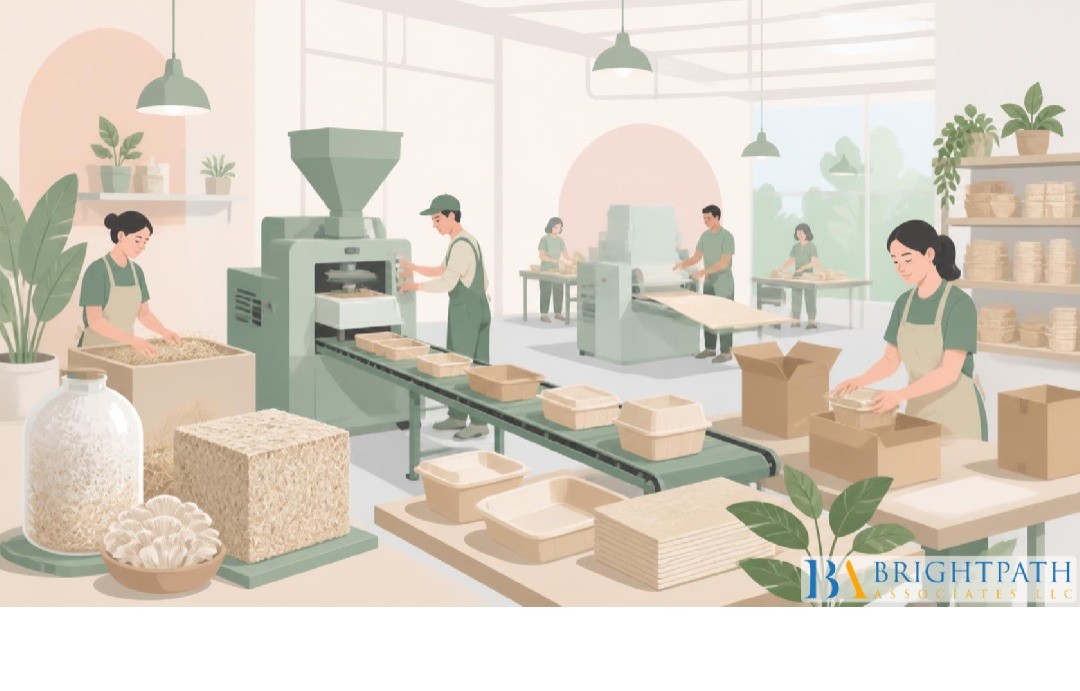
Packaging is changing rapidly, and small and mid-sized manufacturers are under increasing pressure to find alternatives to conventional plastics and petroleum-based protective materials. Customers are paying closer attention to sustainability, retailers are introducing stricter packaging requirements, and businesses are looking for ways to reduce waste without compromising product protection. For small and mid-sized enterprises (SMEs), however, adopting sustainable packaging is not as simple as replacing one material with another. The transition can affect equipment, production speeds, quality standards, storage, supply chains, and costs. Mycelium composites and bio-based fibers are emerging as promising options, but their successful adoption requires a practical manufacturing strategy.
Mycelium-based packaging has attracted attention because it can be formed into protective structures that provide cushioning and shock absorption while offering an alternative to certain foam-based applications. Bio-based fibers, including molded fiber and pulp-based formats, can also be used for trays, separators, inserts, and protective packaging. These materials are particularly interesting for SMEs because they may allow companies to respond to sustainability expectations without completely abandoning existing packaging infrastructure. The real challenge is determining where these materials fit, how they behave under production conditions, and whether the business can maintain consistent performance at commercial scale.
The first step should be defining the packaging requirement rather than choosing a material because it is labeled sustainable. A packaging component must perform a specific function. It may need to withstand compression during transportation, protect a product from impact, tolerate humidity, maintain dimensional stability, or survive temperature changes. Once these requirements are clearly defined, manufacturers can compare mycelium composites, molded fibers, recycled materials, and other alternatives against measurable performance criteria. This prevents sustainability goals from becoming disconnected from the fundamental purpose of packaging: protecting the product efficiently.
Material consistency is another critical consideration. Conventional packaging materials often have well-established specifications and predictable processing characteristics. Bio-based materials can introduce greater variability because their properties may be influenced by fiber composition, moisture, additives, curing conditions, coatings, and manufacturing methods. Mycelium products may also require carefully controlled growing and curing processes. For an SME operating on tight production schedules, inconsistent material quality can result in jams, rejects, damaged products, or unexpected downtime. Supplier qualification and incoming quality checks therefore become essential parts of the transition.
Companies should also avoid relying on a single supplier when a new material is strategically important. Evaluating multiple sources can provide greater visibility into capacity, lead times, quality controls, feedstock sourcing, and change-management procedures. This is particularly important when sustainability claims depend on the origin of the raw material. Businesses increasingly need to demonstrate where fibers come from, how recycled content is managed, and whether environmental claims are supported by credible documentation. Sustainable packaging must be sustainable not only in marketing language but also in its supply chain.
The packaging line itself presents another major challenge. Existing machinery is typically optimized around specific characteristics such as stiffness, friction, thickness, dimensional stability, and surface texture. A new fiber-based tray or mycelium component may behave differently when it enters feeders, denesting equipment, conveyors, grippers, or automated pick-and-place systems. Even a small change in material geometry can create feeding problems. Instead of immediately attempting high-speed production, SMEs should begin with controlled trials that examine stacking, feeding, gripping, deformation, and handling performance.
Automation can help manage some of these challenges, but the objective should not be to install technology simply to create a "smart factory." Targeted automation is often more valuable. Vision systems can identify damaged or misshapen fiber components before they enter critical processes. Sensors can monitor temperature and humidity and help determine whether environmental conditions are influencing defect rates. Load cells, torque monitoring, and other feedback mechanisms can identify changes in machine behavior before they result in larger disruptions. These relatively focused technologies can help manufacturers manage material variability without requiring a complete modernization of the production line.
Sealing, bonding, printing, and labeling may also require adjustment. Fiber-based materials can have different surface characteristics from plastic films or rigid polymers. Porosity may influence printing quality, adhesive performance, and barcode readability. Heat-sensitive materials may require different temperature, pressure, or dwell-time settings. Instead of changing every process simultaneously, manufacturers can introduce changes sequentially. Handling can be validated first, followed by bonding or sealing, and then secondary packaging. This approach makes troubleshooting easier because teams can identify which process change caused a particular problem.
Storage and environmental control should not be overlooked. Bio-based materials can respond differently to humidity and temperature than conventional packaging. Fiber structures may become brittle in excessively dry conditions or soften when exposed to high humidity. Mycelium components may also require specific storage and inventory-management practices to maintain consistent performance. SMEs should establish clear storage specifications and monitor conditions where necessary. Simple environmental controls can prevent a material that performed well during a laboratory trial from becoming unreliable during commercial production.
The economic evaluation should extend beyond the purchase price of packaging. A sustainable material may cost more per unit but create savings elsewhere. Better-fitting protective components may reduce product damage. Lightweight packaging may lower transportation costs. Improved recyclability may reduce disposal expenses. On the other hand, a new material could require additional inspection, specialized tooling, humidity control, or slower production speeds during the initial ramp-up. Companies should therefore evaluate total system economics rather than comparing material prices alone.
Compliance and sustainability claims also require careful attention. Packaging may be subject to customer requirements, transport standards, recyclability expectations, compostability claims, chemical restrictions, or food-contact requirements depending on its application. Mycelium-based products may require evidence regarding biological safety and the materials used in binders or coatings. Fiber-based products may contain additives, inks, wet-strength agents, or barrier coatings that influence end-of-life options. A disciplined qualification process can help businesses determine which claims they can confidently make and what evidence is required to support them.
This broader transformation is creating new opportunities throughout the Paper & Forest Products Industry. Companies operating in this sector are increasingly positioned at the intersection of sustainable materials, manufacturing technology, recycling, packaging innovation, and changing customer expectations. The ability to develop and commercialize bio-based packaging solutions may become an important competitive differentiator for manufacturers that can combine material expertise with efficient production.
Workforce capability will be equally important. Integrating new packaging materials requires collaboration between materials specialists, process engineers, quality professionals, maintenance teams, procurement leaders, and operations managers. SMEs may not have all these capabilities internally. Hiring professionals who understand both sustainable materials and real-world production constraints can reduce the amount of trial-and-error required during implementation. Leadership teams should consider talent strategy alongside equipment investment rather than treating recruitment as a separate issue.
For a deeper examination of the implementation process, Integrating Mycelium and Bio-Based Fibers Into SME Packaging Lines explores how companies can connect material selection with line compatibility, automation, compliance, cost management, and operational stability.
The most successful transitions will not necessarily come from companies that adopt the newest sustainable material first. They will come from companies that understand how the material behaves throughout the entire operating system—from raw-material sourcing to production, storage, transportation, customer use, and end-of-life management. A packaging material is only truly useful when it performs consistently and supports the economics of the business.
For SMEs, the smartest path may therefore be a phased approach. Select one product family, define measurable performance requirements, qualify multiple suppliers, conduct controlled production trials, monitor critical quality indicators, and scale gradually. This allows organizations to learn without putting their entire operation at risk.
