Integrating Blockchain for Traceable Mineral Provenance and ESG Reporting
Author : Shawn Fisher | Published On : 06 Aug 2026
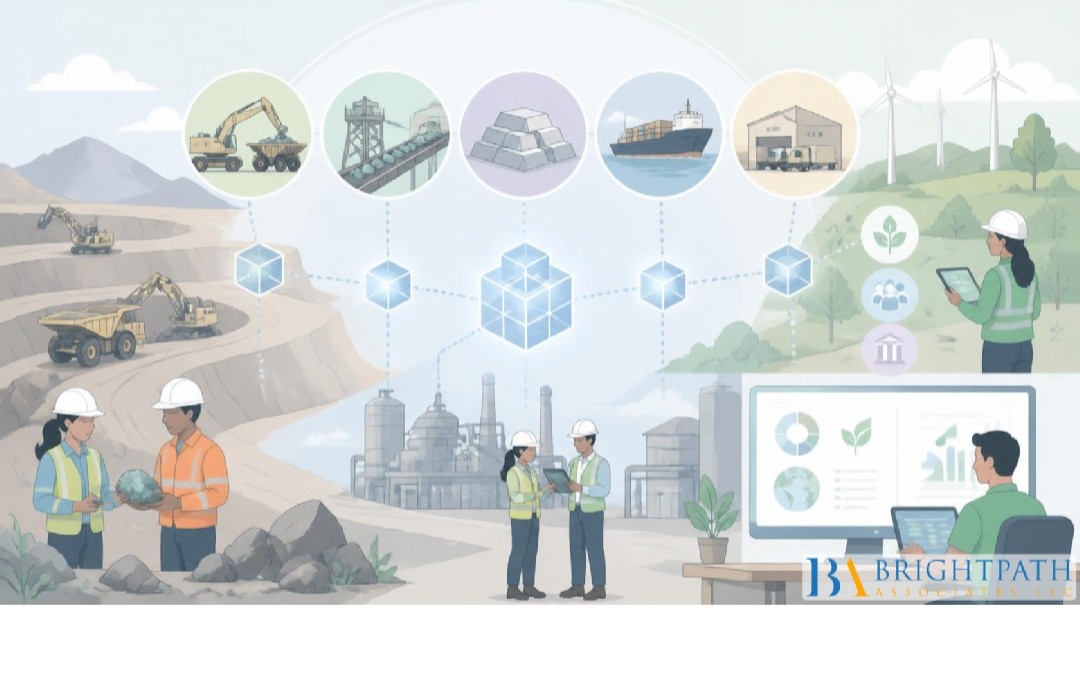
The global mining and metals industry is experiencing a significant transformation. Traditionally, success in mining was measured by production capacity, operational efficiency, and profitability. Today, companies are expected to deliver much more. Investors demand transparency, regulators require stronger reporting standards, manufacturers want ethically sourced materials, and customers increasingly expect businesses to demonstrate environmental and social responsibility throughout their supply chains.
As these expectations continue to evolve, digital technologies are helping mining organizations modernize their operations beyond extraction and production. Among these technologies, blockchain is emerging as a powerful tool for improving mineral traceability, strengthening Environmental, Social, and Governance (ESG) reporting, and building trust across increasingly complex global supply chains.
Organizations throughout the Mining and Metals Industry are exploring how blockchain can provide greater visibility into the movement of raw materials while supporting responsible sourcing initiatives and long-term operational resilience.
One of the greatest challenges facing mining companies is proving where materials originate and how they move through multiple stages of processing before reaching manufacturers. Minerals often pass through numerous suppliers, processors, transport providers, refiners, and distributors before becoming part of finished products. Every transfer introduces opportunities for documentation errors, inconsistent recordkeeping, and reduced visibility. Traditional paper-based documentation or disconnected digital systems can make it difficult to verify product origins with complete confidence.
Blockchain technology offers an alternative approach by creating secure digital records that document every transaction throughout the supply chain. Instead of relying on isolated databases maintained by individual organizations, authorized participants can access a shared record that reflects the movement and verification of materials at each stage. This improves transparency while helping reduce disputes related to documentation accuracy.
Traceability has become particularly important as manufacturers seek responsibly sourced raw materials. Automotive companies, electronics manufacturers, renewable energy providers, and industrial equipment producers increasingly evaluate supplier sustainability alongside traditional purchasing considerations such as cost, quality, and delivery performance. Companies capable of demonstrating transparent sourcing practices often strengthen customer confidence while improving long-term business relationships.
ESG reporting represents another area where blockchain delivers meaningful value. Investors, regulators, and customers expect organizations to provide reliable information regarding environmental performance, ethical sourcing, workforce practices, emissions management, and governance initiatives. Gathering this information from multiple operational systems can be time-consuming while increasing the risk of inconsistencies. Blockchain-enabled recordkeeping supports more consistent documentation by creating verifiable digital records that simplify reporting and auditing processes.
Another advantage involves improving collaboration across supply chains. Mining operations rarely function independently. Success depends upon coordination among exploration companies, extraction facilities, processing plants, logistics providers, equipment suppliers, manufacturers, and regulatory agencies. Blockchain platforms encourage greater information sharing while allowing participants to maintain appropriate control over sensitive business information. Improved collaboration helps reduce administrative complexity while increasing operational visibility.
Operational efficiency also benefits from better information management. Traditional document verification often involves manual reviews, duplicate recordkeeping, and repetitive administrative processes. Digital verification supported by blockchain can streamline documentation while accelerating supplier validation, shipment approvals, inventory reconciliation, and compliance reporting. Administrative efficiencies allow organizations to dedicate more resources toward operational improvement and strategic planning.
Risk management has become increasingly important as supply chains expand globally. Organizations must address regulatory compliance, geopolitical uncertainty, ethical sourcing requirements, counterfeit materials, and changing customer expectations simultaneously. Blockchain strengthens risk management by providing better visibility into supplier networks while improving the ability to identify potential issues before they disrupt operations. Companies with stronger traceability systems generally respond more effectively when addressing product recalls, supplier investigations, or regulatory inquiries.
Technology integration is also transforming asset management within mining operations. Blockchain solutions increasingly complement existing digital initiatives including Internet of Things (IoT) sensors, artificial intelligence, enterprise resource planning systems, predictive maintenance platforms, and advanced analytics. Together, these technologies create more connected operations capable of generating valuable business insights while supporting continuous improvement initiatives across multiple functional areas.
Customer expectations will likely continue evolving as supply chain transparency becomes an increasingly important purchasing criterion. Companies capable of providing reliable documentation regarding product origin, sustainability practices, and operational integrity position themselves more favorably within competitive global markets. Rather than viewing blockchain solely as an information technology investment, forward-looking organizations recognize its broader role in strengthening trust, improving collaboration, and supporting sustainable business growth.
Businesses interested in learning more about digital traceability strategies can also explore Integrating Blockchain for Traceable Mineral Provenance, which provides additional perspectives on strengthening supply chain transparency and responsible resource management.
Ultimately, blockchain is becoming more than a technology trend within the mining and metals sector. It represents a practical opportunity to improve traceability, strengthen ESG reporting, enhance operational efficiency, and build greater confidence across increasingly interconnected supply chains. Organizations that combine digital innovation with experienced leadership, responsible governance, and highly skilled professionals will be better positioned to meet evolving market expectations while achieving sustainable long-term growth.
