Integrating Blockchain for Traceability: From Feed Origin to Consumer Shelf
Author : Alyssa Miller | Published On : 29 Sep 2026
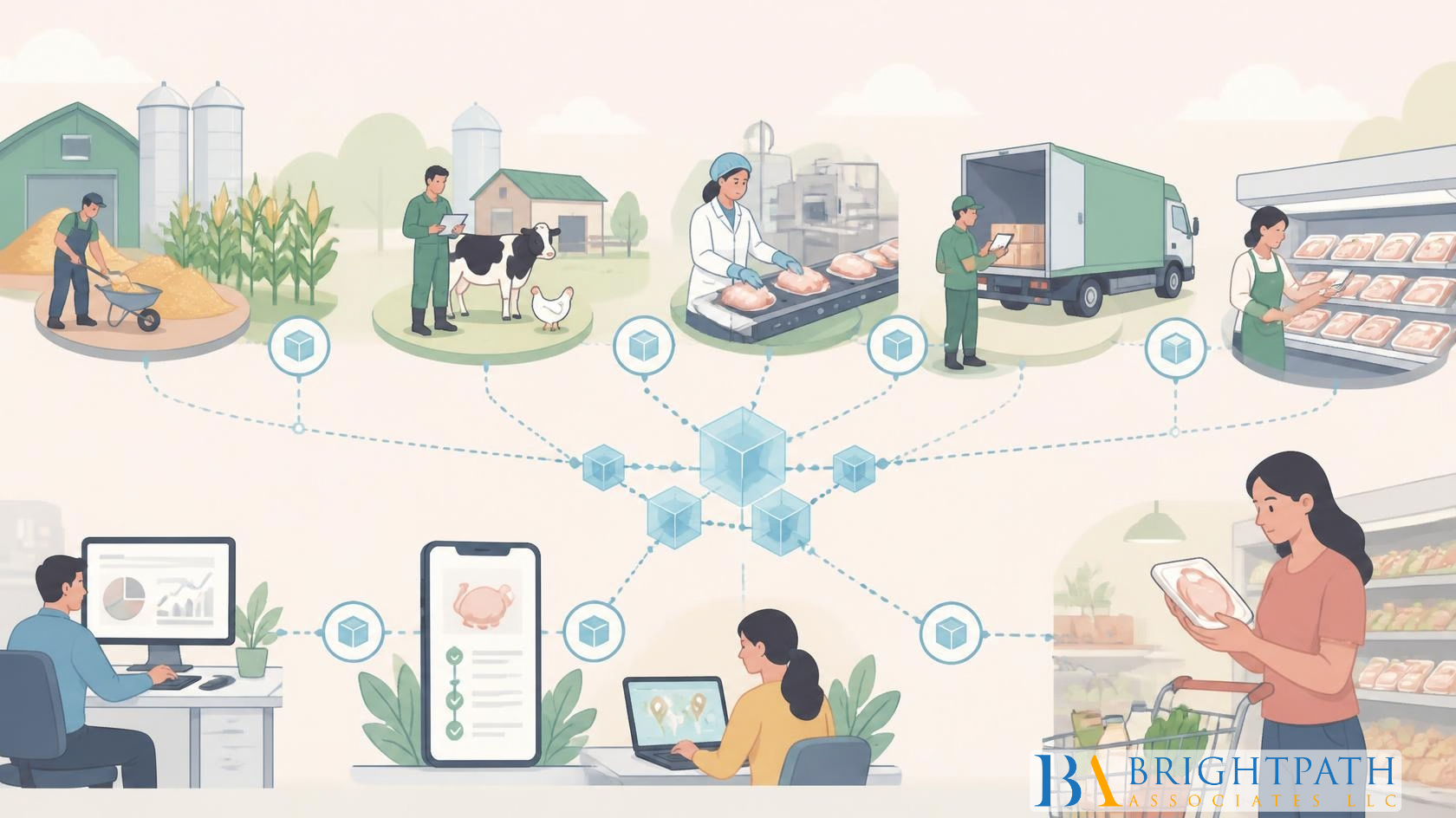
The modern dairy supply chain is becoming increasingly complex. Milk can pass through farms, collection centers, processors, cold-chain logistics providers, distributors, retailers, and digital sales channels before reaching the consumer. At every stage, information about origin, quality, temperature, handling, and processing can influence product safety and consumer confidence.
For dairy businesses, the challenge is no longer simply collecting this information. The bigger challenge is connecting it. However, the real value does not come from blockchain alone. It comes from building an ecosystem in which reliable data can move efficiently across the dairy value chain.
Blockchain technology is emerging as one potential solution for creating a more connected traceability framework. When combined with Internet of Things sensors, automation, cloud computing, analytics, and digital farm-management systems, blockchain can help organizations create a consistent record of selected supply-chain events.
Why End-to-End Traceability Matters
Traditional dairy supply chains often rely on a combination of spreadsheets, paper documentation, databases, enterprise systems, and manually exchanged records. These systems can work effectively within individual organizations, but difficulties can emerge when information needs to be shared across multiple businesses.
Consider a quality issue involving a particular batch of milk. Investigating the problem may require information about the farm, feed inputs, collection time, transportation conditions, processing facility, testing results, packaging batch, and distribution route.
If those records exist in disconnected systems, reconstructing the product's journey can take significant time. This can be particularly valuable during quality investigations, recalls, supplier assessments, and compliance activities.
A connected traceability system can help create relationships between these events. Blockchain can provide a shared, permissioned ledger for selected transactions and supply-chain records, giving authorized participants a consistent history of relevant events.
Connecting Feed Origin With Milk Production
Traceability does not begin when milk enters a processing facility. It begins much earlier. Feed sourcing, animal management, farm practices, storage conditions, and environmental factors can all be relevant to understanding agricultural production.
Blockchain can potentially connect information about feed suppliers and batches with individual farms or production periods. When combined with digital farm-management systems, this creates an opportunity to establish a more comprehensive history of the inputs associated with milk production.
This can also support broader Dairy Industry transformation efforts by connecting agricultural information with processing and distribution data. That distinction can help organizations manage both data volume and system costs.
The objective is not necessarily to place every piece of information on a blockchain. Large datasets generated by sensors and farm-management systems may be better stored in conventional databases, while blockchain can maintain verified records or references to important supply-chain events.
Combining IoT With Blockchain
Automated milking equipment, temperature sensors, milk-quality testing systems, animal-monitoring devices, digital weighing equipment, and transportation-monitoring technologies can generate information throughout the production process.
When appropriately integrated, sensors can capture production information while cloud platforms manage data, analytics identify patterns, and blockchain records selected events in a way that can be shared among authorized participants.
For example, temperature information collected during transportation could be associated with a specific product batch. Processing information could then be linked to that batch, followed by packaging and distribution records.
Improving Food Safety and Quality Management
When a dairy company identifies a quality concern, speed matters. Management needs to determine which products may be affected, where those products were processed, where they were distributed, and which other batches may share the same source or production conditions.
A well-designed traceability framework can make this investigation more structured. Blockchain does not replace laboratory testing, quality assurance programs, food-safety procedures, or regulatory controls. Instead, it can strengthen the information layer supporting those processes.
Temperature-sensitive dairy products provide a useful example. Connected monitoring systems can record environmental conditions during transportation and storage. Those records can then be associated with product batches, providing greater visibility into the conditions experienced by the product throughout its journey.
The Next Stage of Dairy Traceability
Blockchain is unlikely to transform dairy traceability by itself. Its potential becomes more meaningful when it works alongside IoT, automation, cloud computing, artificial intelligence, analytics, enterprise systems, and digital supply-chain platforms.
The long-term opportunity is therefore broader than simply tracking milk from one location to another. It is about creating a reliable digital thread that connects feed origin, farm production, milk collection, processing, transportation, distribution, retail, and the consumer experience.
What would greater end-to-end traceability change for your dairy business? Would the greatest value come from improving food safety, reducing recall risk, strengthening supplier relationships, supporting premium products, or creating greater consumer transparency?
If your organization is adopting new traceability technologies, modernizing supply-chain operations, or building leadership capabilities for the next phase of dairy transformation, BrightPath Associates LLC can help identify the specialized executive talent needed to support that journey. Connect with BrightPath to discuss your leadership and talent requirements.
