Inside a Pulse Jet Dust Collector: How It Works and Why It’s Effective
Author : Tech Flow | Published On : 10 Jun 2026
Industrial environments such as cement plants, foundries, metal workshops, chemical facilities, and food processing units face a common challenge—dust control. Fine airborne particles can affect worker health, damage machinery, reduce product quality, and increase maintenance costs. To address these challenges, industries rely on advanced dust collection systems that ensure cleaner air and safer working conditions.
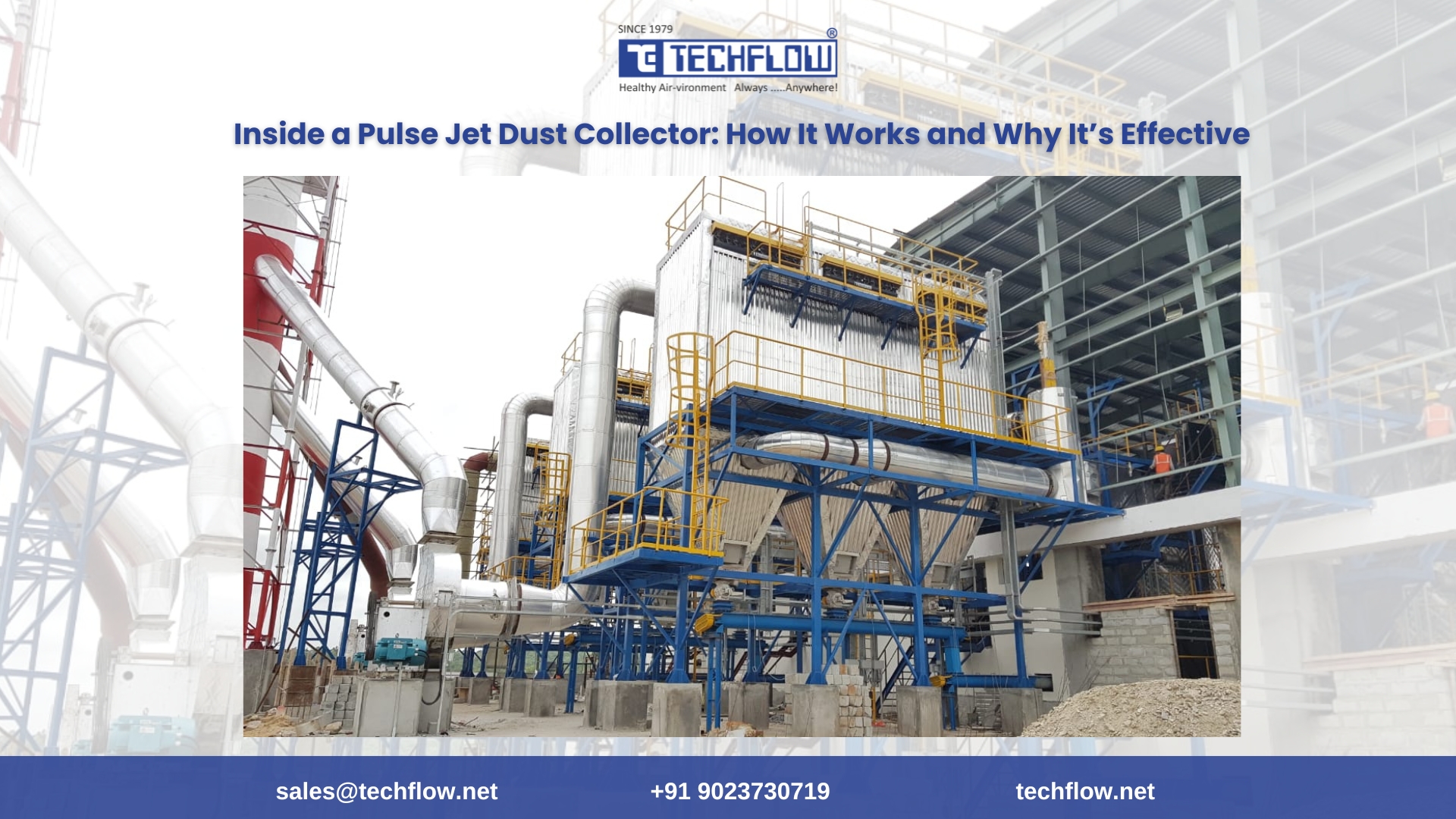
One of the most efficient and widely used solutions is the Pulse Jet Dust Collector. Known for its high filtration efficiency, continuous operation, and low maintenance requirements, this system plays a vital role in modern industrial air pollution control.
At TECHFLOW, we specialize in designing and manufacturing industrial dust collection systems that meet the demanding requirements of heavy-duty industrial operations. This article explores how a Pulse Jet Dust Collector works, its major components, benefits, and applications across industries.
What is a Pulse Jet Dust Collector?
A Pulse Jet Dust Collector is a type of baghouse filtration system designed to capture and remove dust particles from industrial air. Unlike traditional dust collection systems that require manual cleaning or shutdowns, pulse jet collectors clean themselves automatically using short bursts of compressed air.
The term “pulse jet” comes from the cleaning mechanism itself. During operation, compressed air is released in controlled pulses to clean the filter media, allowing the system to operate continuously with minimal interruption. This self-cleaning capability makes pulse jet collectors one of the most reliable and efficient dust control solutions available today.
TECHFLOW designs Pulse Jet Dust Collectors for a wide range of industries, including cement, foundry, mineral processing, food manufacturing, and chemical plants, ensuring cleaner air and improved operational efficiency.
Key Components of a Pulse Jet Dust Collector
Understanding the major components helps explain why these systems are so effective.
Inlet Duct
The inlet duct brings dust-laden air from industrial processes into the collector.
Filter Bags or Cartridges
These are the primary filtration elements that capture dust particles while allowing clean air to pass through.
Cage
The cage supports the filter bags and maintains their shape during filtration and cleaning cycles.
Pulse Valves and Air Header
These components release controlled bursts of compressed air that clean the filters and maintain performance.
Hopper
The hopper collects dust removed during the cleaning process and stores it for disposal or recycling.
Outlet Duct
After filtration, clean air exits the system through the outlet duct and is released back into the atmosphere.
Each component works together to ensure efficient dust collection, reliable operation, and simplified maintenance.
How a Pulse Jet Dust Collector Works
The operation of a Pulse Jet Dust Collector can be divided into three main stages: filtration, cleaning, and dust discharge.
Step 1: Filtration Process
Dust-laden air enters the collector through the inlet duct and passes through filter bags or cartridges. As the air flows through the filter media, dust particles are trapped on the outer surface while clean air continues through the system and exits through the outlet.
Over time, a layer of dust, commonly known as a “dust cake,” forms on the filter surface. This layer can actually improve filtration efficiency to a certain extent. However, once it becomes too thick, cleaning becomes necessary.
Step 2: Cleaning Process
The cleaning process is where the pulse jet technology comes into action.
A short burst of compressed air is released through nozzles positioned above each filter bag or cartridge. This pulse causes the filter media to expand slightly, dislodging the accumulated dust cake from its surface.
The cleaning process occurs in cycles, allowing only a small section of filters to be cleaned at a time. This means the rest of the system continues operating normally, ensuring uninterrupted dust collection and maintaining production efficiency.
Step 3: Dust Discharge
Once the dust is dislodged, it falls into the hopper located beneath the filtration chamber.
The collected dust is then discharged through rotary valves, screw conveyors, or other material handling systems for proper disposal or recycling. This continuous cycle of filtration, cleaning, and discharge allows the system to operate efficiently throughout the day.
Why Pulse Jet Dust Collectors Are So Effective
Several features contribute to the popularity and effectiveness of pulse jet dust collection systems.
Continuous Operation
Unlike older dust collection technologies that require periodic shutdowns for cleaning, Pulse Jet Dust Collectors operate continuously. Automatic cleaning ensures that filtration performance remains high without interrupting production.
Compact and Powerful Design
The efficient cleaning mechanism allows the use of fewer filter bags or cartridges compared to reverse-air or mechanical collectors. As a result, pulse jet systems offer a smaller footprint while delivering excellent performance.
High Filtration Efficiency
Pulse Jet Dust Collectors are capable of capturing extremely fine particles, often smaller than one micron. This makes them suitable for handling powders, ash, fumes, and other fine particulate matter generated in industrial environments.
TECHFLOW systems are engineered with precision pulse timing and optimized air distribution to ensure consistent filtration performance.
Lower Maintenance Costs
With fewer moving parts and automated cleaning, maintenance requirements are significantly reduced. Operators typically need only periodic inspections of filter bags, cartridges, and pulse valves.
Long Filter Life
TECHFLOW utilizes premium-quality filter media designed to withstand demanding industrial conditions, including high temperatures and corrosive environments. This extends filter life and reduces replacement costs over time.
Cartridge Dust Collectors vs. Bag-Type Collectors
Both cartridge and bag-type dust collectors operate using the same basic principle of filtration followed by pulse jet cleaning. However, they differ in design and application.
Bag-type collectors use cylindrical filter bags and are best suited for heavy dust loads and coarse particles commonly found in foundries, cement plants, and boiler units.
Cartridge dust collectors use pleated filter cartridges that provide greater filtration surface area in a compact design. These systems are ideal for fine dust and fume filtration applications such as powder coating, pharmaceutical manufacturing, and chemical processing.
TECHFLOW offers both bag-type and cartridge dust collector solutions to match specific operational requirements and available installation space.
Applications of Pulse Jet Dust Collectors
Because of their versatility and reliability, Pulse Jet Dust Collectors are used across numerous industries.
Common applications include:
-
Cement and lime processing plants
-
Foundries and sand handling facilities
-
Steel and metal manufacturing units
-
Food and grain processing industries
-
Chemical and pharmaceutical plants
-
Power plants and boiler systems
In addition to improving workplace air quality, these systems help facilities comply with environmental emission standards and workplace safety regulations.
Why Choose TECHFLOW Pulse Jet Dust Collectors?
When industries look for dependable industrial dust collection systems, TECHFLOW stands out as a trusted partner. Our systems are designed to deliver performance, durability, and operational efficiency.
Key advantages include:
-
Proven efficiency across multiple industries
-
Precision-engineered pulse jet valves and manifolds
-
Custom-built designs based on process requirements
-
Low power consumption and high dust recovery rates
-
Strong technical support and after-sales service
Our commitment is to provide long-term dust control solutions that help industries maintain cleaner facilities, safer work environments, and improved productivity.
Conclusion
A Pulse Jet Dust Collector is one of the most efficient and reliable dust control solutions available for modern industries. By combining continuous filtration, automatic cleaning, and effective dust discharge, these systems deliver outstanding performance while minimizing maintenance and downtime.
Whether used in cement plants, foundries, chemical facilities, food processing units, or metal industries, Pulse Jet Dust Collectors help improve air quality, protect equipment, and ensure compliance with environmental standards.
With advanced engineering, durable construction, and industry-specific customization, TECHFLOW continues to provide high-performance Pulse Jet Dust Collection Systems that support cleaner, safer, and more productive industrial operations.
