Innovation by Layer: Impact of Additive Manufacturing on Rail Component Production
Author : David Pitman | Published On : 23 Mar 2026
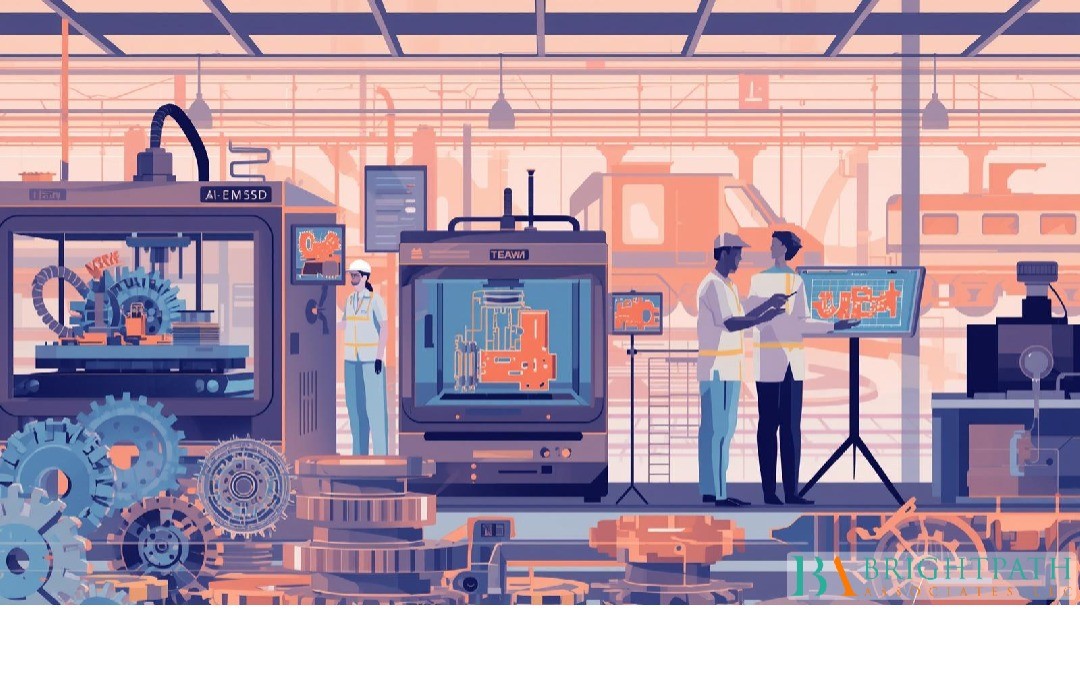
The railroad manufacturing industry is entering a transformative phase—one driven not by incremental upgrades, but by technological reinvention. Among the most disruptive forces is additive manufacturing (AM), commonly known as 3D printing. Once limited to prototyping, this technology is now redefining how rail components are designed, produced, and maintained.
For C-suite leaders and operational strategists in small to mid-sized rail manufacturing companies, the implications are profound: faster production cycles, reduced costs, enhanced customization, and a reimagined talent landscape. To explore the broader industry context, visit our Railroad Manufacturing industry page.
Shift from Traditional to Additive Manufacturing
Traditional rail component manufacturing has long relied on subtractive processes—cutting, milling, and assembling materials. While effective, these methods often involve long lead times, high material waste, and limited design flexibility.
Additive manufacturing flips this paradigm. Instead of removing material, it builds components layer by layer from digital designs, enabling near-limitless geometric complexity and precision. This shift is especially critical in the railroad sector, where customization, durability, and lifecycle management are paramount.
Why Additive Manufacturing Matters in Rail Production
1. Accelerated Production and Reduced Downtime
Rail operators often face challenges sourcing obsolete or low-volume parts. Additive manufacturing allows companies to produce components on-demand, eliminating dependency on large inventories and long supplier lead times.
This capability significantly reduces downtime—an essential factor in maintaining operational efficiency and profitability.
2. Design Innovation and Lightweight Engineering
AM enables the creation of complex, lightweight structures that were previously impossible with traditional methods. This results in rail components with improved strength-to-weight ratios, contributing to energy efficiency and reduced operational costs. For manufacturers, this opens the door to innovation in areas such as:
-
Optimized brackets and housings
-
Advanced cooling systems
-
Integrated multi-functional components
3. Sustainability and Material Efficiency
Sustainability is no longer optional—it’s a strategic imperative. Additive manufacturing minimizes waste by using only the material required to build a component. Compared to conventional processes, this leads to:
-
Lower raw material consumption
-
Reduced carbon footprint
-
More sustainable supply chains
In an era where ESG metrics influence business decisions, AM positions rail manufacturers as forward-thinking and environmentally responsible.
4. Lifecycle Extension and Maintenance Optimization
Rail infrastructure and rolling stock are subject to constant wear and tear. Additive manufacturing offers innovative repair solutions, such as laser cladding, which restores damaged components and extends their lifespan.
This approach not only reduces replacement costs but also enhances asset longevity—an essential factor for companies managing aging fleets.
Real-World Applications Transforming the Industry
Leading rail companies are already leveraging additive manufacturing to gain a competitive edge. Applications include:
-
On-demand spare parts production for legacy systems
-
Rapid prototyping for faster product development cycles
-
Custom tooling for maintenance and operations
-
Enhanced rail surface coatings to reduce wear and fatigue
In fact, the ability to produce discontinued components has become a game-changer, enabling manufacturers to support long-life rail assets without costly redesigns. For a deeper dive into how this transformation is unfolding, explore the original article: Lumber Industry Trends and Market Dynamics Shaping.
Strategic Hiring: The Missing Link in Digital Transformation
Adopting additive manufacturing is not just a technological decision—it’s a strategic hiring challenge. Forward-thinking rail manufacturers are already:
-
Building cross-functional teams combining engineering and digital expertise
-
Investing in upskilling existing employees
-
Partnering with specialized recruitment firms to secure niche talent
This is where industry-focused executive search becomes critical. Identifying professionals who understand both rail manufacturing complexities and advanced production technologies can accelerate transformation and reduce implementation risks.
Future of Rail Manufacturing: Hybrid and Digital
The future is not about replacing traditional manufacturing—it’s about integration. Hybrid models that combine additive and conventional methods are emerging as the most effective approach. These models enable manufacturers to:
-
Optimize production efficiency
-
Enhance product performance
-
Reduce costs without compromising quality
As digital inventories, smart factories, and AI-driven design tools evolve, additive manufacturing will become a cornerstone of the next-generation rail ecosystem.
