Industry 4.0: Smart Manufacturing and Digital Transformation
Author : SoftSages Technology | Published On : 30 Jul 2026
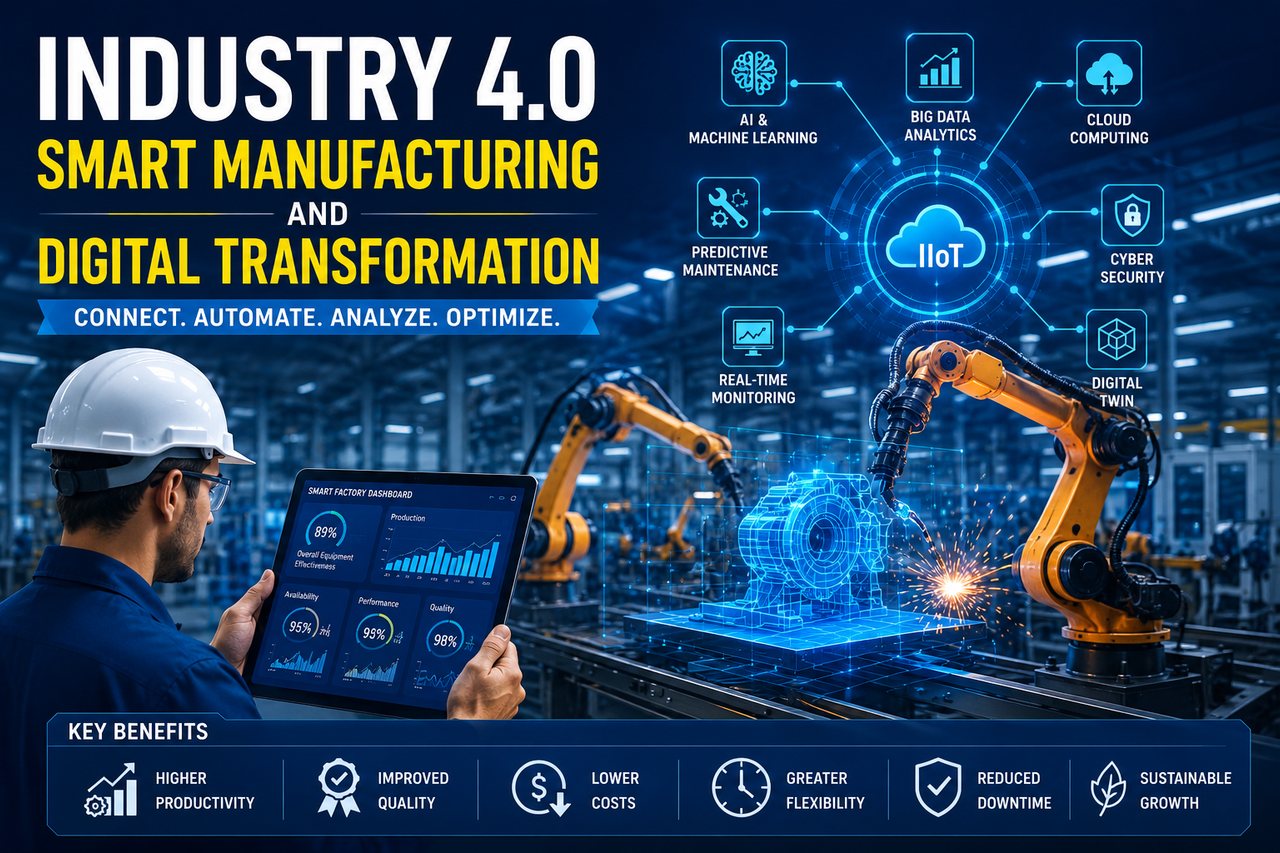
Manufacturing is evolving beyond traditional assembly lines, manual processes, and standalone machines. Today's manufacturers face growing pressure from changing customer demands, global competition, supply chain disruptions, and the need to improve efficiency while reducing operational costs. To remain competitive, businesses are adopting innovative strategies that modernize operations, improve productivity, and strengthen long-term resilience.
Industry 4.0 smart manufacturing and digital transformation are reshaping the way manufacturers design, produce, monitor, and optimize their operations. By combining connected technologies, real-time data, automation, and intelligent decision-making, organizations can build smarter, more agile production environments. This transformation goes beyond implementing new technologies; it enables manufacturers to improve operational visibility, enhance product quality, optimize resource utilization, make faster data-driven decisions, and create resilient manufacturing systems that are prepared for future challenges.
Why Manufacturing Needs a Digital-First Mindset
For decades, manufacturers relied on proven processes and traditional production models. While these methods supported growth, today's industrial landscape requires greater flexibility and faster decision-making.
Several key factors are driving the growing need for digital transformation across industries:
- Increasing demand for customized products
- Rising operational and energy costs
- Global supply chain uncertainties
- Workforce shortages and changing skill requirements
- Growing sustainability and regulatory expectations
A digital-first mindset enables manufacturers to move beyond reactive operations.Rather than reacting to problems after they occur, organizations can use real-time insights to anticipate potential issues, optimize production processes, and drive continuous operational improvement.
Five Signs Your Manufacturing Business Is Ready for Industry 4.0
Many organizations believe they need to fully modernize their facilities before starting their digital transformation journey. In reality, digital transformation often begins when operational challenges become too significant to overlook.
Your business may be ready for Industry 4.0 if you experience:
Limited Visibility Across Operations
If production data is scattered across spreadsheets, disconnected systems, or manual reports, it becomes difficult to identify bottlenecks and make informed decisions.
Frequent Equipment Downtime
Unexpected equipment failures can interrupt production schedules, increase maintenance expenses, and reduce overall operational efficiency. Real-time monitoring and predictive insights help reduce unplanned downtime by identifying potential issues before they disrupt operations.
Quality Issues Affecting Production
Recurring defects, inconsistent product quality, or excessive rework often indicate a need for more intelligent quality monitoring and process control.
Slow Decision-Making
When managers wait hours or even days for production reports, valuable opportunities to improve efficiency are lost.
Growing Customer Expectations
Customers increasingly expect faster delivery, greater product customization, and consistent quality, requiring manufacturers to become more agile than ever before.
Building a Connected Manufacturing Ecosystem
Smart manufacturing is not about implementing a single technology. It is about creating a connected ecosystem where machines, systems, and people communicate and collaborate seamlessly.
Instead of operating independently, production equipment, enterprise systems, inventory management, quality control, and supply chain operations work together through shared data.
A connected manufacturing ecosystem typically includes:
- Production equipment generating operational data
- Enterprise Resource Planning (ERP) systems managing business processes
- Manufacturing Execution Systems (MES) coordinating shop floor activities
- Inventory and warehouse management solutions
- Quality management platforms
- Analytics dashboards providing operational insights
When information flows freely across these systems, manufacturers gain greater visibility into operations and can make faster, more informed decisions.
How Data Becomes a Competitive Advantage
Manufacturing facilities generate vast amounts of operational data every day from machines, production systems, sensors, and connected devices. The real advantage lies not in collecting this information, but in turning it into actionable insights.
Data-driven manufacturing enables organizations to:
- Monitor production performance in real time
- Identify process inefficiencies
- Improve production planning
- Optimize inventory levels
- Reduce waste and energy consumption
- Enhance forecasting accuracy
Instead of relying on assumptions, leaders can make decisions supported by accurate operational intelligence. This improves responsiveness while helping organizations adapt to changing business conditions.
Beyond Automation: Creating Smarter Operations
Automation has long improved manufacturing productivity, but Industry 4.0 takes operational efficiency a step further by introducing intelligence into everyday processes.
Modern manufacturing environments combine automation with advanced analytics, artificial intelligence, and connected systems to create smarter operations.
Examples include:
- Intelligent production scheduling based on real-time demand
- Automated quality inspections supported by computer vision
- Predictive maintenance detects potential equipment issues before failures occur, helping minimize unplanned downtime, reduce maintenance costs, and improve asset reliability.
- Remote monitoring of production facilities across multiple locations
- AI-assisted production planning that optimizes resource utilization
These capabilities help manufacturers improve productivity without sacrificing flexibility or product quality.
Common Misconceptions About Industry 4.0
Despite its growing adoption, several misconceptions continue to discourage organizations from pursuing digital transformation.
Myth 1: Industry 4.0 is only for large manufacturers.
Small and mid-sized manufacturers can achieve significant benefits by adopting scalable digital solutions tailored to their operational needs and business goals.
Myth 2: Every machine must be replaced.
Many existing production assets can be integrated with modern monitoring and connectivity technologies, extending their value.
Myth 3: Automation replaces people.
Industry 4.0 is designed to enhance human capabilities by reducing repetitive tasks and supporting better decision-making not replacing skilled employees.
Myth 4: Digital transformation happens overnight.
Successful transformation is a continuous journey involving strategy, technology, people, and ongoing improvement.
Measuring Success Beyond ROI
While return on investment remains important, successful digital transformation should also be evaluated through operational performance improvements.
Key performance indicators may include:
- Higher Overall Equipment Effectiveness (OEE)
- Reduced production downtime
- Faster production cycles
- Improved first-pass quality
- Lower maintenance costs
- Better inventory accuracy
- Increased on-time delivery
- Improved customer satisfaction
- Greater energy efficiency
These operational metrics provide a more complete picture of long-term business value than financial returns alone.
Preparing Your Workforce for Smart Manufacturing
Technology alone cannot drive transformation. People are one of the most critical drivers of successful smart manufacturing initiatives.
Organizations should invest in:
- Digital skills development
- Cross-functional collaboration
- Continuous learning programs
- Leadership engagement
- Change management initiatives
- Human-machine collaboration
When employees understand how digital technologies improve daily operations, adoption becomes smoother and innovation becomes part of the company culture.
The Future Factory: What Comes After Industry 4.0?
Manufacturing continues to evolve, with emerging technologies expanding the possibilities for intelligent production.
Future factories are expected to incorporate:
- AI-powered decision support
- Autonomous production systems
- Collaborative robots working alongside employees
- Edge computing for faster processing
- Digital twins for continuous optimization
- Sustainable manufacturing practices
- Hyperconnected supply chains
These innovations will help manufacturers become more adaptive, resilient, and environmentally responsible while improving competitiveness in an increasingly digital economy.
Conclusion
Industry 4.0 is redefining how manufacturers operate by connecting people, processes, and technology into a unified digital ecosystem. Rather than focusing solely on automation, smart manufacturing empowers organizations to make faster decisions, improve operational efficiency, enhance product quality, and respond more effectively to changing market conditions.
Digital transformation is a continuous journey of innovation and improvement rather than a one-time initiative. Manufacturers that invest in connected operations, data-driven decision-making, and workforce development today will be better prepared to overcome future challenges, adapt to changing market demands, and drive long-term growth. As the manufacturing landscape continues to evolve, organizations that invest in innovation and adaptability will be best equipped to build smarter, more resilient, and future-ready operations.
