Industrial Automation: Trends, Challenges, and Future of Smart Manufacturing
Author : Jimmy Patel | Published On : 15 Apr 2026
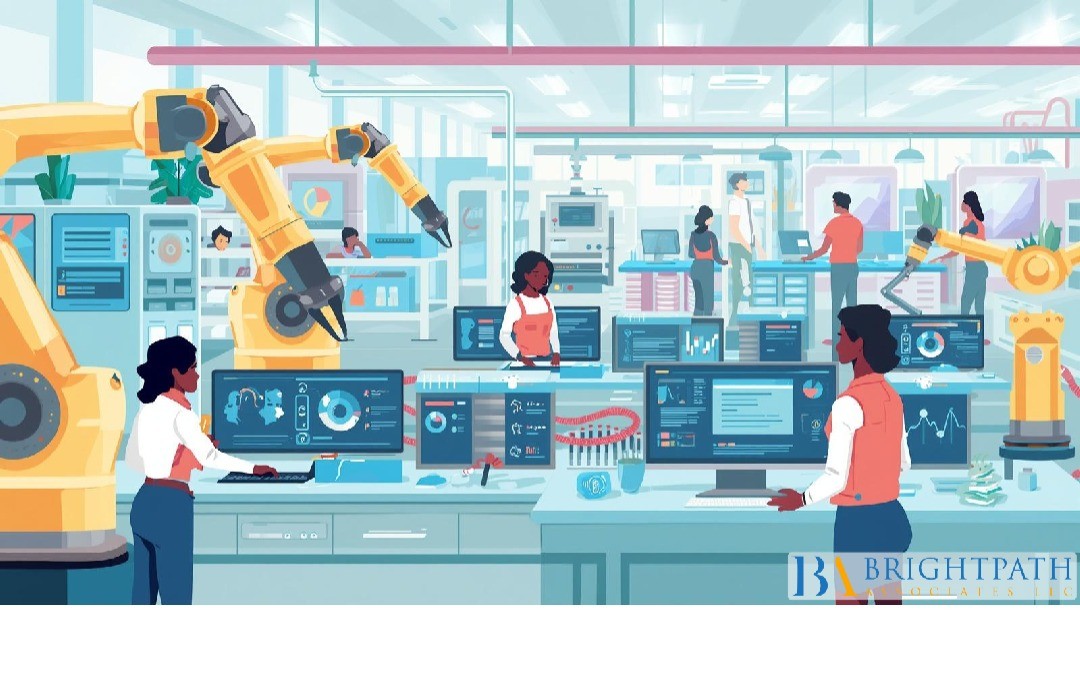
The industrial sector is experiencing a profound transformation driven by rapid technological advancement, shifting workforce expectations, and increasing global competition. Industrial automation has moved beyond being a competitive advantage to becoming a fundamental necessity for survival and growth. For small to mid-sized enterprises across the United States, the urgency is clear—those who fail to embrace automation risk falling behind in an increasingly digital and efficiency-driven marketplace. To better understand the broader landscape and opportunities within this sector, exploring the industrial automation industry provides valuable context into how businesses are evolving and positioning themselves for long-term success.
At the heart of this transformation lies smart manufacturing, an approach that integrates advanced technologies such as artificial intelligence, the Industrial Internet of Things (IIoT), robotics, and digital twins into production environments. These technologies are enabling factories to become more connected, intelligent, and responsive. AI-powered systems are now capable of predicting equipment failures before they occur, optimizing production processes in real time, and ensuring consistent product quality. Meanwhile, digital twins allow organizations to simulate entire production systems in a virtual environment, reducing risks and improving decision-making. As these technologies continue to evolve, manufacturers are shifting from reactive operations to predictive and autonomous systems that drive efficiency and innovation.
Several key trends are accelerating the adoption of industrial automation. One of the most impactful is AI-driven decision-making, which allows machines to analyze vast amounts of data and make real-time adjustments to operations. This is complemented by the growing use of collaborative robots, or cobots, which work alongside human employees to enhance productivity while reducing physical strain. This shift reflects a broader transition toward a more human-centric approach to automation, where technology augments rather than replaces human capabilities. At the same time, IIoT is creating hyper-connected ecosystems where machines, sensors, and systems communicate seamlessly, enabling real-time insights and improved operational visibility. Edge computing is also gaining traction, allowing data to be processed closer to its source, thereby reducing latency and improving responsiveness. In addition, sustainability has become a key driver, with organizations leveraging automation to reduce waste, optimize energy consumption, and meet environmental standards.
Despite these advancements, the path to automation is not without challenges. One of the most pressing issues is the shortage of skilled talent capable of implementing and managing advanced automation systems. As technology continues to evolve rapidly, the demand for professionals with expertise in AI, robotics, and digital systems far exceeds supply. Integration complexity is another major concern, particularly for companies operating with legacy systems that are not easily compatible with modern technologies. Cybersecurity risks also increase as systems become more connected, making it essential for organizations to adopt robust security frameworks. Additionally, the high initial cost of automation can be a barrier for smaller enterprises, even though the long-term benefits often outweigh the investment.
Looking ahead, the future of industrial automation is centered on fully autonomous and resilient manufacturing systems. These next-generation factories will be capable of self-optimization, continuously adapting to real-time data and changing conditions. Production lines will become more flexible, allowing manufacturers to respond quickly to shifts in demand and supply chain disruptions. AI-driven systems will play a central role in managing end-to-end operations, from inventory management to quality control. For a deeper understanding of how these advancements are shaping the industry, you can explore detailed insights on industrial automation trends and smart manufacturing.
However, technology alone is not enough to drive transformation. Leadership plays a critical role in determining the success of automation initiatives. Organizations must develop a clear strategic vision, invest in the right talent, and foster a culture that embraces innovation and continuous improvement. The ability to align technology with business goals and effectively manage change is what separates successful implementations from failed ones.
For small to mid-sized enterprises, industrial automation represents a powerful opportunity to scale operations, improve efficiency, and gain a competitive edge. Companies that successfully adopt automation can reduce costs, enhance product quality, and accelerate time-to-market. More importantly, they can position themselves as forward-thinking organizations capable of adapting to an ever-changing business landscape. However, achieving these outcomes requires more than just technology—it requires the right people, leadership, and strategy.
As the industrial landscape continues to evolve, one important question remains: is your organization prepared for the future of automation? The decisions made today will determine whether businesses lead the transformation or struggle to keep up with competitors.
At BrightPath Associates LLC, we specialize in helping industrial organizations build high-performing teams that drive automation success. By connecting businesses with top-tier talent in industrial automation, AI, and smart manufacturing, we enable organizations to turn strategy into execution and innovation into measurable growth.
So, what challenges is your organization currently facing in adopting industrial automation? Are you confident that your leadership team is equipped to drive this transformation? The conversation starts here—and the future belongs to those who are ready to take action.
