Impact of Shortened Order Cycles on Small Textile Businesses
Author : Ayesha Diaz | Published On : 04 Sep 2026
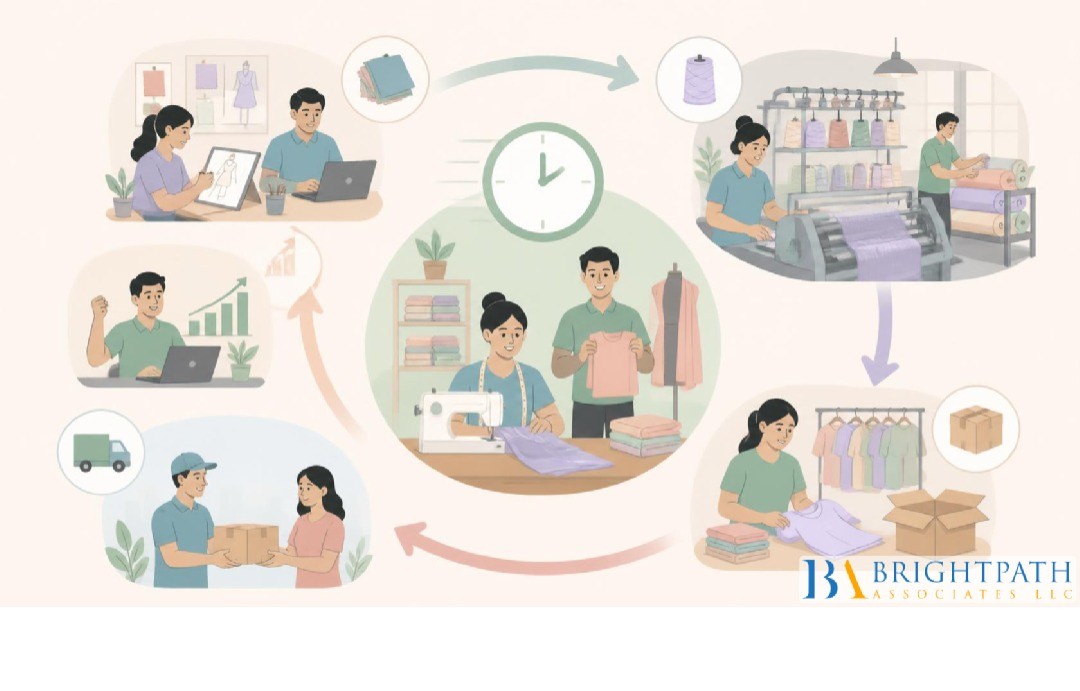
For decades, textile businesses operated around relatively predictable production and ordering patterns. Manufacturers could plan raw-material purchases, schedule production, allocate labor, and manage inventory based on established seasonal cycles and longer customer commitments.
Fashion cycles are accelerating. Buyers increasingly expect flexibility. E-commerce has shortened the distance between consumer demand and manufacturing decisions. Brands want smaller quantities, faster replenishment, and greater responsiveness to changing market conditions.
For large textile manufacturers with sophisticated technology and extensive resources, shorter order cycles can represent an opportunity. For small and mid-sized textile businesses, they can become a serious operational challenge.
The shift is not simply changing how textile companies manufacture products. It is changing how they think about inventory, workforce planning, technology, supplier relationships, and leadership.
Why Order Cycles Are Getting Shorter
Digital commerce allows customers to discover trends almost instantly. Retailers can monitor sales performance in near real time and adjust their purchasing decisions accordingly. Instead of committing to large volumes months in advance, some buyers increasingly prefer smaller initial orders followed by replenishment when demand becomes clearer.
A textile manufacturer receiving smaller and more frequent orders has less room for delays. Production schedules may need to change more frequently. Raw materials may need to be sourced faster. Machines may require more frequent changeovers. Production managers have to coordinate shifting priorities while maintaining quality and controlling costs.
The Inventory Problem Becomes More Complicated
Shorter order cycles can reduce the need for excessive finished-goods inventory, but they do not eliminate inventory challenges. Instead, the pressure can move upstream.
Manufacturers need access to yarn, fibers, dyes, chemicals, fabrics, packaging materials, and other inputs at the right time. Holding too much inventory ties up working capital. Holding too little can create production delays.
Textile businesses need to understand not only what customers are ordering today but also what demand could look like in the coming weeks. Historical sales information, customer behavior, production capacity, supplier lead times, and market signals can all contribute to better planning. The challenge is turning that information into decisions quickly enough.
Smaller Textile Companies Face a Talent Challenge
Technology receives much of the attention when businesses discuss faster order cycles, but people remain central to the equation. A sophisticated planning system cannot compensate for a shortage of capable decision-makers.
Small and mid-sized textile companies may need managers who can simultaneously understand production, procurement, customer requirements, inventory economics, and technology. These hybrid skills are becoming increasingly valuable.
A production leader who only understands manufacturing efficiency may struggle when customer demand changes weekly. Similarly, a technology specialist without practical knowledge of textile production may find it difficult to design systems that work effectively on the factory floor.
The emerging requirement is for leaders who can connect these functions. This is particularly relevant across the broader Textile Industry, where manufacturers are dealing with supply-chain digitization, sustainability requirements, advanced production technologies, and increasingly data-driven planning.
Technology Can Help—but Only When the Organization Is Ready
Shorter order cycles naturally encourage textile companies to invest in digital tools. Enterprise resource planning systems, manufacturing execution systems, demand forecasting platforms, inventory-management software, and real-time production monitoring can all improve visibility.
But technology adoption alone does not guarantee better performance. A company may have access to large amounts of operational data while still relying on manual spreadsheets and disconnected decision-making. Employees may not understand how to interpret the information. Different departments may maintain separate datasets. Managers may continue making decisions based primarily on intuition.
The real value comes when technology becomes embedded in the operating model. A production manager should be able to understand current capacity. Procurement should have visibility into upcoming requirements. Sales should understand what the factory can realistically deliver. Senior leadership should be able to see how customer demand is affecting margins and working capital.
Workforce Flexibility Will Matter More
Shorter order cycles are also changing what textile companies expect from their workforce. Employees increasingly need broader capabilities. Cross-training can help manufacturers move people between processes when production requirements change. Supervisors may need stronger analytical skills. Supply-chain professionals may need to understand production realities. Technology teams may need greater exposure to manufacturing operations.
This creates an opportunity for companies to rethink workforce development. Instead of simply asking, "How many employees do we need?" textile leaders may need to ask, "What capabilities do we need our workforce to have when demand changes tomorrow?"
Can Small Textile Businesses Turn Speed Into an Advantage?
Shorter order cycles undoubtedly create pressure, but they can also create opportunity. Smaller textile businesses often have an advantage that large organizations struggle to replicate: agility.
A mid-sized manufacturer may be able to change production priorities faster, communicate directly with customers, test new products, or adjust its operating model without navigating multiple layers of corporate bureaucracy.
But agility only works when the business has the systems and leadership to support it. Speed without coordination creates chaos. Speed with accurate information, flexible production, capable employees, and decisive leadership creates competitive advantage.
The changing relationship between order cycles, inventory, technology, and workforce requirements is examined further in BrightPath Associates' analysis, Impact of Shortened Order Cycles on Small Textile Businesses.
The Real Question Is Organizational Readiness
The textile industry's move toward shorter order cycles is unlikely to be reversed simply because some manufacturers find the transition difficult. Customer expectations will continue evolving. Digital commerce will continue accelerating market feedback. Buyers will continue looking for flexibility and responsiveness.
For small and mid-sized textile companies, the answer is not necessarily to imitate the technology investments of the largest manufacturers. Instead, leaders should determine where their organization is most vulnerable.
