IEEE 80: The Substation Grounding Standard Every GCC Engineer Should Know
Author : ColinWallac ColinWallac | Published On : 20 Aug 2026
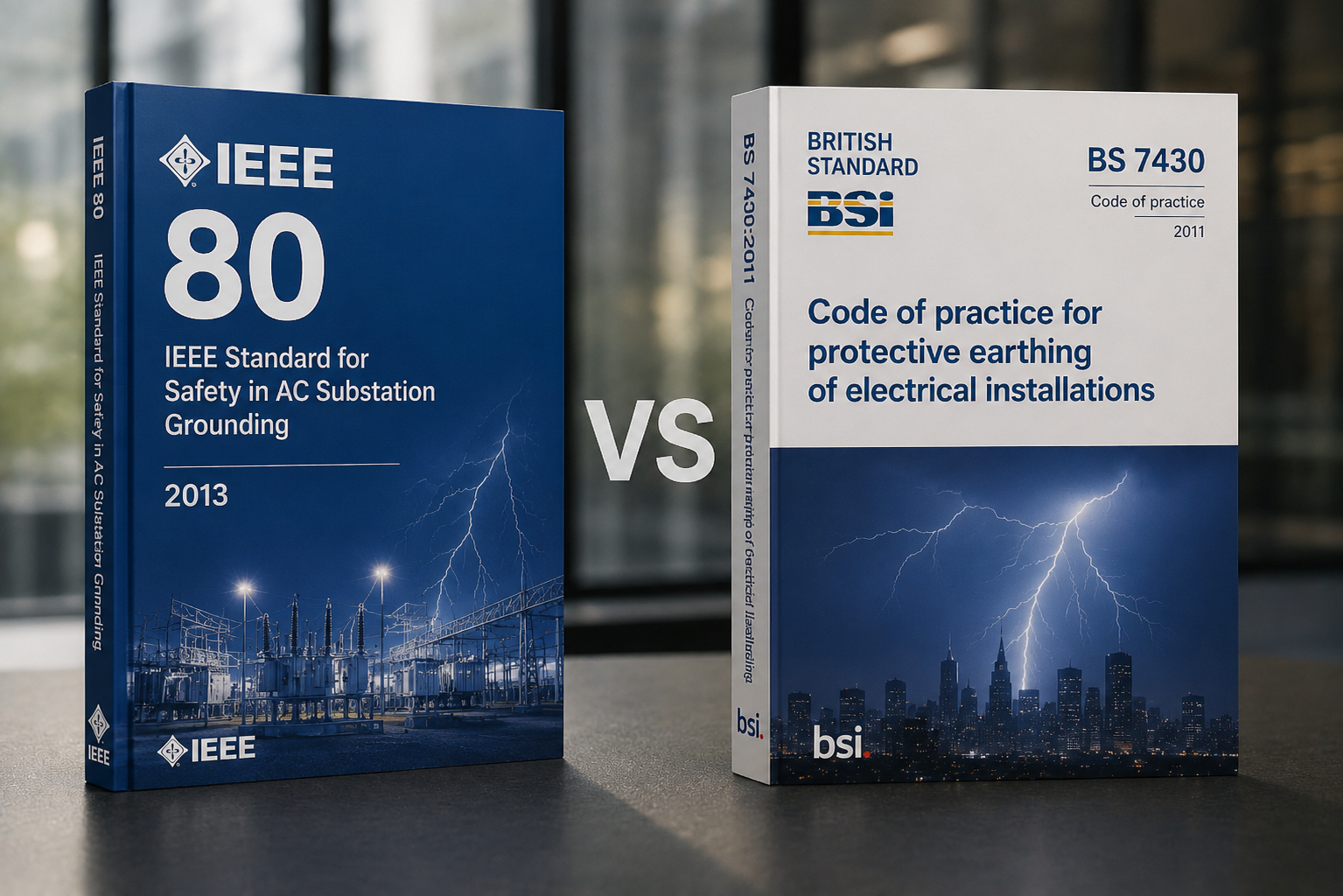
When engineers design a high voltage substation in Saudi Arabia or anywhere across the GCC, the first document they reach for is almost always IEEE 80. This standard has shaped how substation earthing grids are calculated, reviewed, and approved for decades. Yet many people confuse it with bs-7430 or assume both documents say the same thing. They do not. Understanding what ieee 80 actually does and does not cover can save your project from costly rework and compliance failures.
What IEEE 80 Was Designed to Do
IEEE 80 is a guide specifically written for safety in AC substation grounding. Its entire framework is built around one core question: if a ground fault occurs, will the people working in or near that substation be safe? To answer that question, the standard walks engineers through a precise calculation sequence. First, you determine the maximum grid current. Then you calculate the ground potential rise that current will produce. Finally, you compare the actual step and touch voltages in the yard against tolerable limits.
Those tolerable limits are not guesswork. They come from body current thresholds and the resistivity of the surface layer material underfoot. This is where ieee 80 goes further than most people expect. It explicitly credits the use of crushed rock or gravel as a high resistivity surface layer in the safety calculation, which can dramatically change whether a design passes or fails. No other major earthing standard handles this in quite the same way.
How IEEE 80 Compares to BS 7430
The comparison between ieee-80 and bs 7430 comes up constantly on GCC projects because consultants and clients sometimes reference both in the same specification. The two standards answer fundamentally different questions. IEEE 80 is analytical and focused narrowly on HV substation safety.bs-7430 is a broader code of practice for protective earthing across electrical installations including buildings, LV systems, and equipment bonding.
One practical difference involves acceptance criteria. IEEE 80 will accept a grounding grid with a high overall resistance value, provided the step and touch voltage calculations prove the design is safe. BS 7430 tends toward prescriptive resistance thresholds regardless of the voltage analysis. This means a design that passes IEEE 80 might appear to fail a BS 7430 review simply because the reviewers are applying the wrong criteria to the wrong document.
Where GCC Projects Apply IEEE 80
On a typical industrial or utility project in Saudi Arabia, engineers run the IEEE 80 calculation for the HV yard and any zone where a ground fault can produce significant ground potential rise. This covers substations, switching stations, and transmission infrastructure where high fault currents are expected. For the LV distribution network, buildings, and bonding systems, the relevant document shifts to bs 7430 alongside IEC 60364 clauses.
Both sets of output should appear in one consolidated earthing report. When the design reviewer can see which criterion governed each zone, the compliance process moves far more smoothly. Mixing the two standards without clearly labeling which applies where is one of the most common causes of rejected earthing submissions across the region.
Why Conductor Sizing Matters Under IEEE 80
IEEE 80 sizes earthing conductors based on fault current magnitude, fault duration, and a material decrement factor. This produces a result tied directly to the thermal capacity the conductor needs to survive a worst case event. BS 7430 by contrast provides tabulated minimum sizes. On large industrial sites the IEEE 80 method often results in larger conductors because the fault currents are higher and the fault clearing times longer. Applying tabulated minimums in those situations can result in conductors that melt during a fault.
Understanding Scope Boundaries
One point that trips up even experienced designers is the scope boundary of ieee 80. The standard stops at the substation fence. Everything beyond that perimeter, including the buildings, the cable routes, the equipment pads and the bonding between them, falls outside its scope. BS 7430 covers that broader territory. This is why a well written earthing specification will clearly state which standard governs which zone rather than listing both without context.
Conclusion
IEEE 80 remains the definitive analytical tool for substation grounding safety across the GCC. Its step and touch voltage methodology, surface layer credit, and fault current sizing approach give engineers a rigorous framework that prescriptive codes simply cannot match for HV applications. Used alongside bs 7430 for the wider installation, the two standards complement each other effectively. The key is knowing precisely where one ends and the other begins.
