How to Vet Sustainable Textile Suppliers in 2026
Author : Ayesha Diaz | Published On : 21 Aug 2026
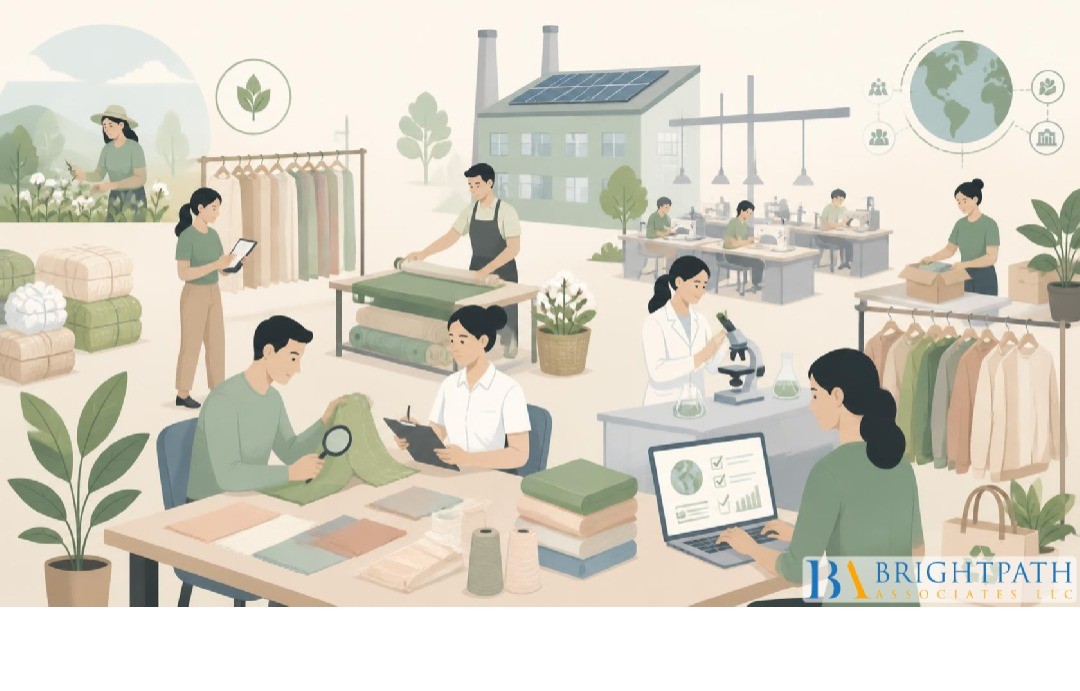
Sustainability has moved from a corporate aspiration to an increasingly important part of supplier selection. For manufacturers, the question is no longer simply whether a supplier can deliver materials at the right price and quality. Businesses are increasingly asking where those materials originate, how they are produced, how resources are consumed, and whether suppliers can remain reliable as regulations, technologies, and customer expectations change.
This shift is particularly relevant to companies operating across complex manufacturing ecosystems. A supplier may have an impressive production facility while depending on subcontractors, transportation networks, or raw-material sources that create additional operational and sustainability risks. As a result, supplier vetting is becoming less of a procurement checklist and more of a strategic leadership responsibility.
Sustainability Starts With Visibility
A meaningful supplier evaluation begins with understanding the supplier's complete operating network. Manufacturers should look beyond a primary facility and examine the origins of raw materials, manufacturing locations, subcontractors, transportation arrangements, energy sources, waste-management practices, and relevant certifications.
This broader view matters because sustainability performance can vary significantly across different stages of a supply chain. A company may invest heavily in efficient equipment at its primary plant while having limited visibility into upstream suppliers.
For businesses connected to the Textile Industry, this challenge can be particularly significant because production networks often span multiple countries and involve numerous stages, from fiber sourcing and yarn production through manufacturing, finishing, distribution, and retail.
Move Beyond Certifications
Certifications can provide useful evidence, but they should not become the entire supplier evaluation process. A supplier may possess environmental or sustainability certifications while still struggling with inefficient production, excessive waste, inconsistent quality, or weak supply-chain resilience.
Procurement teams should therefore ask a more important question: What measurable improvements has the supplier actually achieved? Useful indicators can include energy consumption per unit produced, water usage, waste generation, defect rates, material recovery, emissions, delivery performance, and resource efficiency.
For example, reducing production defects can lower material consumption. Better production planning can reduce unnecessary energy use. Improved inventory management can reduce expedited shipments and excess stock. Sustainability becomes much more meaningful when it produces measurable operational improvements.
Data Is Becoming a Supplier-Vetting Advantage
Traditional supplier audits often provide a snapshot of performance. Data analytics can provide a much broader picture. Manufacturers can compare supplier performance over time and identify patterns in production efficiency, quality, energy consumption, delivery reliability, and resource use.
Consider two suppliers with similar pricing and product quality. One consistently improves its energy efficiency and reduces defect rates, while the other shows little measurable progress. Which supplier represents the stronger long-term partnership?
The answer may not be obvious from a conventional procurement scorecard, but longitudinal data can make the distinction clearer. This is why companies increasingly need procurement leaders who understand both commercial performance and data-driven decision-making.
Technology Can Strengthen Traceability
Digital traceability is another important development in sustainable sourcing. Blockchain and other distributed-data technologies can potentially provide stronger records of material origins, processing stages, certifications, and supply-chain transfers.
But technology does not automatically create trustworthy information. If inaccurate information enters the system, a sophisticated digital platform may simply preserve inaccurate information more efficiently.
Manufacturers should therefore evaluate not only the technology a supplier uses but also how information is collected, verified, updated, and connected to physical products. Strong traceability requires both appropriate technology and disciplined processes.
Automation Can Reveal More Than Efficiency
Investment in automation is another factor worth examining during supplier evaluation. Modern machinery, robotics, process-control systems, digital monitoring, and advanced quality-control technologies can help manufacturers improve consistency and reduce waste.
But executives should not assume that a supplier purchasing sophisticated equipment is automatically a better partner. Does automation reduce scrap? Does it improve energy efficiency? Does it reduce production variability? Does it improve traceability? Does it strengthen worker safety? Does it increase production flexibility?
Technology investment should be evaluated through measurable outcomes rather than equipment lists. This perspective is especially relevant to machinery companies, where suppliers and customers increasingly depend on advanced equipment to achieve productivity and sustainability objectives simultaneously.
Leadership May Be the Most Important Supplier Metric
There is another factor that procurement teams sometimes overlook: leadership capability. Sustainability programs can fail when responsibility is fragmented between procurement, operations, engineering, finance, and compliance teams.
The right executive can ask whether a sustainability initiative supports profitability, whether technology investments generate measurable returns, whether suppliers are resilient enough to support growth, and whether employees have the capabilities necessary to implement new processes.
As manufacturing becomes more technology-driven, leadership itself is becoming more multidisciplinary. Executives increasingly need to understand operations, supply chains, data, sustainability, technology, international markets, and risk management simultaneously.
From Supplier Compliance to Strategic Partnership
The most effective supplier-vetting strategy does not end when a supplier passes an audit. It continues through ongoing measurement, performance reviews, technology assessment, risk monitoring, and strategic collaboration.
Companies should establish clear expectations around sustainability data, resource efficiency, quality, transparency, resilience, and future investment. Suppliers should be evaluated not only on where they are today but also on whether they have the leadership, technology, financial strength, and organizational culture required to improve tomorrow.
For a deeper look at the supplier-evaluation framework and the sustainability considerations shaping sourcing decisions in 2026, read How to Vet Sustainable Textile Suppliers in 2026. What supplier metric do you believe manufacturers are still overlooking when evaluating long-term partners: sustainability performance, technology capability, resilience, or leadership?
