How to Track Competitor Product Launches Across 50+ Marketplaces
Author : Actowiz Solutions | Published On : 20 Apr 2026
Introduction: Why You Are Always the Last to Know About Competitor Launches
In eCommerce, competitive advantage increasingly comes from speed of response. When a competitor launches a new product, adjusts their assortment, or enters a new category, the businesses that detect these moves fastest are the ones that respond most effectively. Yet most companies still rely on ad hoc monitoring, quarterly market reports, or accidental discovery to track competitor product activity.
By the time you see a competitor’s new product in a quarterly report, they have already captured early adopters, built review momentum, and established search rankings. The window to respond competitively has narrowed or closed entirely.
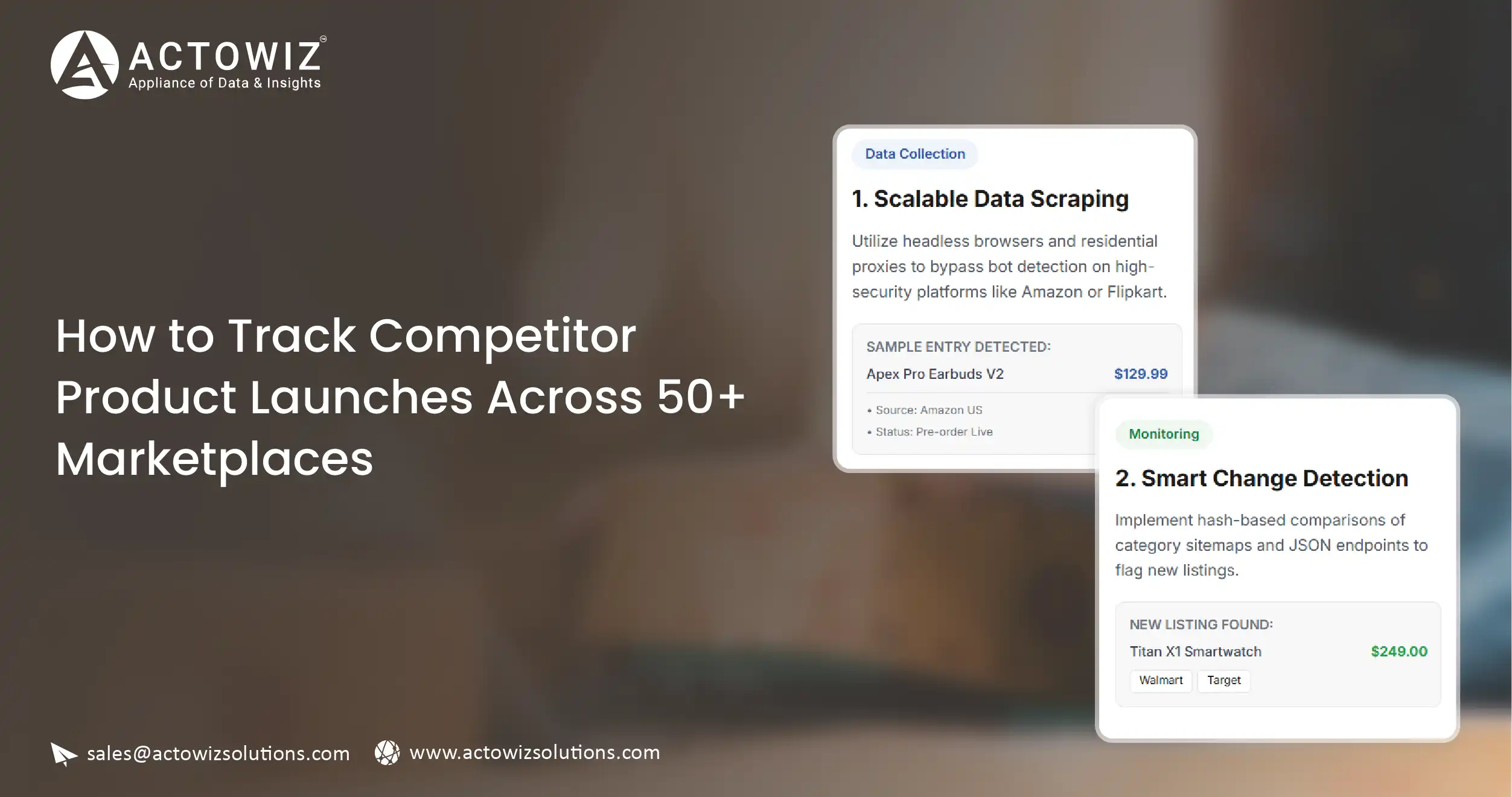
Automated web scraping changes this equation fundamentally. By continuously monitoring competitor product catalogs across all relevant marketplaces, you can detect new launches within 24 hours, track assortment changes over time, and build a comprehensive competitive intelligence database that informs product strategy.
What Competitor Product Tracking Actually Means
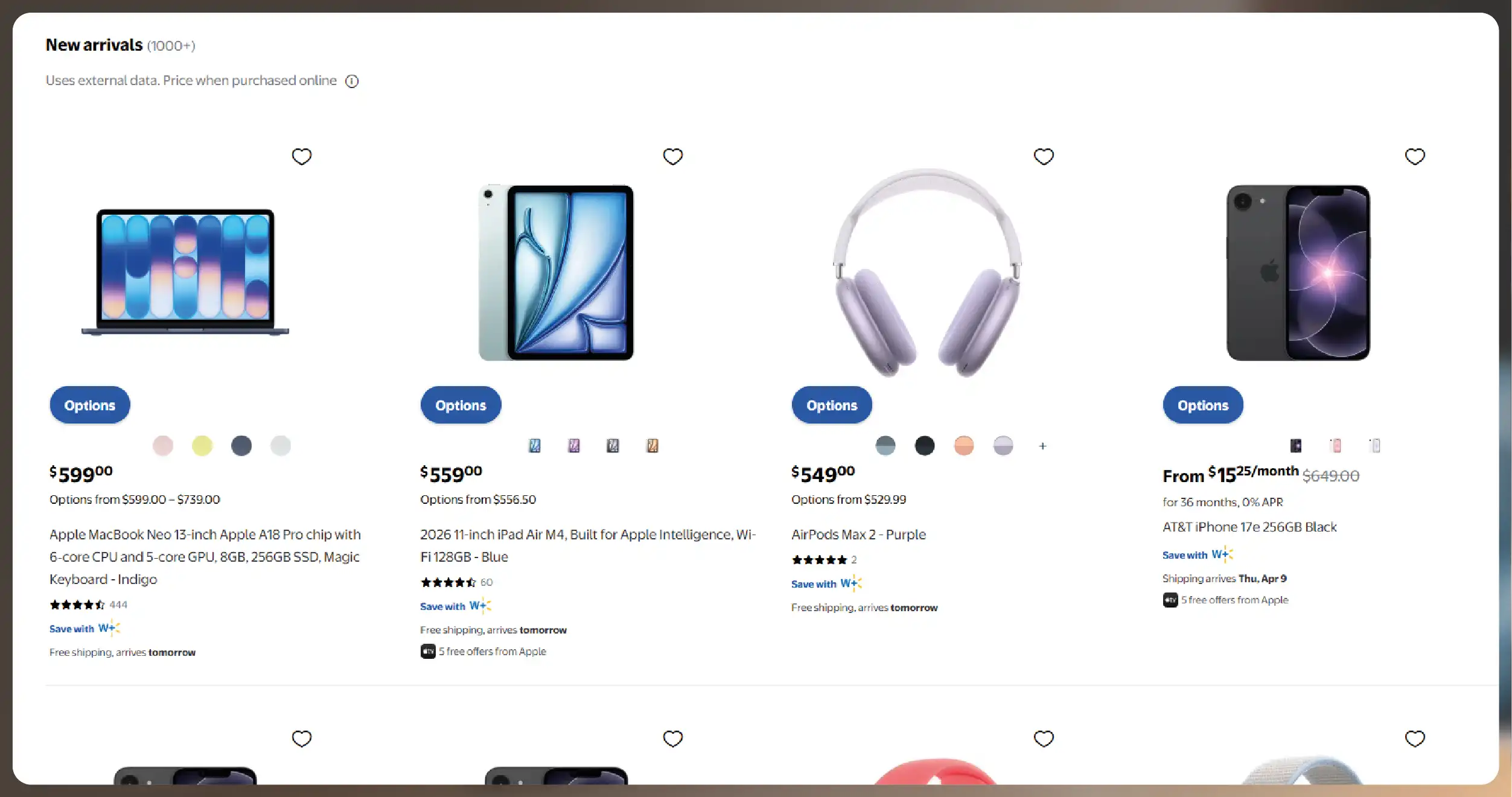
Effective competitor product tracking goes far beyond simply noting when a new item appears on Amazon. It encompasses a comprehensive set of monitoring activities:
- New product launch detection: Automated alerts when competitors add new SKUs to any monitored marketplace, including product details, pricing, and positioning.
- Assortment expansion and contraction: Tracking when competitors add or remove product lines, enter new categories, or adjust their catalog depth.
- Variant and configuration monitoring: Detecting new sizes, colors, bundles, multipacks, or configurations of existing products.
- Pricing at launch: Understanding how competitors price new products relative to their existing range and your competing products.
- Content and positioning analysis: Monitoring how competitors describe, categorize, and position new products through their titles, bullet points, images, and A+ content.
- Review velocity tracking: Measuring how quickly new products accumulate reviews and ratings, indicating market reception and promotional investment.
Building a Competitor Product Monitoring System
Step 1: Define Your Competitive Universe
Start by identifying which competitors matter most. Typically this includes your top 5-10 direct competitors plus any emerging brands gaining traction in your categories. Map each competitor’s presence across marketplaces — a competitor might sell on Amazon, Walmart, their own DTC site, and several niche marketplaces.
Step 2: Establish Baseline Catalogs
Before you can detect changes, you need a baseline. Scrape the complete product catalog for each monitored competitor across all relevant marketplaces. This becomes your reference point for identifying additions, removals, and modifications.
Step 3: Implement Continuous Monitoring
Daily catalog scans compare the current state against the baseline to detect changes. New products are flagged automatically with full product details. Removed products are logged for trend analysis. Price changes, content updates, and variant additions are tracked and timestamped.
Step 4: Set Up Alert Workflows
Not all changes require immediate attention. Configure alert tiers: high priority for new products in your core categories, medium for adjacent category launches, low for routine assortment updates. Route alerts to the right teams — product launches to the product team, pricing changes to the pricing team, content changes to marketing.
Step 5: Build a Competitive Intelligence Database
Over time, your monitoring system builds a valuable historical database of competitor product activity. This enables trend analysis: which categories are competitors investing in? How frequently do they launch new products? What is their typical pricing strategy at launch? These patterns inform your own product roadmap and competitive positioning.
Never Miss Another Competitor Launch
How Leading Companies Use Competitor Product Intelligence
Product Development Teams
Identify gaps in the market by analyzing what competitors offer versus what customers search for but cannot find. Track feature evolution across competitor products to ensure your roadmap addresses emerging requirements. Monitor launch timing to coordinate your own releases for maximum impact.
Category and Merchandising Teams
Optimize your assortment based on competitor moves. If a competitor delists a popular product, ensure you have stock and visibility for the alternative. If competitors are expanding a subcategory, evaluate whether you should follow or differentiate. Use competitor assortment data to strengthen retailer presentations.
Marketing and Brand Teams
Track competitor product positioning through their content, imagery, and messaging. Identify positioning gaps you can own. Monitor competitor review sentiment to understand their weaknesses and highlight your strengths.
Case Study: Electronics Brand Spots Market Gap 3 Months Before Competitors
A consumer electronics brand used Actowiz’s competitor monitoring to track 15 competitors across Amazon, Best Buy, Walmart, and Newegg. The system detected that two major competitors had both discontinued their mid-range wireless earbuds within the same week — a signal that supply chain or component issues might be affecting the category.
The brand fast-tracked a planned product launch in the mid-range segment, achieved first-mover advantage in a temporarily less competitive space, and captured 18% more market share in the category over the following quarter compared to their projections.
Client Feedback
"Detecting that two competitors exited the segment simultaneously gave us a window we would never have seen without automated monitoring. We moved fast and it paid off significantly."
— VP Product, Consumer Electronics Brand
FAQs
1. How quickly do you detect new competitor products?
Daily catalog scans detect new products within 24 hours of listing. For high-priority competitors, we offer twice-daily scans. Alerts are delivered via email, Slack, or webhook within minutes of detection.
2. Can you track competitors on marketplaces outside Amazon?
Yes. We monitor 50+ marketplaces globally including Amazon, Walmart, eBay, Target, Best Buy, Shopify stores, and dozens of category-specific platforms. DTC websites included on Professional and Enterprise plans.
3. What product details do you capture for new launches?
Complete product information including title, description, bullet points, pricing, images, category placement, variant details, brand, and initial customer ratings. Historical tracking begins from the moment of detection.
4. How do you handle competitor products sold under multiple brand names?
Our monitoring tracks by seller and storefront, not just brand name. If a competitor sells under multiple brands or launches a new sub-brand, our system detects all listings associated with that seller entity.
Learn More >> https://www.actowizsolutions.com/track-competitor-product-launches-multiple-marketplaces.php
Originally published at https://www.actowizsolutions.com
