How to Source High-Quality Sugarcane Bagasse Bowls for Food Service Operations?
Author : HitokaCece HitokaCece | Published On : 03 Sep 2026
Introduction
In the rapidly evolving world of sustainable foodservice packaging, few products have gained as much traction as sugarcane bagasse bowls. I have seen food service operations transform their environmental footprint while maintaining the durability and performance their customers expect—all by switching from plastic and foam to bagasse. The North America Sugarcane Tableware Market was valued at USD 920 million in 2024 and is estimated to grow at a CAGR of 10% to reach USD 2.4 billion by 2034. The February 2024 FDA announcement banning PFAS-based grease-proofing agents from U.S. food packaging has triggered a rapid shift toward alternative materials. With global plastic bans accelerating and consumers increasingly favoring brands that demonstrate environmental responsibility, sourcing the right sugarcane bagasse bowls has never been more critical. Let me share what I have learned about sourcing high-quality sugarcane bagasse bowls for food service operations.
Quality Indicators for Sugarcane Bagasse Bowls in Food Service
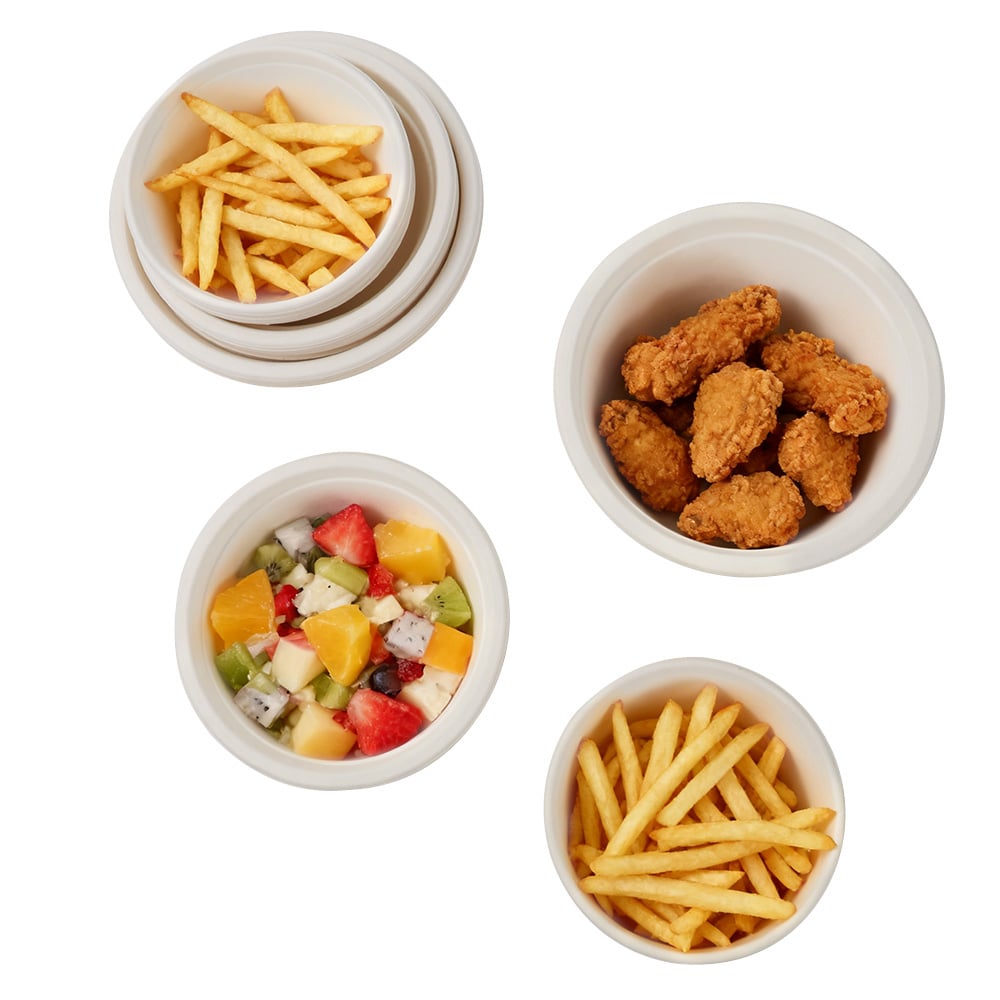
When sourcing sugarcane bagasse bowls for food service, several quality indicators should guide your selection. Heat resistance is paramount—quality bowls should withstand temperatures up to 120°C (248°F) without warping or leaking. This is essential for hot soups, stews, and other heated foods. Oil and grease resistance is equally critical for greasy foods, and quality bowls should resist oil penetration without softening or staining. The structural integrity of the bowl matters too—it must hold its shape under the weight of food without bending or breaking. The bowl‘s edge finish is another indicator; rough or uneven rims indicate poor trimming and can lead to customer complaints. True sugarcane bagasse products contain no PLA coating, contain no petroleum-based additives, and leave no microplastic residue. When evaluating suppliers, request samples and test them with your actual menu items under real service conditions.
Certification and Compliance Requirements for Sugarcane Bagasse Bowls
Certifications are the language of trust in the sustainable tableware industry. For sugarcane bagasse bowls, the most important certifications include compostability standards such as EN 13432 for the European market and ASTM D6400 for the North American market. BPI certification provides additional verification for the US market. PFAS-free compliance is increasingly critical—the EU PPWR (Regulation (EU) 2025/40) will fully enforce PFAS restrictions on August 12, 2026, and the FDA has banned PFAS-based grease-proofing agents from U.S. food packaging. For food-contact safety, FDA approval for the US market and LFGB certification for the European market are essential. True sugarcane bagasse products are tested for food-contact safety and are safe for contact with hot, cold, oily, and wet foods. A reputable supplier will provide these certifications readily and will be transparent about their quality control procedures.
Evaluating Sugarcane Bagasse Bowl Suppliers for Consistency
Consistency is the hallmark of a reliable sugarcane bagasse bowl supplier. Food service operations depend on predictable quality and supply, week after week. When evaluating potential suppliers, look for manufacturers with ISO 9001 and ISO 14001 certifications, which demonstrate commitment to quality management and environmental responsibility. Assess their production capacity and lead times—can they handle your order volume consistently? Larger facilities (typically over 10,000 m²) can handle bulk orders efficiently and maintain stable output during peak seasons. Verify their export experience and documentation capabilities for your target markets. The most reliable suppliers offer full transparency from farm-sourced fiber to finished product. Building a long-term relationship with a supplier who invests in quality control and certifications ensures a steady supply of premium sugarcane bagasse bowls for your food service operation.
Conclusion
Sourcing high-quality sugarcane bagasse bowls requires attention to quality indicators such as heat resistance up to 120°C, oil resistance, and structural integrity, verification of certifications including compostability standards (EN 13432, ASTM D6400) and PFAS-free compliance, and thorough evaluation of suppliers for consistency, production capacity, and export experience. With the North American market projected to reach USD 2.4 billion by 2034 and regulatory pressure accelerating the shift away from plastic, buyers who prioritize quality and supplier reliability will be best positioned to meet growing demand. By focusing on these factors, food service buyers and procurement professionals can source sugarcane bagasse bowls that deliver performance, safety, and sustainability.
