How to Select the Right Spare Parts for CNC Machine Maintenance
Author : Surya makeyoueasy | Published On : 13 Nov 2026
Introduction
Regular maintenance is essential for keeping CNC machines accurate, reliable, and productive. However, selecting an incorrect replacement component can lead to machine downtime, recurring faults, and unexpected repair costs. Choosing the right CNC machine spare parts requires more than matching dimensions. Machine specifications, component compatibility, operating conditions, and supplier reliability must all be considered.
Why Is Selecting the Right CNC Spare Part Important?
CNC machines depend on mechanical, electrical, and control components working together. A poorly matched replacement can affect positioning accuracy, machining quality, machine safety, and component life.
Selecting the correct spare parts helps:
-
Reduce unexpected machine downtime.
-
Maintain machining accuracy and repeatability.
-
Prevent damage to connected components.
-
Support planned maintenance activities.
-
Control repair and replacement costs.
Common CNC Machine Spare Parts
Understanding the main categories makes it easier to identify the components required for maintenance.
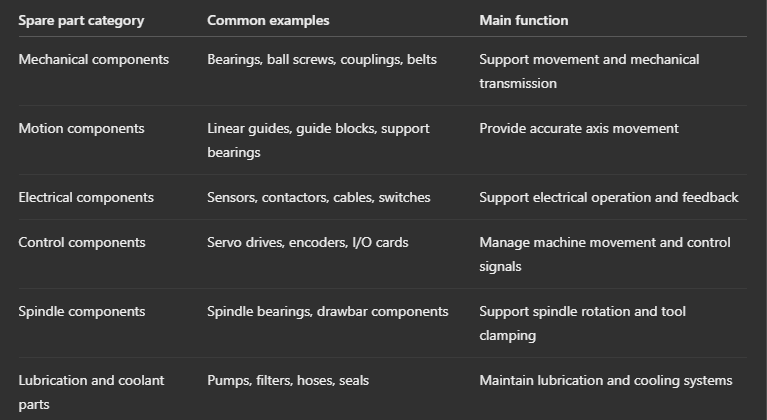
The exact parts required depend on the CNC machine type, manufacturer, configuration, and operating conditions.
How to Select the Right Spare Parts for CNC Machine Maintenance
1. Identify the CNC Machine Model
Start by checking the machine manufacturer’s name, model number, serial number, manufacturing year, and CNC control system. Also identify relevant options and fitted components.
Machines from the same product series may use different components depending on their configuration or production revision. Use the machine’s maintenance manual, parts catalogue, and original component number to identify the correct replacement.
2. Check the Original Part Number
Whenever possible, use the original manufacturer’s part number to identify the replacement. Record the component description, revision, dimensions, and installation location.
A photograph can help explain the component, but it should not be the only method of identification. Similar-looking parts may have different electrical ratings, connector arrangements, or mechanical specifications.
3. Verify Technical Specifications and Compatibility
A replacement part must match the machine’s technical requirements, not just its physical appearance.
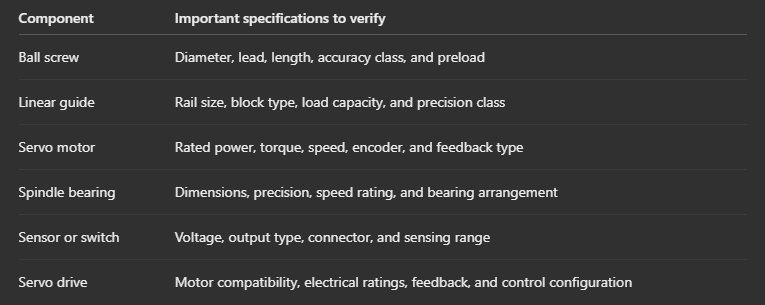
Always confirm specifications using the machine or component manufacturer’s documentation before ordering.
4. Choose Between OEM and Compatible Spare Parts
OEM (Original Equipment Manufacturer) parts are supplied by the machine manufacturer or its approved component suppliers. They are generally the preferred option when exact compatibility and manufacturer support are important.
Compatible aftermarket parts may also be suitable when their specifications, quality, and performance are verified.
Consider the following before purchasing:
-
Confirm that the alternative is approved for the machine.
-
Check material quality and manufacturing standards.
-
Request relevant test reports or quality documentation.
-
Review warranty and technical support availability.
-
Avoid unverified parts for critical machine systems.
For safety-related components, spindle assemblies, servo systems, and control hardware, follow the manufacturer’s approved replacement procedure.
5. Consider Machine Operating Conditions
Spare-part requirements depend on how the CNC machine is used. Continuous production, multiple shifts, heavy machining, dust, coolant exposure, and vibration can influence component wear.
Review operating hours, maintenance records, recurring failures, and the machine’s working environment before deciding which parts need regular replacement or backup stock.
6. Evaluate Supplier Reliability and Availability
A suitable spare part is useful only when it can be sourced with reliable technical support. Before placing an order, check:
-
Product identification and specification details.
-
Supplier experience with CNC components.
-
Stock availability and confirmed lead time.
-
Warranty and return conditions.
-
Technical assistance for compatibility questions.
For critical components, consider the total replacement time, including sourcing, delivery, installation, and machine testing.
How to Plan a CNC Spare Parts Inventory
Not every component needs to be stored in large quantities. Prioritize spare parts according to their failure impact, replacement frequency, cost, and availability.
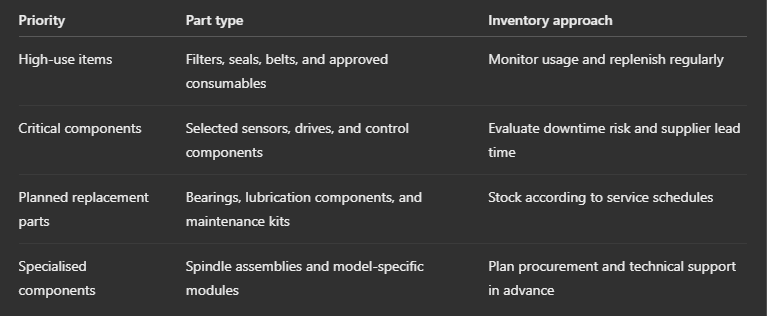
Review stock levels periodically. Proper labelling, clean storage, and accurate inventory records help prevent confusion and unnecessary purchases.
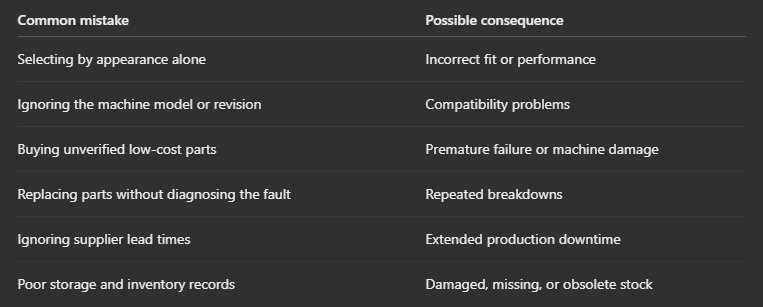
Common Mistakes to Avoid When Buying CNC Spare Parts
Why Choose MakeYouEasy for CNC Maintenance Requirements?
MakeYouEasy helps machining professionals explore CNC cutting tools, tool holders, machine accessories, and related industrial products. Identifying the correct product specifications and compatibility requirements is an important step when planning CNC maintenance and replacement needs.
Conclusion
Selecting the right spare parts for CNC machine maintenance involves identifying the machine correctly, checking original part numbers, verifying technical specifications, and choosing reliable suppliers. A planned inventory strategy and regular maintenance records can also help reduce unexpected downtime and control operating costs.
Before purchasing any replacement component, confirm its compatibility with the machine manufacturer’s specifications. The right part, correctly selected and installed, helps maintain dependable CNC machine performance.
Explore CNC tools and machining accessories at MakeYouEasy.com.
FAQs
1. How do I identify the correct spare parts for a CNC machine?
Check the machine model, serial number, original part number, maintenance manual, and component specifications.
2. Are OEM spare parts better than aftermarket parts?
OEM parts are generally preferred for assured compatibility, while verified aftermarket alternatives may be suitable when they meet the required specifications.
3. Which spare parts should be kept in CNC machine inventory?
Prioritise frequently used maintenance items, scheduled replacement parts, and critical components with long procurement lead times.
4. Can an incorrect spare part affect CNC machining accuracy?
Yes. Incorrect mechanical, motion, spindle, or control components can affect positioning, vibration, repeatability, and machining quality.
5. How often should CNC spare parts inventory be reviewed?
Review it periodically and update it after breakdowns, component replacements, changes in machine usage, or supplier availability.
Popular Search Keywords
CNC machine spare parts, CNC maintenance spare parts, CNC machine replacement parts, CNC spare parts selection, CNC machine maintenance, CNC machine components, CNC mechanical spare parts, CNC machine preventive maintenance, industrial CNC spare parts
