How to Select the Right Raised Access Floor System for Your Data Center and Commercial Building?
Author : HitokaCece HitokaCece | Published On : 12 Aug 2026
Introduction
Over the years in the raised flooring industry, I have seen countless data center and commercial building projects compromised by one fundamental oversight: choosing the wrong raised access floor system for their application. The raised access floor may seem like a straightforward component of building infrastructure, but its impact on cooling efficiency, cable accessibility, and long-term operational reliability cannot be overstated. A poorly selected floor leads to inadequate airflow, difficult cable management, and premature structural failure. The right raised floor system, however, delivers optimal underfloor air distribution, seamless access to services, and years of reliable service under heavy loads. With the global raised access floor market projected to grow from USD 151 billion in 2025 to USD 283 billion by 2033, understanding proper floor selection has never been more important. Having worked with facility managers, data center designers, and contractors across multiple regions, I have learned what separates a successful raised floor investment from a costly mistake. In this article, I want to share those lessons with you.
Raised Access Floor Load Capacity and Application Requirements
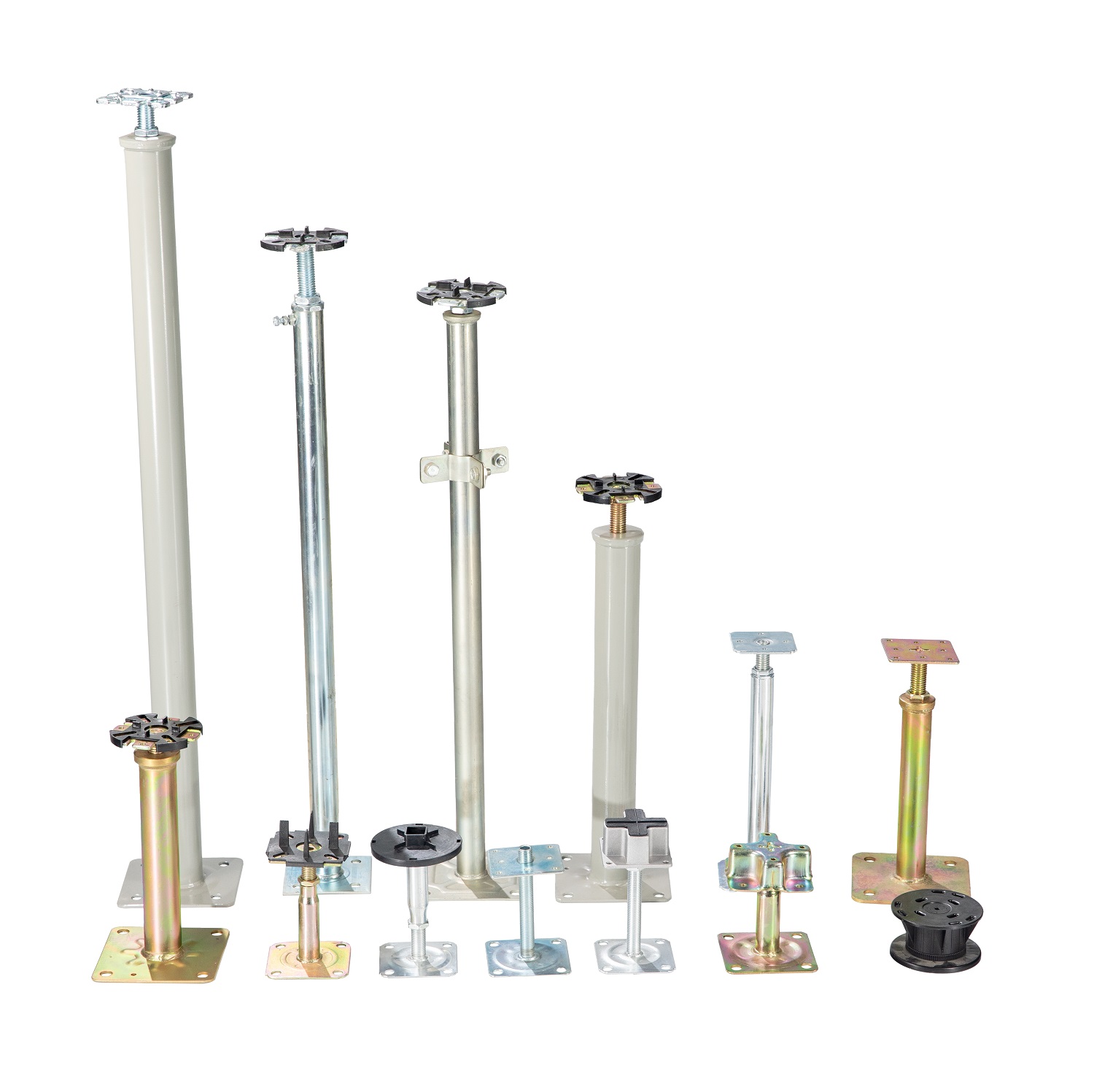
The foundation of any smart raised access floor selection is understanding your load capacity requirements and application environment. Data centers and commercial buildings place unique demands on raised flooring systems. The floor must support not only the weight of server racks, equipment, and furniture but also the dynamic loads of installation, maintenance, and future expansion. When evaluating raised access floor options, consider both the ultimate load and the rolling load capacity. The ultimate load is the maximum weight the panel can withstand before failure, while the rolling load reflects the floor's ability to handle wheeled equipment such as server trolleys and maintenance carts. High-performance steel raised access floor panels offer exceptional load-bearing capacity, making them ideal for heavy server environments. Calcium sulphate raised access floor panels provide excellent load distribution and are particularly well-suited for applications requiring high point load resistance. The FS1500 calcium sulphate panel, for example, achieves a concentrated load capacity of 680 kg and a uniform load of 33.34 kN/m², meeting the most demanding data center requirements. When selecting a raised floor system, I always advise clients to plan for future expansion. A floor that meets today's load requirements may be inadequate as equipment density increases. Choosing a raised floor with higher load capacity than currently needed is a wise investment in long-term flexibility.
Raised Access Floor Material Options Steel vs Calcium Sulphate vs Aluminum
The choice between steel raised access floor, calcium sulphate raised access floor, and aluminum raised access floor panels is one of the most important decisions in raised floor selection. Steel raised access floor panels are manufactured with a steel top and bottom skin bonded to a cementitious or lightweight core. These panels offer exceptional strength-to-weight ratio, making them ideal for applications where load capacity is critical. Steel panels also provide excellent dimensional stability and are resistant to moisture and environmental changes. Calcium sulphate raised access floor panels, by contrast, are made from a high-density calcium sulphate composite reinforced with cellulose fibres. These panels offer superior point load resistance, making them ideal for heavy equipment installations. Calcium sulphate panels also provide excellent thermal mass, which can contribute to more stable temperature control in data center environments. The calcium sulphate core is manufactured from non-toxic, unbleached plant fiber combined with solidified calcium sulphate crystal, achieving international strength standards. Aluminum raised access floor panels are precision die-cast from aluminum alloy, offering a smooth, non-porous surface that supports easy cleaning and effective particle control. They are particularly well-suited for cleanrooms and technical environments requiring high load capacity and cleanliness control. When choosing between steel, calcium sulphate, and aluminum raised access floors, consider your specific load requirements, environmental conditions, and budget. I have worked with data centers that chose steel for its strength and cost-effectiveness, others that selected calcium sulphate for its superior point load performance and thermal properties, and cleanroom facilities that preferred aluminum for its non-porous, easy-to-clean surface. The right choice depends on your specific application.
Raised Access Floor Finish Selection HPL vs PVC vs Ceramic
The surface finish of raised access floor panels plays a critical role in durability, appearance, and performance. High-pressure laminate (HPL), PVC, and ceramic are the most common finish options, each offering distinct advantages for different applications. HPL is a decorative surface material created by impregnating multiple layers of kraft paper with thermosetting resins and consolidating them under high heat and pressure. The result is a highly durable, scratch-resistant surface that can be manufactured in a wide range of colours, patterns, and textures. HPL raised access floors are particularly well-suited for high-traffic commercial environments such as office buildings and corporate headquarters. The surface resists abrasion, impact, and staining, maintaining its appearance even under heavy use. HPL is highly resistant to scratches and burns, making it the standard for heavy data centers. PVC finishes offer distinct advantages for applications where static control and clean room performance are critical. PVC raised access floors are manufactured with a homogeneous PVC surface layer that provides excellent anti-static properties. In environments such as data centers, electronics manufacturing facilities, and laboratories, static electricity can damage sensitive equipment and disrupt operations. PVC raised access floors dissipate static charge safely, protecting equipment and personnel. Ceramic finishes provide the highest level of wear resistance and are ideal for environments requiring superior abrasion resistance and easy cleaning. Calcium sulphate panels with ceramic veneer completely avoid the problem of warpage and offer excellent fire resistance, strong load-bearing performance, and effective sound insulation. When selecting between HPL, PVC, and ceramic finishes, consider the environment, the aesthetic requirements, and the maintenance protocols. HPL excels in durability and aesthetics for commercial environments, PVC excels in anti-static and clean room applications, and ceramic offers the ultimate in wear resistance for demanding industrial settings.
Conclusion
Selecting the right raised access floor system for your data center and commercial building requires careful attention to load capacity and application requirements that ensure reliable support for current and future equipment, material options including steel, calcium sulphate, and aluminum panels that balance strength, stability, and thermal performance, and finish choices including HPL, PVC, and ceramic that deliver durability, aesthetics, or anti-static protection as needed. By evaluating these factors against your specific application requirements, facility managers and procurement professionals can select a raised floor system that delivers reliable performance, efficient cooling, and long-term value. In an industry where downtime is measured in dollars per minute and cooling costs represent a significant portion of operating expenses, the right raised access floor is not just a structural component—it is a strategic investment in your facility's performance and profitability.
