How to Select the Right PVC Sewer Pipe for Your Drainage Project?
Author : HitokaCece HitokaCece | Published On : 13 Aug 2026
Introduction
A sewer system is only as good as the pipe that carries the waste, and I have seen too many projects where the wrong PVC sewer pipe led to collapses, blockages, and costly repairs within years of installation. PVC sewer pipe has been the backbone of underground drainage for decades, offering exceptional corrosion resistance, light weight for easy handling, and a service life exceeding 50 years when properly selected and installed. The global sewer and drainage pipe market continues to grow, and choosing the right pipe has never been more important. Let me share what I have learned about selecting PVC sewer pipes that deliver lasting performance.
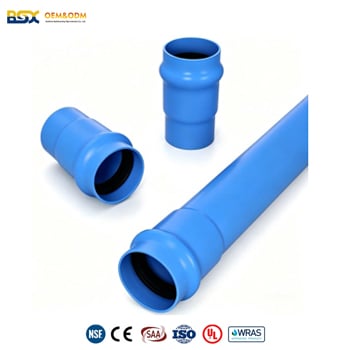
Understanding PVC Sewer Pipe Specifications and Standards
The foundation of reliable PVC sewer pipe selection is understanding the key specifications and applicable standards. PVC sewer pipes are manufactured in various wall thicknesses and stiffness classes, with pipe stiffness (SN) ratings from SN2 to SN16 indicating the pipe's ability to resist deformation under soil loads. Higher SN ratings are required for deeper installations and heavier traffic loads. The material must meet rigorous standards such as ISO 4435 for PVC-U pipes for sewerage, ASTM D2729 for PVC sewer pipe, and EN 1401 for PVC-U piping systems. Product standards for plastic sewer pipes define requirements for ring stiffness, impact resistance, and seal performance. When selecting PVC sewer pipe, verify that the product meets the relevant standards for your region and application.
Installation and Bedding Requirements for PVC Sewer Pipe
Proper installation is as critical as the pipe itself for long-term PVC sewer pipe performance. The pipe must be bedded on a stable, properly prepared foundation to provide uniform support along its entire length. The bedding material should be free from stones and debris that could damage the pipe or cause localized stress points. Jointing systems—including elastomeric gaskets and solvent cement joints—must be properly aligned and sealed to prevent infiltration and exfiltration. For PVC sewer pipe, the joint design must accommodate minor settlement and thermal movement while maintaining a watertight seal. Backfill should be placed and compacted in layers to avoid displacing the pipe. A well-installed PVC sewer pipe system will provide decades of reliable service.
Soil Conditions and Load Calculations for PVC Sewer Pipe
The selection of PVC sewer pipe must account for the specific soil conditions and loads the pipe will encounter. Pipe stiffness requirements are determined by burial depth, soil type, surface loading, and groundwater conditions. In soft or unstable soils, higher SN ratings or additional structural support may be required to prevent deformation. When crossing beneath roads or railways, the pipe must be able to withstand traffic loads without compromising its structural integrity. Engineers should calculate the expected loads and select PVC sewer pipe with an appropriate SN rating. Consulting with pipe manufacturers and geotechnical engineers ensures that the selected PVC sewer pipe is suitable for the specific site conditions.
Conclusion
Selecting the right PVC sewer pipe requires attention to specifications and standards, installation and bedding requirements, and soil conditions. Pipe stiffness ratings must match the burial depth and loading conditions. Proper bedding and jointing prevent infiltration and structural failure. Soil analysis and load calculations ensure the pipe can withstand site-specific demands. By focusing on these factors, engineers and contractors can choose PVC sewer pipes that deliver reliable performance and long service life.
