How to Select the Right Liquid Filling Machine for Your Production Line?
Author : HitokaCece HitokaCece | Published On : 17 Jul 2026
Introduction
Over the years in the liquid filling and packaging machinery industry, I have seen production lines struggle—and sometimes fail—because of one fundamental oversight: choosing the wrong liquid filling machine. The filling machine is the heart of any liquid packaging line. It determines not only how fast you can produce but also how accurately you fill, how much product you waste, and ultimately, how satisfied your customers are. A machine that cannot handle your product's viscosity will drip and create messes. A machine that cannot achieve the required accuracy will give away profit with every bottle. Having worked with production managers, plant engineers, and procurement professionals across multiple regions, I have learned what separates a successful filling machine investment from an expensive mistake. In this article, I want to share those lessons with you.
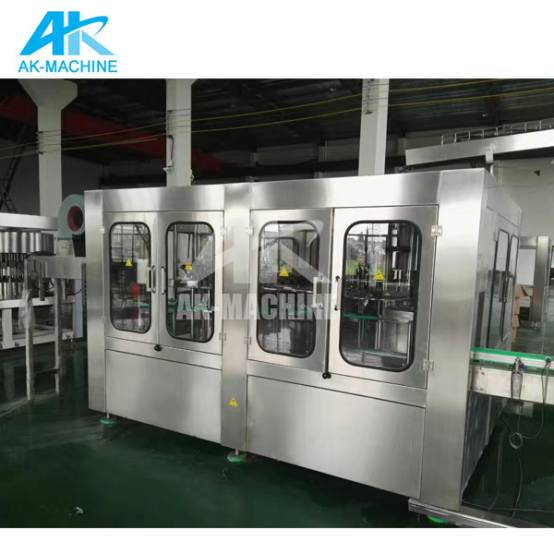
Liquid Filling Machine Product Viscosity and Characteristics
The most fundamental factor in liquid filling machine selection is understanding your product's physical properties. The viscosity of your liquid—its resistance to flow—is the single most important characteristic that determines which filling technology will work effectively. Low-viscosity liquids such as water, juice, and thin beverages can be handled by gravity fillers or simple pump systems. Medium-viscosity liquids such as syrups, sauces, and oils require positive displacement pumps or piston fillers that can push thicker products through the filling nozzles. High-viscosity products such as pastes, gels, and heavy creams often require specialized filling systems with heated nozzles or larger-diameter passages. Beyond viscosity, consider whether your product is carbonated, prone to foaming, shear-sensitive, or abrasive. Carbonated beverages require back-pressure filling to prevent foaming and loss of carbonation. Foaming products may need special filling heads or slower fill speeds to prevent overflow. Shear-sensitive products such as certain food emulsions or biological materials require gentle handling to avoid degrading the product quality. I have worked with production managers who purchased a filling machine that was perfectly suited for one product but could not handle the viscosity of their other product lines. Understanding your product characteristics is the essential first step.
Liquid Filling Machine Fill Volume and Speed Requirements
The second critical factor in liquid filling machine selection is determining your fill volume and speed requirements. Fill volume refers to the amount of liquid dispensed into each container, which can range from a few milliliters for pharmaceutical samples to several liters for large beverage bottles or industrial containers. The machine must be capable of achieving the required accuracy at the required volume. For small-volume fills, precision is paramount—a fraction of a milliliter can represent a significant percentage of the total volume. For large-volume fills, speed and consistency are the primary concerns. Production speed is measured in bottles or containers per hour, with modern high-speed filling lines capable of producing tens of thousands of bottles per hour. However, higher speed often comes with trade-offs in accuracy and equipment cost. When evaluating your speed requirements, consider not just your current production needs but also your future growth projections. A machine that meets today's needs may become a bottleneck as your business expands. I have worked with plant engineers who opted for a slower, lower-cost machine and found themselves unable to meet order volumes within a year of installation. Matching the machine's capacity to your production volume—with room for growth—is essential for long-term success.
Liquid Filling Machine Container Compatibility and Filling Technology
The third critical factor in liquid filling machine selection is container compatibility and filling technology. The machine must be compatible with the containers you use—whether they are glass bottles, PET bottles, aluminum cans, plastic pouches, or rigid containers of various shapes and sizes. The filling machine must handle the container dimensions, neck sizes, and material properties without damaging the containers or compromising the seal. Different container types may require different filling heads, conveyor systems, or container handling mechanisms. The choice of filling technology is equally important. Gravity filling is the simplest and most cost-effective method for low-viscosity, non-carbonated liquids. Pressure filling uses pressurized product to fill containers faster and is suitable for medium-viscosity products. Vacuum filling draws product into the container using suction and is ideal for filling containers with narrow necks. Pump filling uses positive displacement pumps for accurate fills across a wide viscosity range. For carbonated beverages, back-pressure filling with counter-pressure is essential to prevent foaming and maintain carbonation. Modern liquid filling machines can be integrated with upstream and downstream equipment such as bottle rinsers, capping machines, labeling machines, and packaging equipment to form a complete production line. I have worked with procurement professionals who selected a filling technology that was incompatible with their containers or product characteristics, resulting in costly retrofits and production delays.
Conclusion
Selecting the right liquid filling machine requires careful attention to product viscosity and characteristics that determine which filling technology will work effectively, fill volume and speed requirements that match your current production needs and future growth, and container compatibility with the right filling technology that ensures efficient, accurate, and reliable operation. By evaluating these factors against your specific production requirements, production managers, plant engineers, and procurement professionals can select a liquid filling machine that delivers precision, efficiency, and long-term value. In an industry where every drop counts and every minute of downtime costs money, the right liquid filling machine is not just a piece of equipment—it is a strategic investment in your production success.
