How to Select the Right Double Girder Overhead Crane for Heavy Manufacturing and Steel Mill Applicat
Author : HitokaCece HitokaCece | Published On : 10 Aug 2026
Introduction
Over the years in the crane manufacturing industry, I have seen countless manufacturing plants and steel mills struggle with one fundamental challenge: selecting the right double girder overhead crane for their operations. The wrong choice leads to inadequate lifting capacity, frequent breakdowns, and costly downtime. The right crane, however, delivers decades of reliable service, efficient material handling, and a strong return on investment. Double girder overhead cranes are the workhorses of heavy industry—they move steel coils, lift massive molds, transport finished products, and keep production lines running. Having worked with plant managers and engineering consultants across multiple regions, I have learned what separates a successful crane investment from an expensive mistake. In this article, I want to share those lessons with you.
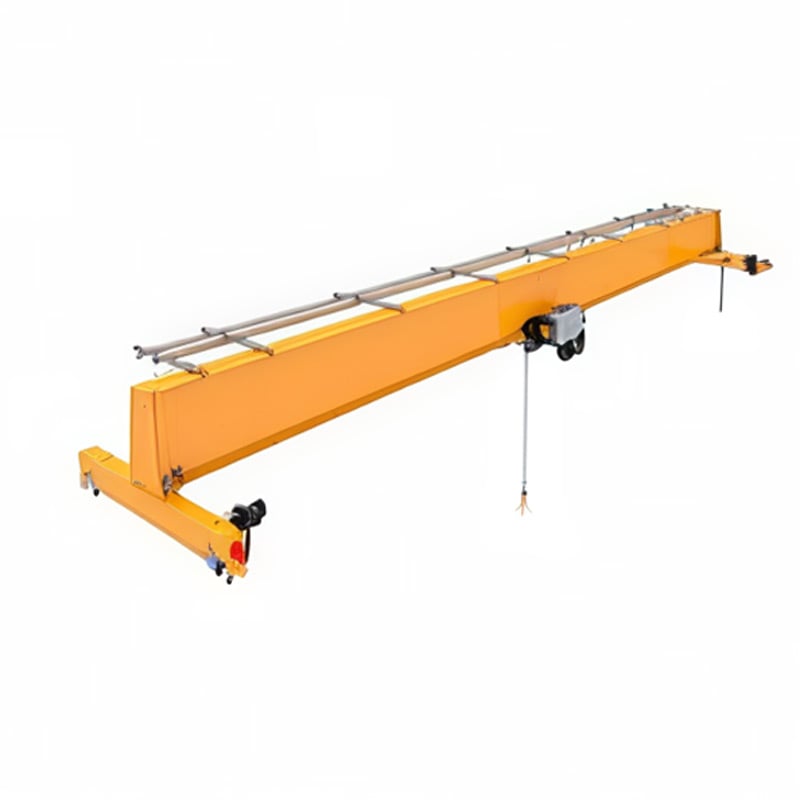
Double Girder Overhead Crane Load Capacity and Structural Design
The most fundamental factor in selecting a double girder overhead crane is understanding your load capacity requirements and the structural design that supports them. Double girder overhead cranes feature two main girders that provide superior strength and stability compared to single girder designs. This dual-girder configuration enables handling of much heavier loads, with capacities ranging from several tons to hundreds of tons. The crane consists of two main beams and two end beams, providing strong bearing capacity and the ability to withstand large loads. For steel mills and heavy manufacturing plants, a 25-ton double girder overhead crane is often the standard choice for handling heavy structural elements, steel billets, and finished products. The rated capacity must be carefully matched to your maximum load weights, with an appropriate safety margin for future growth. The structural design must also accommodate the span—the distance between runway rails—which can range from 10 meters to over 30 meters depending on your facility layout. When evaluating double girder overhead crane options, consider not just your current lifting needs but also future expansion. A crane that meets today's requirements may become a bottleneck as production volumes increase.
Double Girder Overhead Crane Duty Classification and Service Life
The second critical factor in double girder overhead crane selection is duty classification. This determines how the crane is rated for frequency of use and load intensity over its service life. A crane used for occasional maintenance lifts has very different requirements than one operating continuously in a steel mill or foundry. Duty classes range from A1 (light service, infrequent use) to A8 (continuous heavy service with high loads). For heavy manufacturing and steel mill applications, duty classes A6 to A8 are typically required. For example, a crane in a steel rolling mill operating 24/7 must be designed for continuous heavy-duty service with high reliability components. FEM standards—widely used in Europe and increasingly adopted globally—provide clear classification systems that guide crane selection. A double girder overhead crane in a demanding environment should be built to FEM 2M (equivalent to ISO A5) duty class or higher. When specifying your crane, be honest about your actual usage patterns. Consider not just today's production volume but also future growth. I have worked with plant managers who specified a lower duty class than needed and faced premature component failure and costly downtime within years of installation. Investing in the right duty class from the start is far more cost-effective than upgrading or replacing equipment later.
Double Girder Overhead Crane Customization for Complex Environments
The third critical factor in double girder overhead crane selection is customization for complex industrial environments. Every manufacturing facility has unique constraints—low headroom, high temperatures, corrosive conditions, or specific load handling requirements. A one-size-fits-all approach rarely works for demanding applications. For plants with limited overhead clearance, low-headroom designs can maximize usable lift height within existing building constraints. For steel mills and foundries where high temperatures are a constant challenge, heat-resistant components, specialized cooling systems, and heat-shielding protect critical equipment from thermal damage. The crane's control system also offers significant customization options—cab control, pendant pushbutton control, and remote control are all available. Remote control has become increasingly popular for improving operator safety and positioning flexibility. Double girder overhead cranes can be equipped with an overload protection system that automatically halts lifting when the weight exceeds the rated load. When evaluating customization capabilities, look for manufacturers who treat customization as a core competency rather than an afterthought. The ability to adapt standard designs to your specific site constraints can dramatically improve operational efficiency and reduce installation costs.
Conclusion
Selecting the right double girder overhead crane requires careful attention to load capacity and structural design that match your lifting requirements and facility layout, duty classification that aligns with your operational intensity and service life expectations, and customization for complex environments that addresses your unique site constraints. By evaluating these factors against your specific application needs, plant managers and procurement professionals can invest in a double girder overhead crane that delivers reliable performance, efficient material handling, and long-term value. In heavy manufacturing and steel mill operations where downtime is measured in thousands of dollars per hour, the right crane is not just equipment—it is a strategic investment in productivity and profitability.
