How to Reduce Vibration During Grooving Operations
Author : Surya makeyoueasy | Published On : 04 Aug 2026
Introduction
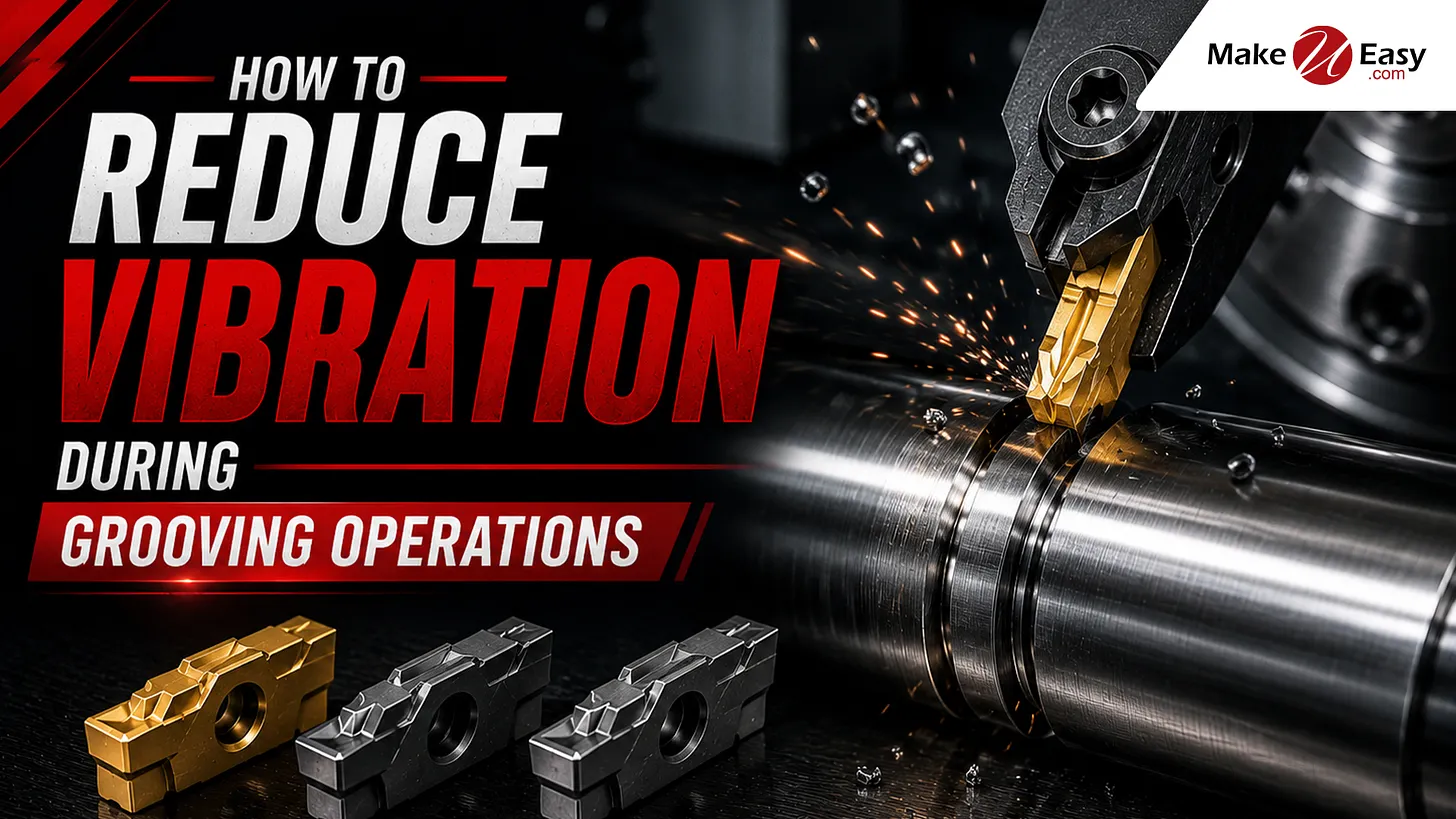
Vibration is one of the most common challenges in CNC grooving operations. Excessive vibration, also known as chatter, can negatively affect surface finish, dimensional accuracy, tool life, and overall machining efficiency. It may also lead to insert chipping, poor chip evacuation, and increased machine wear, resulting in higher production costs and unplanned downtime.
Fortunately, vibration can be minimised by selecting the right grooving insert, using rigid tool holders, optimising cutting parameters, and ensuring proper machine setup. Small improvements in tooling and machining practices can significantly enhance cutting stability and productivity.
At MakeYouEasy, we provide premium grooving inserts, CNC tool holders, and precision tooling solutions designed to deliver stable, accurate, and reliable machining performance.
🌐 Website:
What Causes Vibration During Grooving?
Several factors contribute to vibration in grooving operations, including:
-
Excessive tool overhang
-
Incorrect grooving insert selection
-
Worn or damaged inserts
-
Poor workpiece clamping
-
High cutting speeds
-
Incorrect feed rates
-
Machine spindle wear
-
Poor chip evacuation
-
Low machine rigidity
Identifying the root cause helps improve machining performance.
Why Reducing Vibration Is Important
Controlling vibration offers several benefits:
-
Better surface finish
-
Higher machining accuracy
-
Longer insert life
-
Improved tool stability
-
Reduced machine wear
-
Better chip control
-
Lower production costs
-
Increased productivity
1. Choose the Right Grooving Insert
Selecting the proper insert is the first step in reducing vibration.
Choose an insert based on:
-
Workpiece material
-
Groove width
-
Groove depth
-
Insert geometry
-
Insert coating
A high-quality carbide grooving insert provides greater rigidity and wear resistance.
2. Minimize Tool Overhang
Long tool overhang reduces rigidity and increases vibration.
For best results:
-
Keep the tool as short as possible.
-
Use the minimum overhang required.
-
Select a rigid tool holder.
A shorter setup provides greater stability during cutting.
3. Use a Rigid Tool Holder
A strong and accurately manufactured tool holder improves cutting stability.
Benefits include:
-
Reduced deflection
-
Lower vibration
-
Better machining accuracy
-
Improved insert life
Always ensure the tool holder is securely clamped.
4. Optimize Cutting Speed
Running at excessively high spindle speeds often increases chatter.
Follow the recommended cutting speeds based on:
-
Workpiece material
-
Insert grade
-
Groove dimensions
-
Machine capability
Balanced cutting parameters improve stability.
5. Adjust Feed Rate Correctly
Very low feed rates can cause rubbing, while excessively high feeds increase cutting forces.
Use the manufacturer’s recommended feed rates for smoother cutting and better chip formation.
6. Improve Workpiece Clamping
An unstable workpiece amplifies vibration.
Ensure that:
-
The workpiece is firmly clamped.
-
Fixtures are rigid.
-
Long components are properly supported.
-
Machine setup is secure.
Rigid workholding is essential for accurate grooving.
7. Maintain Proper Chip Control
Poor chip evacuation increases cutting pressure and heat.
Good chip control helps:
-
Reduce vibration
-
Prevent insert damage
-
Improve surface finish
-
Extend tool life
Use inserts with effective chip breaker designs and apply coolant where required.
8. Inspect Inserts Regularly
A worn insert generates uneven cutting forces that can increase chatter.
Replace inserts when you notice:
-
Edge wear
-
Chipping
-
Cracks
-
Poor surface finish
-
Increased cutting forces
Regular inspections maintain consistent machining quality.
9. Check Machine Condition
Machine health directly affects machining stability.
Regularly inspect:
-
Spindle bearings
-
Tool holders
-
Chuck condition
-
Guideways
-
Machine alignment
Preventive maintenance reduces unnecessary vibration.
Common Mistakes That Increase Vibration
Avoid these common mistakes:
-
Using worn grooving inserts
-
Excessive tool overhang
-
Incorrect cutting parameters
-
Poor workpiece support
-
Ignoring spindle maintenance
-
Using low-quality tool holders
-
Delaying insert replacement
Correcting these issues improves both tool life and machining quality.
Why Choose MakeYouEasy?
At MakeYouEasy, we offer premium CNC tooling solutions designed for precision and durability.
Our Product Range
-
Grooving Inserts
-
Turning Inserts
-
Threading Inserts
-
Face Milling Cutters
-
High Feed Milling Cutters
-
Thread Milling Cutters
-
U Drills
-
BT Tool Holders
-
ER Collet Chucks
-
Precision Measuring Instruments
Why Buy From MakeYouEasy?
-
Premium industrial-quality products
-
Precision-engineered tooling
-
Competitive pricing
-
Fast Pan-India delivery
-
Expert technical support
-
Trusted CNC tooling supplier
🌐 Explore our products:
Conclusion
Reducing vibration during grooving operations is essential for achieving better surface finishes, longer insert life, and higher machining accuracy. By selecting the right grooving insert, minimizing tool overhang, using rigid tool holders, optimizing cutting parameters, and maintaining your CNC machine, you can significantly improve machining stability and productivity.
High-quality tooling makes a noticeable difference in demanding machining applications. MakeYouEasy offers reliable grooving inserts and CNC tooling solutions that help manufacturers achieve smoother, more efficient, and more accurate grooving operations.
Frequently Asked Questions (FAQs)
1. What causes vibration during grooving operations?
Excessive tool overhang, poor workpiece clamping, incorrect cutting parameters, and worn inserts are common causes of vibration.
2. How can I reduce vibration while grooving?
Use a rigid tool holder, minimize tool overhang, select the correct grooving insert, and optimize cutting speeds and feeds.
3. Does insert quality affect vibration?
Yes, high-quality carbide grooving inserts provide better stability, wear resistance, and smoother cutting.
4. Why is chip control important during grooving?
Effective chip control reduces cutting pressure, minimizes heat buildup, and helps prevent vibration.
5. Where can I buy premium grooving inserts in India?
You can purchase high-quality grooving inserts and CNC tooling from
