How to Pack Foam for Shipping: Compression and Roll Packing Guide
Author : Kimkoo Mattress Machinery | Published On : 03 Sep 2026
Shipping foam products can be challenging because foam is lightweight but often takes up a large amount of space. A large foam block, mattress foam layer, or upholstered furniture component may occupy much more room during transportation than its actual weight would suggest. For manufacturers and distributors, the key is to reduce packaging volume without damaging the product.
One practical solution is to combine foam compression with airtight sealing and roll packing. This guide explains how the process works, what type of foam can be compressed, and what manufacturers should consider when preparing foam for shipping.
Why Should Foam Be Compressed Before Shipping?
Foam naturally contains a large amount of air within its structure. When shipped in its original size, this unused volume can increase warehouse space requirements and transportation costs.
Compression temporarily reduces the thickness and overall volume of resilient foam. Once the foam is compressed inside a PE or PVC packaging bag and properly sealed, it can remain in a compact condition during storage and transportation.
For manufacturers shipping large quantities of foam, this can make loading, storage, and handling considerably more efficient.
How to Pack Foam for Shipping
A reliable foam packaging process usually involves several steps, from selecting the right packaging material to compressing and securing the finished package.
1. Prepare the Foam and Packaging Bag
Before compression, check the foam dimensions, thickness, density, and rebound characteristics. The packaging bag should also be selected according to the finished product size.
PE or PVC film bags are commonly used for compression packaging because they can contain the compressed foam and allow the package to be sealed before the foam expands again.
2. Compress the Foam
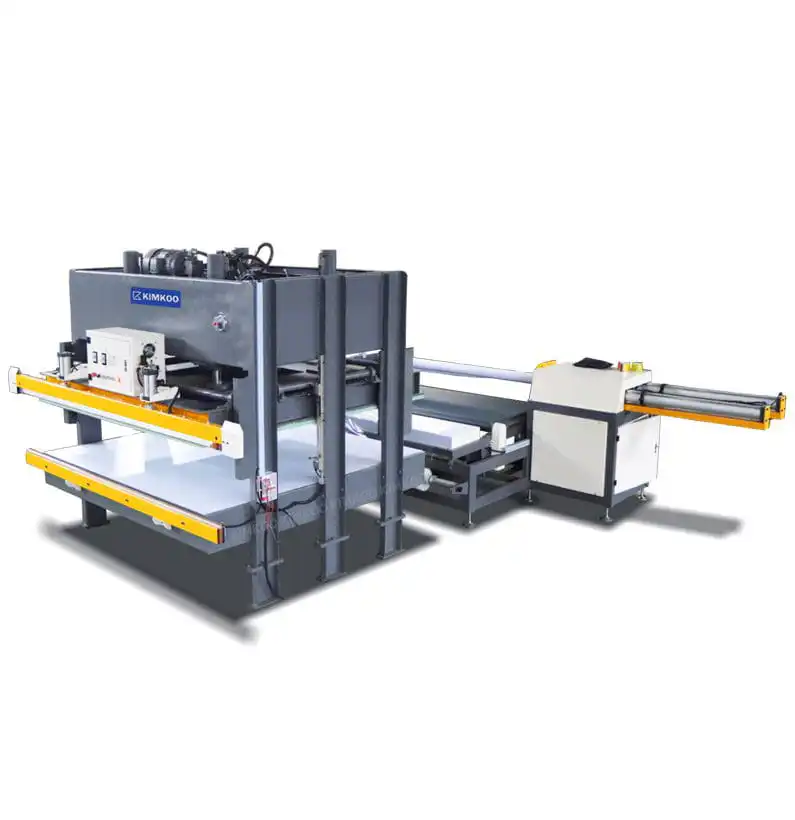
A foam compression machine applies controlled hydraulic pressure to reduce the height of the foam product.
The required compression level should not simply be based on maximum machine pressure. Foam density, elasticity, thickness, and the required final package size all need to be considered. For example, KIMKOO compression equipment can provide up to 50 tons of hydraulic pressure, while the actual operating parameters can be adjusted according to the product.
3. Seal the Compressed Foam
Sealing is an important step because compressed foam naturally tries to recover its original shape. After reaching the required compression height, the packaging bag is heat-sealed to limit air leakage and help maintain the compact package during transportation.
A properly sealed package also provides better protection against contamination and makes the finished product easier to handle.
4. Roll Pack the Compressed Foam
For products suitable for roll packaging, the sealed foam can then be transferred to a roll packing unit. Electric-driven rotation tightly rolls the compressed product into a cylindrical package.
Depending on the original product dimensions and thickness, the final roll diameter can typically range from about 28 to 45 cm. This compact shape is easier to stack, box, load, and transport than a large flat foam product.
Can Foam Blocks Be Compressed for Shipping?
Yes. Foam blocks can also be prepared for compact transportation, but the machine must have sufficient compression height for the product.
A foam block compression machine can be configured for taller products. KIMKOO's standard configuration supports a compression height of up to 500 mm, while customized equipment can reach up to 1000 mm.
This makes customized configurations suitable for taller foam blocks, stacked foam layers, and certain sofa structures containing foam or pocket springs.
What Should You Consider Before Choosing a Foam Packing Solution?
The best packaging method depends on the actual product rather than simply choosing the machine with the highest compression force. Manufacturers should consider:
- Foam dimensions and maximum product height
- Foam density and rebound characteristics
- Required final package dimensions
- Whether roll packing is required
- Packaging material and sealing requirements
- Expected production volume
For smaller manufacturers, a semi-automatic or manually operated compression and roll packing solution can provide a practical balance between investment and packaging efficiency. Higher-volume factories may require a more automated packaging line.
About KIMKOO Mattress Machinery
KIMKOO Mattress Machinery is a professional mattress machine manufacturer with more than 17 years of manufacturing experience. The company develops compression and packaging equipment for mattresses, foam products, foam blocks, stacked foam layers, and selected sofa applications.
KIMKOO's compression and roll packing solutions combine hydraulic compression, heat sealing, PLC control, electric-driven rolling, and pneumatic product discharge. Standard and customized configurations are available to accommodate different product sizes and packaging requirements.
Is Compression and Roll Packing Suitable for Your Foam?
Foam compression and roll packing can be an effective shipping solution when the product has sufficient resilience and can safely withstand temporary compression. The correct compression height, packaging material, sealing method, and roll diameter should always be determined according to the actual foam characteristics.
When properly configured, the process can transform a bulky foam product into a compact, sealed roll that is easier to store, handle, and transport. For manufacturers dealing with high-volume foam shipping, this approach can be a practical way to make packaging more efficient while keeping the product protected throughout the delivery process.
