How to Optimize Your Local Distribution Network for Last-Mile Efficiency
Author : Alyssa Miller | Published On : 28 Jul 2026
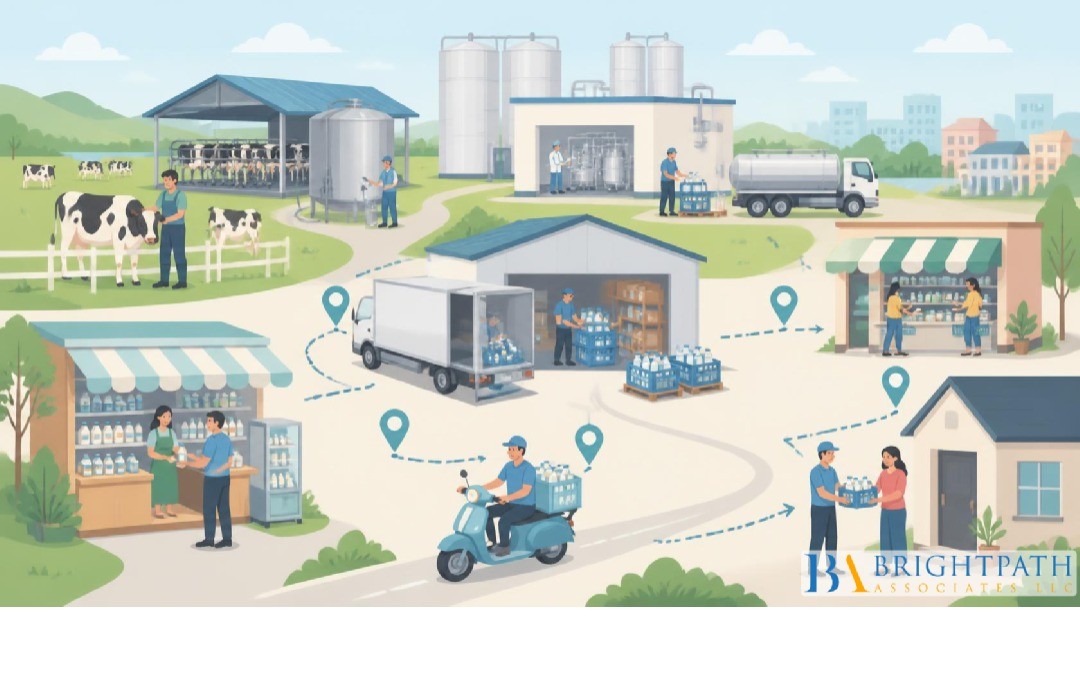
In the dairy industry, product quality depends on much more than manufacturing excellence. Even the highest-quality milk, cheese, yogurt, butter, or cultured dairy products can lose their value if they fail to reach retailers, distributors, or consumers quickly and in optimal condition. With today's customers expecting fresher products, shorter delivery windows, and consistent availability, last-mile distribution has become one of the most important competitive differentiators for small and mid-sized dairy businesses. Companies that optimize their local distribution networks not only reduce transportation costs but also improve customer satisfaction, minimize product waste, and strengthen long-term profitability. Industry experts consistently identify the last mile as the most expensive and operationally complex stage of the supply chain, making optimization a strategic priority.
Unlike shelf-stable products, dairy goods require carefully managed cold-chain logistics from production facilities to retail shelves. Temperature fluctuations, traffic congestion, delivery delays, and inefficient routing can shorten product shelf life while increasing spoilage and operational expenses. As consumer demand continues to grow for fresh, locally produced dairy products, businesses must rethink traditional distribution strategies and build agile networks capable of responding quickly to changing market conditions.
One of the most effective ways to improve last-mile efficiency is by strategically positioning local distribution centers closer to key customer markets. Rather than shipping products over long distances from a single production facility, many successful dairy companies establish regional hubs that reduce delivery times and transportation costs. By shortening delivery routes, businesses preserve product freshness, improve service reliability, and respond more effectively to fluctuating customer demand. Strategic warehouse placement also provides greater flexibility during seasonal demand spikes and supply chain disruptions. Research shows that warehouse location decisions often have a greater long-term impact on logistics performance than routing improvements alone.
Route optimization technology has become another essential tool for dairy distributors. Traditional delivery planning often relies on static schedules and manual decision-making, which struggle to account for real-time traffic conditions, changing customer orders, vehicle capacity, and delivery priorities. Modern route optimization software uses live data and intelligent algorithms to determine the most efficient delivery sequences, reducing fuel consumption, driver hours, and vehicle wear while improving on-time delivery performance. These technologies allow fleet managers to adjust routes dynamically throughout the day, ensuring that products arrive on schedule despite unexpected delays.
Delivery visibility is equally important for both businesses and customers. Real-time GPS tracking, automated delivery notifications, electronic proof of delivery, and estimated arrival updates improve communication across the supply chain. Retailers gain confidence through accurate delivery information, while operations managers can quickly respond to disruptions before they impact customers. Enhanced visibility also supports continuous performance measurement by providing valuable operational data for future planning and process improvements.
Demand forecasting plays a crucial role in optimizing local distribution. Dairy demand often fluctuates due to weather, holidays, promotions, school schedules, and regional buying patterns. Advanced forecasting tools powered by artificial intelligence and predictive analytics enable businesses to anticipate these fluctuations more accurately. Better forecasts allow organizations to position inventory closer to anticipated demand, reduce emergency shipments, minimize excess stock, and lower product waste while improving customer service levels.
Inventory optimization works hand in hand with distribution efficiency. Maintaining excessive inventory increases storage costs and raises the risk of product expiration, while insufficient inventory can lead to stockouts and lost sales. By analysing historical sales patterns, seasonal demand, retailer purchasing behaviour, and regional consumption trends, dairy companies can allocate inventory more effectively across distribution centres. This balanced approach supports faster deliveries while maintaining product freshness.
Cold-chain management remains one of the defining characteristics of dairy logistics. Every stage of transportation must maintain strict temperature controls to preserve product quality and comply with food safety regulations. Smart temperature monitoring devices, connected sensors, and automated alerts enable logistics teams to identify potential temperature deviations immediately. Continuous monitoring not only reduces spoilage but also strengthens regulatory compliance and customer confidence. Digital monitoring technologies have become increasingly valuable as dairy supply chains grow more complex and geographically diverse.
Collaboration across the supply chain can further improve last-mile performance. Dairy manufacturers, distributors, logistics providers, retailers, and suppliers all benefit from sharing operational information and coordinating delivery schedules. Collaborative planning reduces duplicate deliveries, improves vehicle utilisation, and allows businesses to consolidate shipments where appropriate. Strong partnerships also improve resilience during transportation disruptions, labour shortages, or unexpected market changes.
Sustainability has become another major driver of distribution network optimization. Consumers increasingly favour brands that demonstrate environmental responsibility. Efficient routing, reduced fuel consumption, electric delivery vehicles, optimized packaging, and lower food waste contribute to both environmental goals and financial performance. Shorter transportation distances also reduce greenhouse gas emissions while helping companies meet evolving ESG objectives without compromising customer service.
Automation continues transforming dairy logistics operations. Warehouse automation, automated order picking, digital dispatch systems, and integrated transportation management platforms improve operational accuracy while reducing manual effort. These technologies allow employees to focus on higher-value decision-making while improving order accuracy and reducing fulfilment times. As digital transformation accelerates across the food industry, automated logistics capabilities will become increasingly important competitive differentiators.
The success of any distribution strategy ultimately depends on the people managing it. Experienced logistics managers, supply chain professionals, warehouse leaders, fleet supervisors, operations executives, maintenance specialists, and food safety experts play essential roles in maintaining efficient dairy distribution networks. Their expertise ensures that technology investments, operational improvements, and customer service initiatives deliver measurable business value. As competition for skilled supply chain professionals intensifies, attracting experienced talent becomes increasingly important for long-term success.
Companies seeking specialised professionals to strengthen their operations can explore BrightPath Associates' expertise in the Dairy Industry. BrightPath Associates helps small and mid-sized dairy businesses connect with experienced professionals who understand the operational, technical, and leadership challenges unique to modern dairy manufacturing and distribution.
Leadership commitment also determines whether distribution optimization initiatives succeed. Organizations that foster continuous improvement, encourage cross-functional collaboration, invest in digital technologies, and empower employees to identify operational improvements consistently outperform businesses that rely solely on traditional logistics models. Optimizing last-mile efficiency should be viewed as an ongoing strategic initiative rather than a one-time operational project.
For additional insights into improving local logistics performance, read BrightPath Associates' article, Local Distribution Network for Last-Mile Efficiency. The article explores practical strategies that help businesses strengthen distribution performance while enhancing customer satisfaction and operational resilience.
As customer expectations continue evolving, dairy companies that modernize their local distribution networks will be better positioned to compete in an increasingly demanding marketplace. Efficient last-mile operations improve product freshness, reduce operating costs, strengthen retailer relationships, and create lasting competitive advantages.
