How to Map Your Supply Chain Network for Immediate Risk Visibility
Author : Alyssa Miller | Published On : 31 Aug 2026
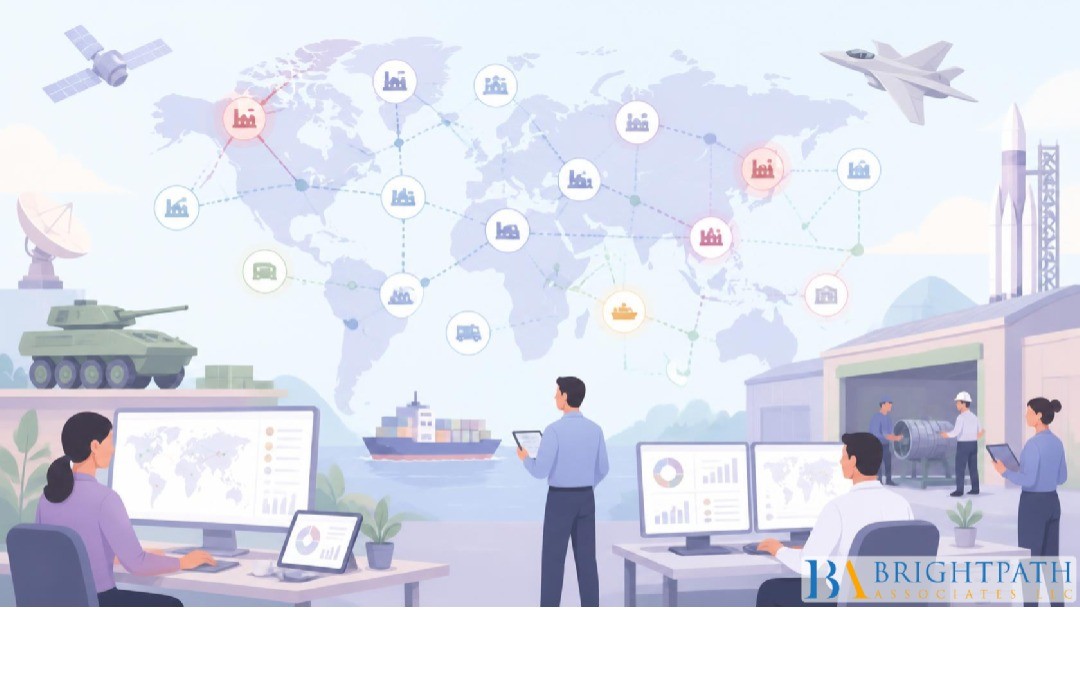
Defense and space companies operate some of the most complex supply networks in the industrial economy. A single program can depend on specialized electronics, precision components, advanced materials, software, sensors, propulsion technologies, logistics providers, and highly qualified subcontractors. The result is a network in which a disruption affecting one organization can create consequences far beyond the original supplier.
For small and mid-sized defense and space businesses, this complexity can create an especially serious challenge. Unlike large prime contractors, smaller organizations may have limited resources for supply chain analytics, risk management, and supplier monitoring. Yet they often depend on a small number of specialized suppliers for mission-critical components.
Supply chain mapping provides a practical way to address this challenge. Instead of viewing suppliers as individual vendors, organizations can visualize how materials, components, information, technology, and services move through the broader network. This creates the visibility executives need to identify vulnerabilities before they become production delays, cost increases, or program risks.
Moving Beyond the Traditional Supplier List
A conventional supplier database answers an important question: Who does the company purchase from? However, that information represents only the first layer of supply chain visibility.
A defense manufacturer may purchase a specialized component from a Tier 1 supplier while that supplier depends on another company for a critical semiconductor, alloy, sensor, or electronic subassembly. If the upstream manufacturer experiences a disruption, the impact can eventually reach the final producer even though the direct supplier continues operating.
This is why modern supply chain risk management must extend beyond immediate vendors. Companies need to understand critical Tier 2 and Tier 3 relationships where practical, particularly when a component has limited alternatives or requires specialized certification.
The objective is not to map every purchasing relationship in equal detail. A more effective approach is to prioritize the components and suppliers capable of creating the greatest operational impact.
Identify What Could Stop Production
Not every supply chain dependency represents the same level of risk. Office supplies and mission-critical electronic components should never receive identical attention.
Executives can begin by identifying products and components that would create an immediate production problem if they became unavailable. Long lead times, limited qualified suppliers, specialized certifications, proprietary technologies, and difficult-to-replace materials are important indicators.
For aerospace, defense, and space manufacturers, these dependencies may involve advanced electronics, communication systems, sensors, precision-machined components, specialized alloys, and highly engineered assemblies.
Once these critical items are identified, companies can determine where additional visibility is required. This risk-based approach allows mid-sized organizations to focus limited resources where supply chain intelligence can deliver the greatest value.
Look Beyond Tier-One Suppliers
One of the most important advantages of supply chain mapping is its ability to reveal hidden dependencies. A company may have several direct suppliers but discover that those suppliers ultimately depend on the same upstream manufacturer. On paper, the organization appears diversified. In reality, it may have a significant concentration risk.
This situation can occur when several suppliers purchase the same specialized raw material or component from a limited global source. Understanding these relationships can change executive decision-making. Instead of simply asking whether the company has multiple suppliers, leadership can ask whether those suppliers are genuinely independent.
That distinction can be critical when planning for geopolitical disruptions, transportation problems, material shortages, or regulatory changes.
Technology Can Turn Mapping Into a Living System
Supply chain mapping does not need to remain a static spreadsheet. Enterprise resource planning platforms, supplier management systems, inventory software, logistics applications, analytics platforms, and digital dashboards can create a more dynamic view of supplier performance.
Artificial intelligence and advanced analytics can further strengthen visibility by identifying unusual changes in lead times, delivery performance, pricing, inventory availability, or supplier capacity.
However, technology should support executive judgment rather than replace it. A late shipment does not automatically indicate a major supply chain crisis. Leadership needs context to determine whether a signal represents a temporary fluctuation or an emerging structural problem.
From Visibility to Competitive Resilience
Supply chain mapping should never become a one-time documentation exercise. Supplier relationships change, technologies evolve, regulations shift, geopolitical conditions develop, and customer requirements change.
A map that accurately represented a business several years ago may no longer reflect its current risk exposure. Organizations should therefore treat supply chain visibility as an ongoing management discipline. Regular reviews can identify emerging dependencies, new supplier risks, geographic concentrations, technology changes, and opportunities for diversification.
For defense and space companies, this capability can influence not only operational continuity but also customer confidence and program performance.
Conclusion: Know the Network Before the Crisis
The modern defense and space supply chain is too interconnected to manage through supplier lists alone. Organizations need to understand how materials, components, technologies, information, and services move through their networks.
Effective mapping begins with identifying critical dependencies and then expands into deeper supplier relationships, cybersecurity exposure, regulatory requirements, technology risks, and scenario planning.
The objective is not to eliminate every possible risk. That would be unrealistic. The objective is to understand which risks matter most, determine where the network is vulnerable, and ensure the organization has realistic options when disruption occurs. For a deeper examination of this approach, read BrightPath Associates’ original analysis, How to Map Your Supply Chain Network for Immediate Risk Visibility.
