How to Increase the Junior Bible Quiz's Buzzer Accuracy and Speed
Author : Jeny Joseph | Published On : 06 Nov 2026
Knowing the right response is just one aspect of winning the Junior Bible Quiz (JBQ). Even if a quizzer has committed all of the questions to memory, they may still struggle during a match because another child understands the question more quickly and triggers the buzzer first. A quizzer, on the other hand, might be incredibly quick with the buzzer but lose important points if they interrupt before correctly identifying the question. For JBQ parents and coaches, this presents one of the biggest obstacles: How can we increase kids' buzzer speed without compromising accuracy? Encouraging kids to buzz more quickly is not the only solution. Strong question memorizing, attentive listening, question recognition, hands-on buzzer practice, and sound judgment are all necessary for effective buzzer training. These ten useful strategies can help coaches and parents improve both accuracy and quickness.
- Develop a solid understanding of questions before concentrating on speed Children must confidently understand the questions and answers they have been given before focusing on buzzer speed. Rushing to sound the buzzer while a quizzer is still having trouble remembering an answer can put more pressure on them and result in wrong answers. Parents and coaches should concentrate on supporting kids during the early learning phase: Learn the given questions by heart (read our advice on how to properly remember JBQ questions). Recognize which question corresponds with each response. Remember the answers on your own. Become familiar with the entire text. When questions are asked in a different order, identify them. A few well-learned questions are more helpful for novices than many that they can only answer with clues (see more about practicing with novices and seasoned quizzers together). Coaches can progressively include faster recognition and buzzing exercises if kids are able to consistently respond to the questions they are given. The basis is provided by accuracy. Focused practice and familiarity help build speed.
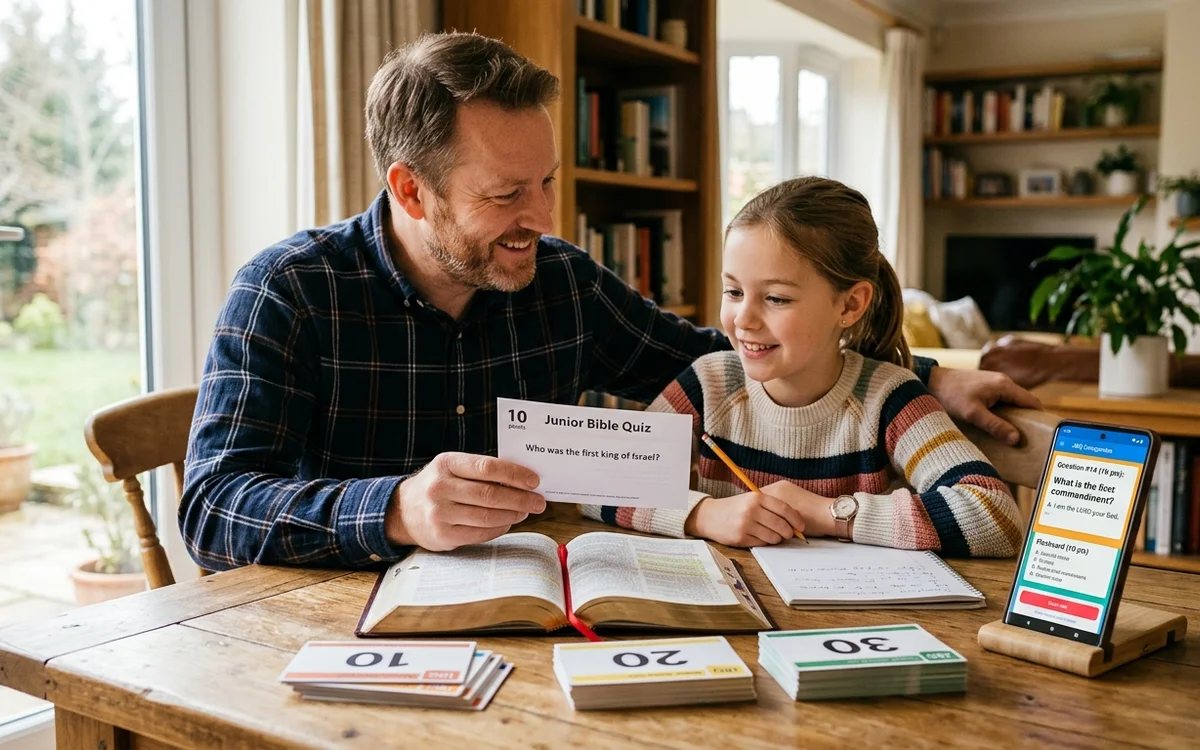
- Teach Kids to Identify a Question's Start Skilled JBQ test takers frequently identify questions before the quizmaster has had a chance to read them. The official JBQ question bank's precise phrasing, structure, and opening sentences become familiar to them. Children can practice this skill at home with the assistance of their parents. Occasionally announce the point value and read just the beginning of the question instead of reading the entire thing. Using these official 10-point questions, for instance: What is the total number of books in the Bible? The response is 66. What is the number of books in the Old Testament? 39 is the response. What is the number of books in the New Testament? The response is 27. Although the answers to these questions differ, their openings are identical. When a quizzer hears only "How many books..." they do not yet have enough information to determine the right response. They have to pay attention to the words that set them apart: Bible, Old Testament, or New Testament. This demonstrates an important lesson: fast recognition is valuable only when the quizzer has heard enough information to identify the correct question.
A Basic Recognition Task While practicing: Declare the point value of the question. Start reading the formal inquiry. At a natural point, stop. Find out which question the child recognized. If more than one question matches the opening, keep reading. Children eventually discover which question openings are special and which call for more listening.
- Practice Comparable Questions Together Practicing questions with similar wording together is one of the best strategies to avoid inappropriate interruptions. Children may recall questions mostly by sequence if they memorize them in numerical order. However, students must be able to identify questions on their own during a real match. As a group, coaches should practice questions that start with similar terms. For instance, a helpful recognition exercise can be found in the three questions concerning the overall number of books in the Bible, Old Testament books, and New Testament books. Go through each question in a different sequence. Sometimes stop early, and other times keep going until the defining phrase is obvious. Ask kids to describe the words that made the question easier for them to understand. Instead of speculating, this fosters attentive listening. When the given question sets include both quotation and non-quotation questions, it can also be helpful to combine them during advanced study. The goal is to identify the right inquiry, not just a well-known phrase.
- Practice Answering Alphabetical Questions Many kids first learn the JBQ questions they are given in numerical sequence. Because it offers a predictable sequence, this can aid with remembering. However, coaches should implement other arrangements once kids are at ease with the inquiries. Practice in alphabetical sequence is particularly beneficial. Children may come across multiple questions with similar beginnings near one another when the questions are arranged alphabetically. For instance, several inquiries might start with "How did," "Who was," or "What is." Children can see commonalities and learn to recognize the terms that distinguish each inquiry as a result.
A Useful Weekly Method Parents can concentrate on questions that are still challenging during weekday reviews (see our practical JBQ practice strategies for busy families). A lengthier practice session on the weekends can go over the entire given set in alphabetical order. Prior to reading each question, state its point value. This method facilitates children's faster transition from memorization of responses to question recognition. Use the official JBQ questions that were assigned for the relevant meet at all times.
- Explain When to Wait and When to Buzz Confusion between quick buzzing and nice buzzing is one of the most common errors in the Junior Bible Quiz. A quizzer may provide an answer that relates to a different topic if they interrupt before hearing enough information. When multiple questions have similar openers, this is very typical. Children should be taught by coaches to differentiate between two scenarios: Situation A: It is obvious what the question is. The quizzer knows the answer and has heard enough of the question's wording to recognize it with confidence. Situation B: There are still a number of questions. The quizzer has not yet heard the words required to answer the right question, but they can recognize a familiar introduction. In the second situation, waiting for more information may be the better strategy.
The fundamental tenet of coaching is to buzz when you understand the question, not just the first few syllables. This does not imply that kids have to wait until the question is read in its entirety. It implies that they should learn to strike a balance between confidence and speed.
- Model Actual Quizmaster Interruptions and Reading Parents frequently read questions slowly and clearly during practice at home. When kids are learning, this is helpful. However, quizmasters may read questions at varying natural speeds, and a question may be interrupted at any time. Children should be able to adjust to those conditions with the aid of advanced practice. Official questions can be read aloud by parents acting as quizmasters. The parent quickly stops reading when the child presses the practice bell. After then, the quizzer answers in accordance with the relevant JBQ practice method.
As an extra recognition exercise, the parent may occasionally pause abruptly in the middle of a word and ask the kid whether they can firmly identify the question. This is not a substitute for formal interruption procedures; rather, it is a training method to acquire recognition from inadequate phrasing.
Why This Is Important When other quizzers interrupt early, kids who only practice with completely read questions could find it difficult. Coaches can help kids become more used to real-world competition situations by progressively introducing interrupted-question drills. As the child becomes better, start with more challenging questions.
- Enhance Your Physical Buzzer Method Buzzer performance involves more than just answering questions. Additionally, kids must learn how to use the actual buzzer. Children can get acquainted with individual practice buzzers without the need for a full quiz box. It may take some work for younger kids to even press the buzzer comfortably (see our coaching recommendations in 10 practical JBQ coaching strategies). Coaches ought to focus on: The buzzer is held or positioned by the youngster. if a lot of pressure is needed to activate the button. The height of the table and the child's seat. Is it possible for the child to sound the buzzer without moving too much? whether or not the buzzer is placed regularly throughout practice. Children who are shorter may be able to easily reach the table with a secure and sturdy seating adjustment. Whenever possible, home practice should mimic the real church setting. The intention is to make buzzer operation seem natural so kids may focus on the question rather than the apparatus. Effective buzzer technique promotes regular replies and minimizes needless movement.
- Use the JBQ Companion for Practice at Home and Question Recognition Particularly for families with hectic schedules, technology can facilitate question practice. The JBQ Companion Learn module facilitates the drafting of questions and the review of given content for both parents and quizzers. Children can practice content that is appropriate for their level by having parents concentrate on questions for a certain meet and point value. Children can also learn the precise phrasing of questions by using the app's audio playback features.
Integrate Buzzer and Audio Practice Dividing learning into two tasks is a helpful strategy: Listening and recognition: Go over the chosen set of questions using the Learn module. Give the youngster multiple chances to hear the questions, especially the ones they struggle with. Practice with active buzzers: For a buzzer session led by parents, use the same official set of questions. When the youngster buzzes, pause, read the questions in a different order, and assess the response. This combination facilitates the connection between the physical process of buzzing and responding and well-known inquiry phrasing. The JBQ Companion virtual quiz box can also be used by families to practice buzzer participation on compatible mobile devices. Utilize the capabilities of the app that suit the family's equipment and educational requirements. Instead of needlessly increasing screen time, the goal is to improve practice effectiveness.
- Use Controlled Practice to Lower Negative Points Even though a child can identify a lot of questions, early interrupts during contests can nevertheless result in repeated negative scores. Telling the child to buzz more quickly or work harder on their studies might not be enough to address this issue. Coaches should determine the cause of inaccurate responses: Did the quizzer mix up two questions that were similar? Did they understand the inquiry but not the response? Did they buzz in the absence of sufficient information? Did the pressure of competitiveness make them anxious? Did they respond too hastily and without planning? Different types of practice are needed for each challenge. Concentrate on recognizing exercises if the problem has similar question wording. Go back to the question review if the issue is incomplete memorization. Encourage the quizzer to wait for a clearer identifying word if the problem is rushing (see our guide on typical JBQ coaching mistakes and how to prevent them).
Constructive Use of Match Results During practice games, coaches can examine both right and wrong answers with the JBQ Companion Scorekeeper module. A coach might observe that a quizzer consistently loses points due to improper interruptions despite earning a lot of points. Instead of scolding the youngster, the coach can use that information to pinpoint a specific improvement objective. For instance: "Focus on hearing the distinguishing words before buzzing during the following practice." Accuracy gains can be equally as beneficial as speed gains.
- Adapt Your Buzzer Approach to the Match Not every JBQ game calls for the same buzzing approach. It is possible that some rival teams have extremely quick quizzers. Some people might wait longer before turning on the buzzer. Children should learn from coaches that they do not have to be as aggressive in every game. One useful tactic is to start a game with controlled buzzing while keeping an eye on the accuracy and pace of the other team. Encourage them to pay close attention and stay away from needless risks during the initial inquiries. As the game progresses, coaches can determine whether the squad should continue to focus on accuracy or adopt a quicker strategy. According to the official standards, any changes in strategy should be conveyed through authorized coaching opportunities (see our advise on increasing communication between coaches and parents).
Refrain from Assessing the Opponent It is not a given that a team with a solid reputation would win every game. In a similar vein, one should not undervalue a staff with less experience. While excessive anxiety can make kids hesitate even when they know the answer, overconfidence can result in thoughtless interruptions. Urge quizzers to focus on the question at hand rather than the reputation of the other team. Preparation, accuracy, confidence, and match situation awareness are all components of a successful buzzing strategy.
A Basic 15-Minute Buzzer Practice Program To increase awareness and accuracy without overwhelming kids, parents and coaches might employ a quick drill session. Time, Activity, and Focus Review well-known questions for three minutes.Precise memory Spend four minutes practicing comparable question openings.Recognition of questions Practice buzzer drills for four minutes.Managed disruptions Examine the questions you missed.Two minutes to clear up any confusion Finish with a two-minute challenge.Self-assurance and pleasure 15 minutes in totalRegularly developing skills This is a sample routine rather than a required schedule. Beginners may need more time for memorization and less time for fast interruptions. Experienced quizzers may benefit from more challenging question-recognition drills and realistic match practice. Adjust the routine to the child's current level.
Typical Buzzer Practice Errors to Avoid Certain behaviors can hinder children's development even when they practice frequently. Buzzing before identifying the inquiry: A unique query is not always identified by familiar introductory words. Practice just in numerical sequence: After the initial memorization phase, switch up the order of the questions. Prioritizing speed over accuracy: When faster buzzing consistently results in inaccurate responses, it is not helpful. Ignoring the physical comfort of the buzzer: Kids should feel at ease with the equipment and position of their buzzer. Practicing only simple questions: Difficult questions and similar openings require more focus. Considering negative aspects as failures: Make use of errors to pinpoint particular areas that require training. Applying the same method to every quiz taker: Different drills may be required for novices and experts. Practicing without actual disruptions: Once you are familiar with the allotted topic, introduce partial-question practice.
Conclusion: The Best Buzzer Is Accurate and Quick It takes more than just fast reflexes to improve buzzer performance in the Junior Bible Quiz. Children must become familiar with the official questions, identify their distinctive phrasing, pay close attention, operate the buzzer with ease, and gain confidence in their responses. Short, regular practice sessions, alphabetical-order reviews, similar-question drills, audio learning, and realistic buzzer exercises are all ways that parents and coaches can help this process. Certain quiz takers will inevitably become quicker than others. But with careful planning and support, every child can get better. Pressing the buzzer first is not the ultimate goal. The objective is for the youngster to identify the right question, give a confident response, and exhibit the Bible knowledge they have diligently studied.
