How to Choose the Right Welding Helmet for Safety and Comfort in Welding Operations?
Author : HitokaCece HitokaCece | Published On : 17 Jul 2026
Introduction
Over the years in the PPE manufacturing industry, I have watched welding helmet technology advance dramatically. What was once a simple passive shield has become a sophisticated safety device with auto-darkening filters that protect welders from harmful UV and IR radiation while allowing them to see clearly before striking an arc. The right welding helmet protects against arc flash, sparks, and flying debris while providing the optical clarity and comfort that enable welders to work with precision and confidence. Having worked with welding supervisors and safety managers across multiple industries, I have learned what separates a quality welding helmet from a compromise. In this article, I want to share how to choose the right welding helmet for safety and comfort.
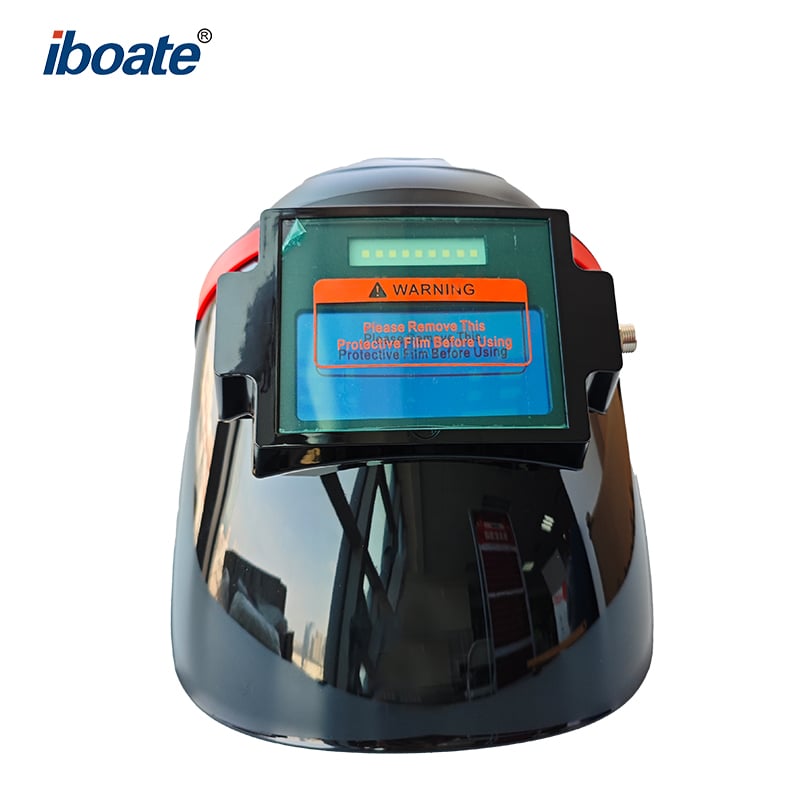
Welding Helmet Auto Darkening Filter Technology and Standards
The defining feature of a modern welding helmet is its auto-darkening filter. Unlike passive helmets that require the welder to flip the visor down before striking an arc, auto-darkening helmets automatically transition from a light state (for setup and inspection) to a dark state (for welding) in milliseconds. In Europe, auto-darkening helmets are governed by EN 379, which provides ratings for optical clarity. The highest rating is 1/1/1/1, indicating excellent optical quality across all measured parameters—light diffusion, variation in luminous transmittance, and angular dependence. When evaluating welding helmets, look for auto-darkening filters with variable shade settings that allow adjustment from shade 9 to shade 13 to accommodate different welding processes—MIG/MAG, TIG, and stick welding. Reliable helmets feature two independent sensors to automatically detect the arc and trigger darkening. I have worked with welding supervisors who prioritized price over optical quality and saw increased welder fatigue and errors. Investing in helmets with high optical clarity ratings is essential for both safety and weld quality.
Welding Helmet Optical Clarity and Lens Quality
Optical clarity is critical for welding precision and reducing eye strain. Poor lens quality distorts the weld pool, making it difficult to track the arc and produce quality welds. The EN 379 1/1/1/1 rating represents the highest standard for optical clarity, ensuring minimal distortion and clear visibility. Beyond clarity, the lens must also filter harmful UV and IR radiation to protect the welder's eyes. Auto-darkening filters provide this protection even before the arc triggers darkening, ensuring that the welder's eyes are never exposed to dangerous radiation. For welding applications requiring high precision, look for helmets with true color technology that provides natural color perception—making it easier to distinguish between the weld pool, base metal, and slag. I have worked with welding operations that upgraded to high-clarity auto-darkening helmets and saw immediate improvements in weld quality and reduced rework.
Welding Helmet Comfort, Weight, and Headgear Design
The third critical factor in welding helmet selection is comfort—because a helmet that is uncomfortable will be lifted when it should be down. Modern welding helmets are engineered for lightweight construction, typically using heat-resistant polycarbonate shells. Ergonomic headgear with adjustable tension settings distributes the helmet's weight evenly, reducing neck fatigue during extended welding sessions. Look for helmets with multiple adjustment points—crown straps, back knobs, and tilt mechanisms—that allow workers to customize the fit. Sweatbands and padding improve comfort in hot environments. For welders working in confined spaces, lightweight, compact designs are essential. I have worked with welding supervisors who selected heavy, poorly balanced helmets and found that welders frequently lifted them to relieve fatigue—compromising safety.
Conclusion
Choosing the right welding helmet requires careful attention to auto-darkening filter technology and EN 379 standards that ensure reliable arc detection and protection, optical clarity and lens quality that minimize distortion and reduce eye strain, and comfort, weight, and headgear design that enable all-day wear and worker compliance. By selecting welding helmets with high optical clarity ratings, reliable auto-darkening filters, and ergonomic headgear, welding supervisors and safety managers can protect workers' eyes and improve weld quality. In an industry where precision and safety go hand in hand, the right welding helmet is not just a safety device—it is an essential tool for quality work.
