How to Choose the Right Solar Street Light for Different Outdoor Applications
Author : zitroen limited | Published On : 02 Sep 2026
A solar street light combines a solar panel, battery, LED lighting unit and control system to provide illumination using energy collected from sunlight. However, choosing the right system is not simply a matter of selecting the highest wattage. The lighting requirement, installation location, operating hours, solar exposure and battery capacity all need to be considered.
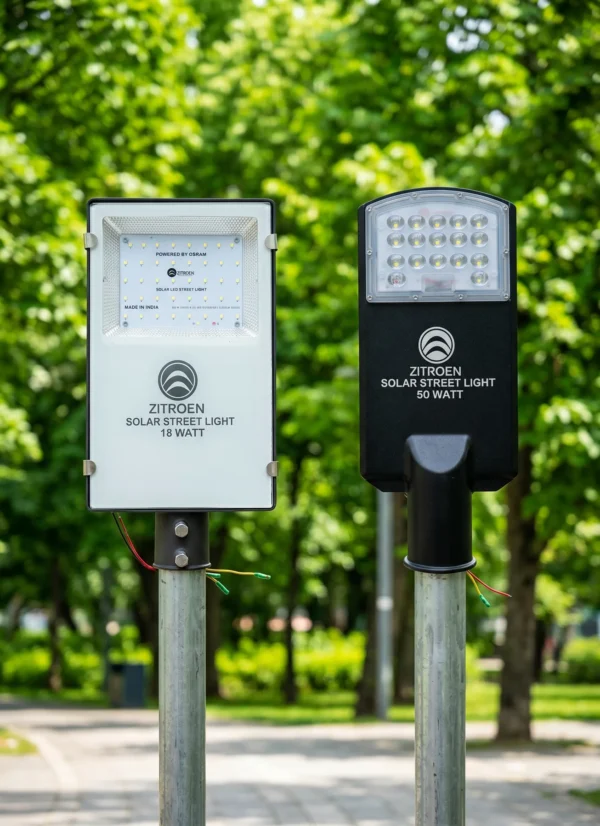
Understanding How Solar Street Lights Work
A typical solar street light collects solar energy during the day and stores it in a rechargeable battery. After sunset, the stored energy powers the LED lighting unit.
The main components generally include:
- Solar panel: Converts sunlight into electrical energy.
- Battery: Stores energy for nighttime operation.
- LED lighting unit: Provides illumination using the stored energy.
- Controller: Manages charging and lighting operation.
Depending on the product and application, a solar street light may also include automatic controls, motion sensors or other smart features.
Why Application Matters
Every outdoor lighting project has different requirements. A residential internal road may require a different configuration from an industrial facility, parking area or large public road.
Before selecting a product, consider the size and purpose of the area that needs illumination. Road width, pole height, spacing between lights and expected operating hours can all influence the appropriate system.
Understanding the application first helps avoid choosing a product based only on its advertised wattage.
Important Factors to Consider
1. Lighting Requirements
The first consideration should be the amount of illumination required.
Think about:
- Area or road width
- Required brightness
- Pole height
- Distance between poles
- Expected lighting coverage
- Traffic or pedestrian activity
A properly planned lighting layout can help reduce dark areas and provide more consistent illumination.
2. Solar Panel Capacity
The solar panel is responsible for generating the energy needed by the system.
Panel capacity should be suitable for the LED load, battery requirements and expected operating conditions. The amount of sunlight available at the installation location is also important.
Buildings, trees and other structures can create shade and reduce solar energy generation. Therefore, the proposed installation area should be checked before finalizing the system.
3. Battery Performance
The battery stores the energy generated during daylight hours and supplies power to the LED light at night.
When comparing solar street lights, consider battery capacity, battery technology and expected operating duration. A suitable battery should be selected according to the lighting load and the expected nighttime operating requirements.
4. LED Technology
LED technology is an important part of solar street lighting because it can provide effective illumination with relatively low power consumption.
However, wattage alone does not tell the entire story. Light distribution, luminous output, optical design and coverage should also be considered.
A well-designed lighting system should distribute light effectively across the required area rather than concentrating illumination in a small section.
5. Operating Hours
Determine how long the light needs to operate each night.
Some locations may require lighting throughout the night, while others may have different requirements depending on activity levels and local conditions.
Expected operating hours should be considered when selecting the solar panel and battery configuration.
6. Installation Environment
Outdoor lighting equipment is exposed to changing environmental conditions.
Before selecting a system, consider:
- Rainfall
- Dust
- Temperature variations
- Sunlight exposure
- Wind conditions
- Possible physical obstacles
The equipment should be suitable for the environment in which it will be installed.
Common Applications of Solar Street Lights
Solar street lights can be used in many different outdoor environments, including:
- Residential communities
- Rural roads
- Industrial premises
- Warehouses
- Parking areas
- Educational campuses
- Commercial properties
- Parks and public spaces
- Internal roads
- Infrastructure projects
The required specifications can vary between these applications, so product selection should always be based on the actual project requirements.
Smart Features in Modern Solar Lighting
Solar lighting technology is also developing beyond basic automatic operation.
Depending on the product, smart features can include motion sensors, automatic brightness control, programmable lighting modes and monitoring capabilities.
For example, a motion sensor can allow a lighting system to respond to movement in the surrounding area. Such features may be useful in locations where activity levels vary throughout the night.
Smart functions can also help organizations manage lighting more effectively, particularly when multiple lighting points are installed across a large site.
Installation and Maintenance
Selecting a suitable product is only one part of a successful solar lighting project. Proper installation is equally important.
Solar panels should be positioned to receive sufficient sunlight. Pole placement, mounting height and spacing should be planned according to the required lighting coverage.
Periodic maintenance can also help maintain performance. Solar panels should be kept reasonably clean, while the overall system should be inspected according to the manufacturer's recommendations.
For larger installations, organizations should also consider technical support and after-sales service when selecting a supplier.
Choosing the Right Solar Lighting Provider
When comparing solar lighting providers, businesses and organizations should look beyond the initial purchase price.
Important factors include:
- Product specifications
- Solar panel capacity
- Battery technology
- LED performance
- Product construction
- Warranty
- Technical support
- Suitability for the intended application
A reliable provider should be able to explain how the product configuration matches the requirements of the project.
Organizations looking for solar street lighting solutions can compare different systems according to their location, required illumination, operating hours and installation conditions.
Zitroen IoT Pvt. Ltd. provides solar, LED and smart lighting solutions for residential, commercial, industrial and infrastructure applications.
Conclusion
Choosing the right solar street light requires a complete understanding of the installation site and lighting requirements. Wattage is only one part of the decision. Solar panel capacity, battery performance, LED technology, operating hours, pole height, lighting coverage and environmental conditions should all be considered.
By evaluating these factors before purchasing, businesses, institutions and infrastructure developers can select a lighting system that better matches their specific requirements.
As solar energy and LED technologies continue to develop, solar street lighting can provide a practical option for energy-conscious outdoor infrastructure across a wide range of applications.
