How to Choose the Right CXS SC Tiny Tool Sleeve Equivalent to Sandvik
Author : Surya makeyoueasy | Published On : 25 Aug 2026
Introduction
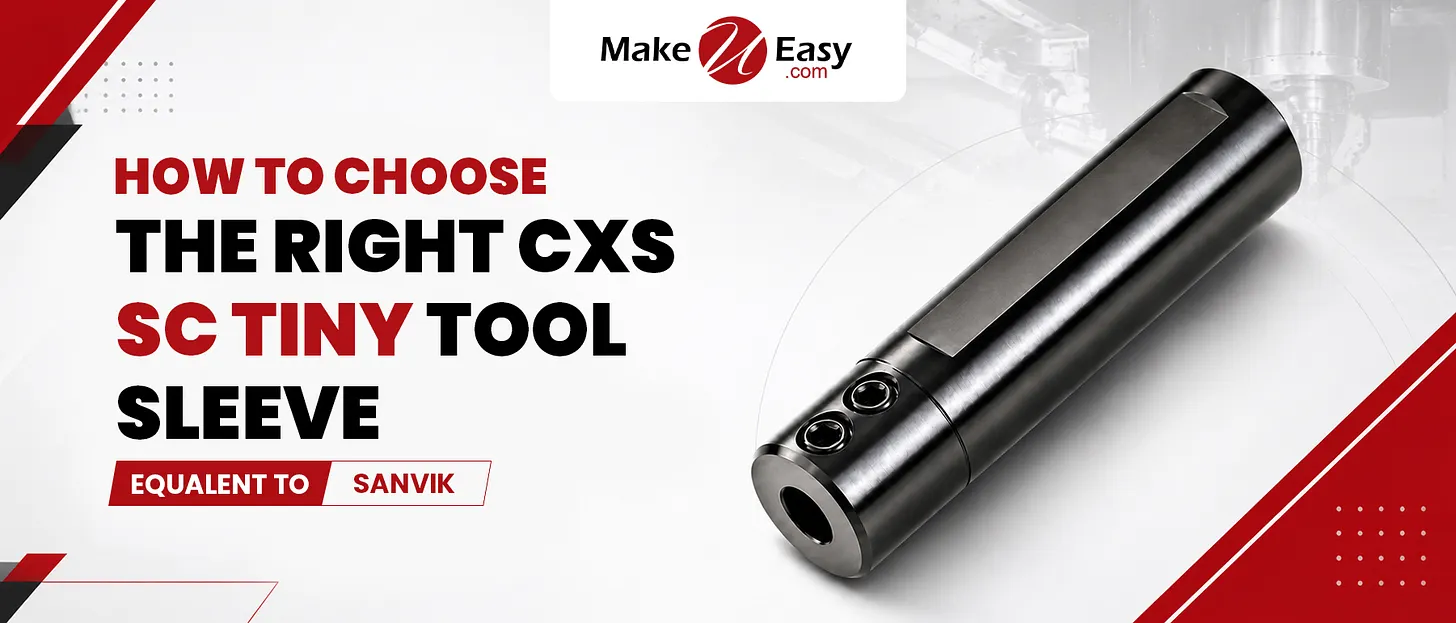
Choosing the right CXS SC Tiny Tool Sleeve equivalent to Sandvik is important for maintaining accurate tool positioning, stable clamping, and reliable performance in small-diameter CNC machining. A suitable equivalent sleeve should not be selected only by appearance or price. Factors such as tool shank size, sleeve dimensions, holder compatibility, concentricity, rigidity, and coolant requirements should be carefully verified to ensure the sleeve is suitable for the intended tiny-tool application.
What Is a CXS SC Tiny Tool Sleeve?
A CXS SC Tiny Tool Sleeve is a precision adapter or reduction sleeve that securely supports small-shank cutting tools in a compatible tool holder.
Tiny tools are commonly used for precision operations such as
-
Small-diameter internal turning
-
Internal grooving
-
Internal threading
-
Small-hole machining
-
Precision boring
-
Fine machining
Because these cutting tools are small, proper support and accurate positioning are especially important.
What Does “Equivalent to Sandvik” Mean?
An equivalent sleeve is a third-party product designed to provide a similar function to a corresponding Sandvik tooling component.
However, “equivalent” should not automatically be interpreted as identical or directly interchangeable.
A genuine technical comparison should consider:
-
Inner diameter
-
Outer diameter
-
Overall length
-
Tool shank compatibility
-
Clamping arrangement
-
Tool position
-
Coolant provision
-
Manufacturing tolerances
The sleeve should be selected based on verified specifications rather than product appearance alone.
Why Is the Right Tiny Tool Sleeve Important?
Small cutting tools are more sensitive to poor clamping and excessive overhang than larger tools.
An incorrectly selected sleeve can contribute to:
-
Tool vibration
-
Poor surface finish
-
Dimensional variation
-
Premature tool wear
-
Tool movement
-
Reduced machining stability
-
Tool breakage
A properly matched sleeve helps create a more rigid and repeatable tool setup.
How to Choose the Right CXS SC Tiny Tool Sleeve
1. Check the Tool Shank Diameter
Start by identifying the exact shank diameter of your CXS SC tiny tool.
The sleeve’s internal diameter should correctly match the tool shank to provide secure support and clamping.
Never choose a sleeve based only on the cutting diameter of the tool.
2. Verify the Sleeve Outer Diameter
The outer diameter of the sleeve must match the bore of the tool holder in which it will be installed.
For example:
Tiny Tool → Sleeve → Tool Holder
All three components must be compatible to create a secure tooling assembly.
3. Compare the Overall Length
Sleeve length affects tool support and positioning.
Check:
-
Overall sleeve length
-
Clamping length
-
Tool insertion depth
-
Required cutting-tool overhang
Using excessive overhang can reduce rigidity and increase vibration, particularly with tiny tools.
4. Check Sandvik Compatibility Carefully
If you’re purchasing a sleeve marketed as equivalent to Sandvik, compare the actual technical specifications with those of the Sandvik component it is intended to replace.
Important dimensions should match the required setup rather than simply carrying a similar product description.
Where available, compare:
-
Product designation
-
Dimensional drawings
-
Tool shank size
-
Holder interface
-
Clamping method
-
Coolant arrangement
5. Consider Concentricity and Accuracy
Precision is especially important for small-diameter tools.
A quality sleeve should position the cutting tool accurately relative to the holder.
Poor concentricity can contribute to uneven cutting conditions, reduced tool life, and dimensional errors.
For precision machining, choose a sleeve manufactured with controlled dimensional tolerances.
6. Look for Good Rigidity
Rigidity is critical in internal machining because boring and grooving tools often operate with considerable overhang.
A properly fitted sleeve helps provide:
-
Stable tool support
-
Reduced vibration
-
Better cutting consistency
-
Improved surface finish
-
More reliable dimensional control
The sleeve should clamp the tool securely without unnecessary clearance.
7. Check Coolant Compatibility
Coolant delivery can be important when machining small internal features because chip evacuation is often difficult.
If your tiny tool uses internal or directed coolant, verify that the equivalent sleeve supports the required coolant arrangement.
Proper coolant delivery can help with:
-
Chip evacuation
-
Temperature control
-
Cutting-edge life
-
Surface finish
-
Stable machining
8. Check Sleeve Material and Build Quality
A precision sleeve should be manufactured from a suitable material with good dimensional stability and wear resistance.
Look for:
-
Accurate machining
-
Clean internal bore
-
Consistent dimensions
-
Quality surface finish
-
Reliable clamping surfaces
-
Properly manufactured slots or functional features
Poor-quality sleeves can compromise the performance of even a premium cutting tool.
Sandvik Sleeve vs Equivalent Sleeve
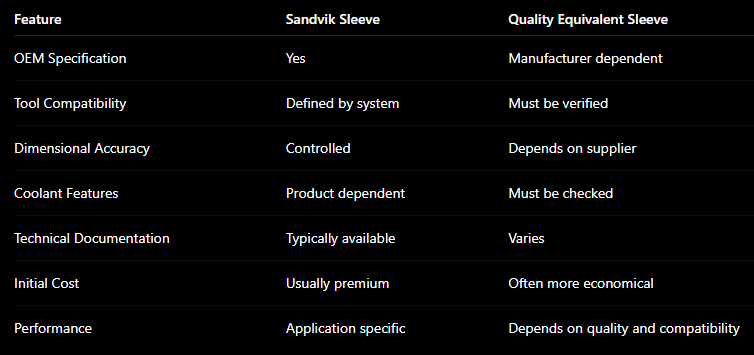
An equivalent sleeve can be a practical option when its specifications are properly verified.
Which Applications Use CXS SC Tiny Tool Sleeves?
These sleeves can be useful for precision CNC operations such as
Internal Turning
Supports small boring tools when machining small internal diameters.
Internal Grooving
Provides stable positioning for tools used to produce precise internal grooves.
Internal Threading
Helps maintain tool positioning during small internal threading operations.
Precision Boring
Supports small-shank tools used to achieve accurate internal dimensions.
Small Component Manufacturing
Useful for industries producing components with small and detailed internal features.
Tips for Better Tiny Tool Performance
For more reliable machining:
-
Keep the sleeve and tool shank clean.
-
Verify the correct sleeve size.
-
Minimize tool overhang.
-
Use a rigid tool holder.
-
Follow recommended cutting parameters.
-
Maintain proper coolant flow where required.
-
Check tool position before machining.
-
Inspect the sleeve regularly for wear or damage.
With tiny tooling, even small setup errors can have a noticeable effect on machining performance.
Common Mistakes to Avoid
Choosing by Appearance
Two sleeves can look nearly identical while having different dimensions or interfaces.
Ignoring Shank Size
Always verify the actual tool shank diameter before selecting the sleeve.
Excessive Tool Overhang
Long overhang reduces rigidity and can increase vibration.
Ignoring Coolant Requirements
Make sure the sleeve does not interfere with the required coolant delivery.
Buying Only by Price
A low-cost sleeve that causes poor tool positioning or unstable clamping may increase the overall machining cost.
Why Choose MakeYouEasy?
At MakeYouEasy, we provide CNC tooling and machining accessories for industrial and precision manufacturing applications.
Our product range includes:
-
CXS SC Tiny Tool Sleeves
-
Sandvik Equivalent Sleeves
-
Tiny Tools
-
Boring Tools
-
Boring Bar Sleeves
-
Turning Inserts
-
Grooving Inserts
-
Threading Inserts
-
CNC Tool Holders
-
Precision Measuring Instruments
Explore CNC tooling solutions: MakeYouEasy
Conclusion
Choosing the right CXS SC Tiny Tool Sleeve equivalent to Sandvik requires more than finding a sleeve with a similar shape or product name. The correct sleeve should match the tool shank diameter, holder interface, overall dimensions, clamping requirements, accuracy, rigidity, and coolant arrangement of the intended CNC setup.
A properly selected equivalent sleeve can provide a cost-effective solution for precision internal machining while maintaining stable tool support and consistent performance. Always verify the complete technical specification before replacing an OEM component with an equivalent product.
Frequently Asked Questions
1. What is a CXS SC Tiny Tool Sleeve used for?
A CXS SC Tiny Tool Sleeve supports and clamps compatible small-shank cutting tools for precision internal CNC machining.
2. Can an equivalent sleeve replace a Sandvik sleeve?
Yes, provided its dimensions, tool compatibility, clamping method, and functional requirements correctly match the intended setup.
3. How do I choose the correct tiny tool sleeve size?
Match the sleeve’s inner diameter to the tool shank and its outer diameter to the compatible tool holder.
4. Does sleeve accuracy affect tiny tool performance?
Yes, accurate sleeve positioning and clamping help improve stability, dimensional consistency, and cutting performance.
5. Why is rigidity important for CXS SC tiny tools?
Good rigidity helps reduce vibration and tool deflection when machining small internal features.
