How to Choose the Right Bottle Filling Machine for Your Production Line?
Author : HitokaCece HitokaCece | Published On : 13 Aug 2026
Introduction
Over the years in the beverage packaging industry, I have seen too many production lines struggle with slow output, inconsistent fill levels, and frequent breakdowns—all because the wrong bottle filling machine was chosen for the job. A bottle filling machine is the heart of any bottling plant, and getting the selection right is essential for operational efficiency and product quality. The global demand for bottled water and beverages continues to climb, and modern filling machines automate the entire process—rinsing, filling, and capping—replacing inconsistent manual labor with automation that runs day and night. Let me share what I have learned about choosing bottle filling machines that deliver reliable performance and long-term value.
Understanding Bottle Filling Machine Types and Configurations
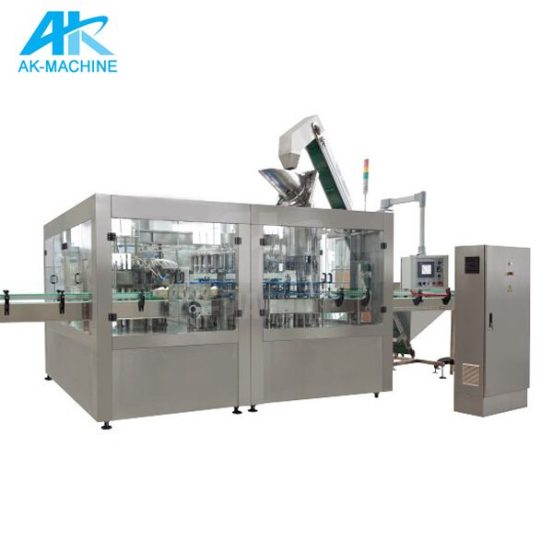
Bottle filling machines come in several configurations, each suited to different production scales and requirements. Automatic bottle filling machines run the entire process—rinsing, filling, and capping—without manual intervention, typically handling 2,000 to 24,000 bottles per hour. Semi-automatic machines require an operator to load or move bottles between steps, making them suitable for small-scale startups with capacities of 200 to 1,500 bottles per hour. The industry standard for modern production is the 3-in-1 monoblock machine, which integrates rinsing, filling, and capping into a single rotary unit. This integration reduces floor space requirements, minimizes contamination risk, and improves overall efficiency. When selecting a bottle filling machine, match the configuration to your production volume and growth projections.
Filling Methods and Precision in Bottle Filling Machines
The filling method of a bottle filling machine determines fill accuracy, product compatibility, and overall performance. For still water, gravity filling is the most common and cost-effective method, using the physical weight of the liquid to fill containers. For carbonated beverages, isobaric or counter-pressure filling is essential—the bottle is pressurized with CO2 before filling to prevent carbonation loss. Advanced machines use flow meter technology for extreme precision, with electromagnetic flow meters providing non-contact filling and rapid changeovers between bottle sizes. The filling system should maintain accuracy within ±0.5% to ensure consistent product quality and minimize giveaway. When evaluating a bottle filling machine, consider the types of products you will run and choose the filling method that matches your requirements.
Hygiene Standards and Construction of Bottle Filling Machines
Food safety is non-negotiable in beverage production, and the construction of a bottle filling machine must meet stringent hygiene standards. High-quality machines are built with food-grade stainless steel, typically 304 or 316L, for all product contact parts. Stainless steel resists corrosion, is easy to clean, and prevents contamination of the product. Modern filling machines incorporate Clean-in-Place (CIP) systems that automatically clean internal surfaces without disassembly. HEPA-filtered laminar flow hoods over the filling and capping area create a cleanroom environment that extends shelf life without preservatives. When selecting a bottle filling machine, verify that the construction materials and hygiene features meet the food safety requirements of your target markets.
Conclusion
Choosing the right bottle filling machine requires careful evaluation of machine types, filling methods, and hygiene standards. Automatic machines suit medium to large-scale production; semi-automatic machines work for small startups. Gravity filling works for still water; isobaric filling is essential for carbonated beverages. And food-grade stainless steel construction with CIP systems ensures product safety. By matching the bottle filling machine to your specific production requirements, you can achieve reliable performance, consistent product quality, and maximum return on investment.
