How to Choose a High‑Quality Book Nook Kit Supplier for Your Retail Brand
Author : HitokaCece HitokaCece | Published On : 13 Jul 2026
Introduction
Over the past five years, the DIY handicraft market has experienced remarkable growth, with book nook kits and 3D wood puzzles posting compound annual growth rates that consistently outpace the broader craft sector. As someone who has spent sixteen years in this industry, I have witnessed the transition from a niche hobby to a mainstream consumer category. More retailers, brand owners, and gift buyers are entering the space, but a real challenge remains: how to filter through hundreds of suppliers to find a long‑term partner you can truly trust. Inconsistent quality, delayed shipments, and high communication costs are pain points I hear far too often. Today, I want to share some proven evaluation criteria based on real operational experience.
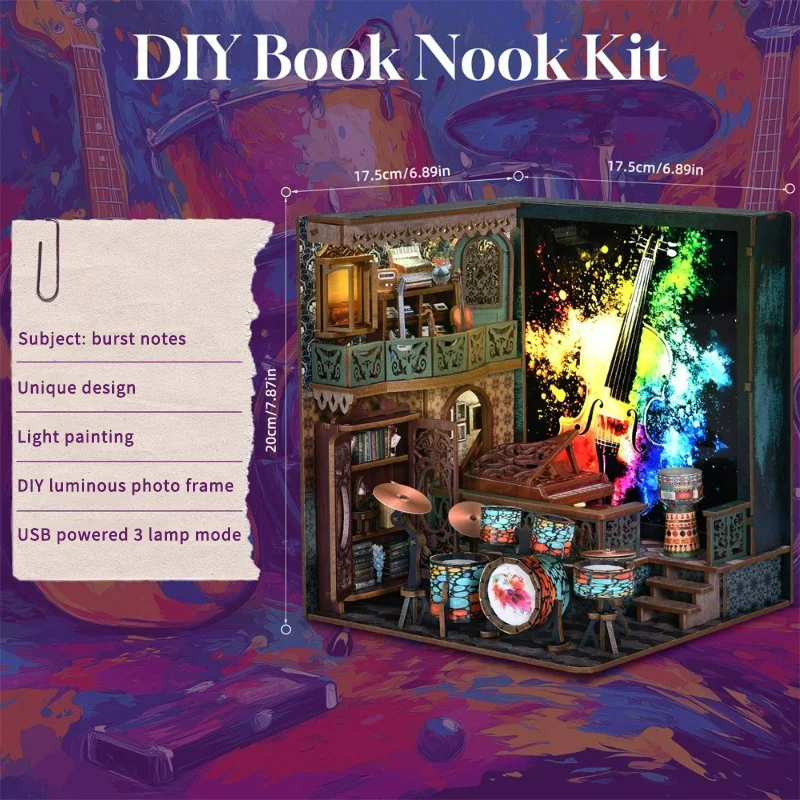
Book Nook Kit Supplier Selection Standards
The first thing to examine when assessing a book nook kit supplier is production control capability. Many procurement professionals ask me why the same 3D wood puzzle design can vary so much in quality between different factories. The answer often lies in the completeness of the production chain. A truly capable manufacturer controls every step in‑house—from design and R&D, laser cutting, and colour matching, to final packaging. This ensures that every process runs under a unified quality standard, eliminating the variability that comes with outsourcing. I have repeatedly verified this in practice: suppliers that outsource key processes tend to show colour deviations and reduced assembly precision in bulk orders. In contrast, factories with an integrated production line maintain consistent precision in wood cutting, LED strip installation, and dust cover fitment across every batch. For retailers, this translates into fewer customer complaints and higher repurchase rates.
Quality Control Systems for 3D Wood Puzzles
Next, let us talk about quality assurance—an area often overlooked by newcomers, yet critical to the longevity of miniature house kits. A premium 3D wood puzzle should achieve laser cutting accuracy within 0.1 mm, so that every mortise‑and‑tenon joint fits flawlessly. In actual production, we have found that a deviation of just 0.05 mm significantly weakens structural stability. Professional manufacturers therefore conduct moisture content tests and laser calibration before production, perform random in‑process sampling, and carry out comprehensive structural verification at the final stage. Material safety is equally important. Book nook kits destined for European and American markets must comply with CE, CPC, and ASTM standards, and ideally the wood should carry FSC certification. These certifications not only protect end consumers but also serve as your brand’s entry ticket to mainstream distribution channels. I strongly advise every buyer to request complete test reports and certification documents before signing any contract.
Customisation Capabilities and OEM Project Management
Finally, I want to emphasise the weight of customisation capability in supplier evaluation. Today’s DIY craft market is intensely competitive, and products with exclusive designs are the ones that stand out on shelves. An excellent book nook kit manufacturer should offer robust OEM and ODM services. This means they can not only produce according to your technical drawings but also provide full support from concept design and renderings to sample making, aligned with your brand positioning and market strategy. In practice, I recommend focusing on the supplier’s design team size and experience, sample response speed, and flexibility for small‑batch trial production—the last being particularly valuable for testing market response. Many professional manufacturers now accept low minimum order quantities, significantly reducing the risk for brand owners. Additionally, value‑added services such as custom logo printing and exclusive packaging design are important indicators of a supplier’s overall service capability.
Conclusion
Choosing the right book nook kit supplier is ultimately about finding a long‑term partner who can grow with your brand. Production integrity sets the floor for quality, certification systems guard your brand’s reputation, and customisation opens the door to differentiation. In this creative industry, a dependable supply chain is your strongest foundation. I hope the insights above help you navigate supplier evaluation more effectively and find the partner that best fits your business needs.
