How to Calibrate Temperature Controllers Used in Manufacturing
Author : Ncqc laboratory | Published On : 27 Oct 2026
Temperature controllers are essential in manufacturing industries where accurate temperature control is critical to product quality and process consistency. They are commonly used in industrial ovens, furnaces, heat treatment systems, and production equipment. Regular temperature controller calibration helps identify measurement errors, maintain reliable process conditions, and support effective quality management.
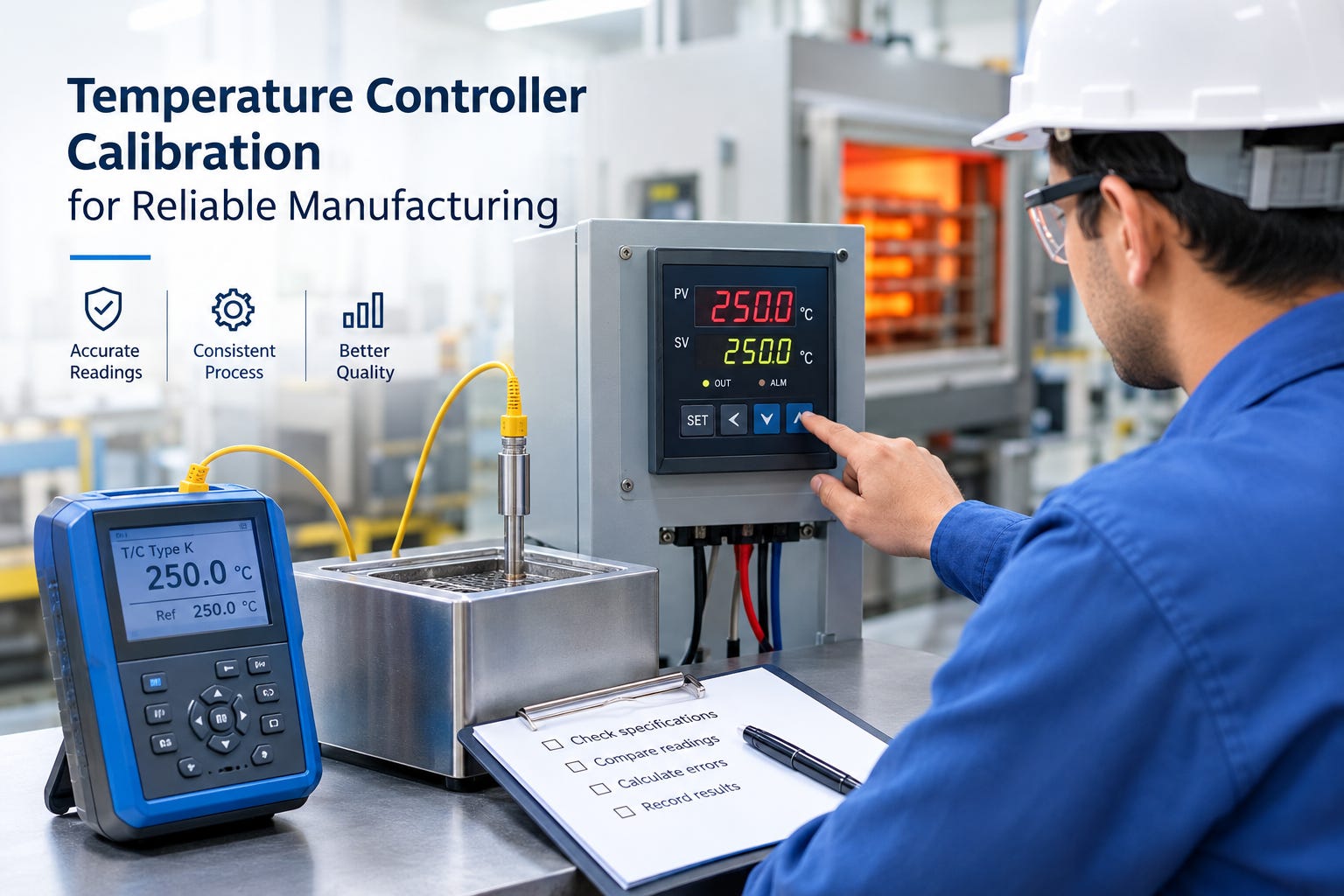
Understanding Temperature Controller Calibration
A temperature controller receives signals from a temperature sensor, such as a thermocouple or resistance temperature detector (RTD), and uses this information to regulate heating or cooling equipment. Calibration involves comparing the controller’s indicated temperature with a suitable reference value to determine measurement error.
This process helps establish whether the instrument meets predefined accuracy requirements. Calibration identifies and documents measurement errors, while adjustment involves changing instrument settings when necessary.
Why Is Temperature Controller Calibration Necessary?
Accurate temperature measurement supports efficient and reliable manufacturing operations in several ways:
· Consistent product quality: Maintaining the required temperature helps manufacturers meet product specifications.
· Reliable process control: Identifying measurement deviations helps prevent unwanted temperature variations.
· Equipment protection: Accurate readings support safer, more controlled equipment operation.
· Quality assurance: Documented results provide evidence of measurement control during quality audits.
· Reduced production waste: Reliable temperature monitoring helps minimize rejected products, unnecessary rework, and material losses.
How to Calibrate a Temperature Controller
A structured calibration procedure helps ensure that measurements are reliable and results are properly documented.
Step 1: Review instrument specifications
Check the controller’s operating range, accuracy requirements, sensor type, and manufacturer’s instructions. Establish suitable acceptance criteria before testing.
Step 2: Select appropriate reference equipment
Choose a calibrated reference standard with suitable accuracy and documented metrological traceability. A temperature signal calibrator can simulate sensor signals to test the controller input. Alternatively, a calibrated reference thermometer and suitable temperature source can be used to assess the complete sensor-controller system.
Step 3: Inspect the controller and sensor
Examine the instrument, sensor connections, wiring, and installation for visible damage. Verify that the controller uses the correct sensor type and input configuration. If the sensor itself requires verification, appropriate Thermocouple Calibration procedures may be necessary.
Step 4: Prepare the calibration setup
Select equipment suitable for the intended test. A dry-block calibrator or temperature bath may be appropriate for evaluating temperature sensors. Ensure the setup covers the required operating range and provides stable conditions.
Step 5: Compare the readings
Test the controller at selected temperature points. Allow sufficient time for stabilization, then record the indicated temperature and corresponding reference value. Include relevant operating points based on process requirements.
Step 6: Evaluate the results
Calculate the measurement error by comparing the controller indication with the reference reading. Assess the results against established acceptance criteria. If the instrument does not meet these requirements, investigate the cause and determine whether adjustment or corrective action is necessary.
Step 7: Maintain calibration records
Document the reference values, indicated readings, calculated errors, equipment identification, calibration date, and acceptance status. Record as-found and as-left results when adjustments are performed, along with the next calibration due date where applicable.
Common Calibration Mistakes to Avoid
Using unsuitable reference equipment, ignoring sensor configuration, and recording readings before stabilization can affect calibration reliability. Testing too few temperature points may also overlook measurement errors. Manufacturers should maintain complete records and investigate out-of-tolerance findings to determine whether previous measurements or affected products require further assessment.
Conclusion
Temperature controller calibration supports accurate measurement, consistent production, and effective quality management. Manufacturers should establish appropriate calibration intervals, use suitable reference equipment, and review results regularly. For dependable measurement performance, consider professional calibration services that can help assess instrument accuracy and maintain documented calibration records.
Contact us to learn how our calibration laboratory can help improve temperature measurement accuracy and support consistent manufacturing quality.
