How Sports Massage Can Fit Into a Training and Recovery Routine
Author : Personal Physio | Published On : 08 Oct 2026
Training regularly can be rewarding, but recovery needs to be part of the routine too. Whether you run, lift weights, play sport or simply stay active, your body needs time and the right support to adapt to physical demands.
Sports massage can be one part of a wider recovery routine. It is not a replacement for rest, appropriate training progression or physiotherapy when an injury needs assessment. Instead, it can be used alongside these things to support how you feel before and after periods of higher activity.
For people who train regularly, the most useful approach is to consider when massage may be appropriate, what you want from the session and how it fits around your normal training schedule.
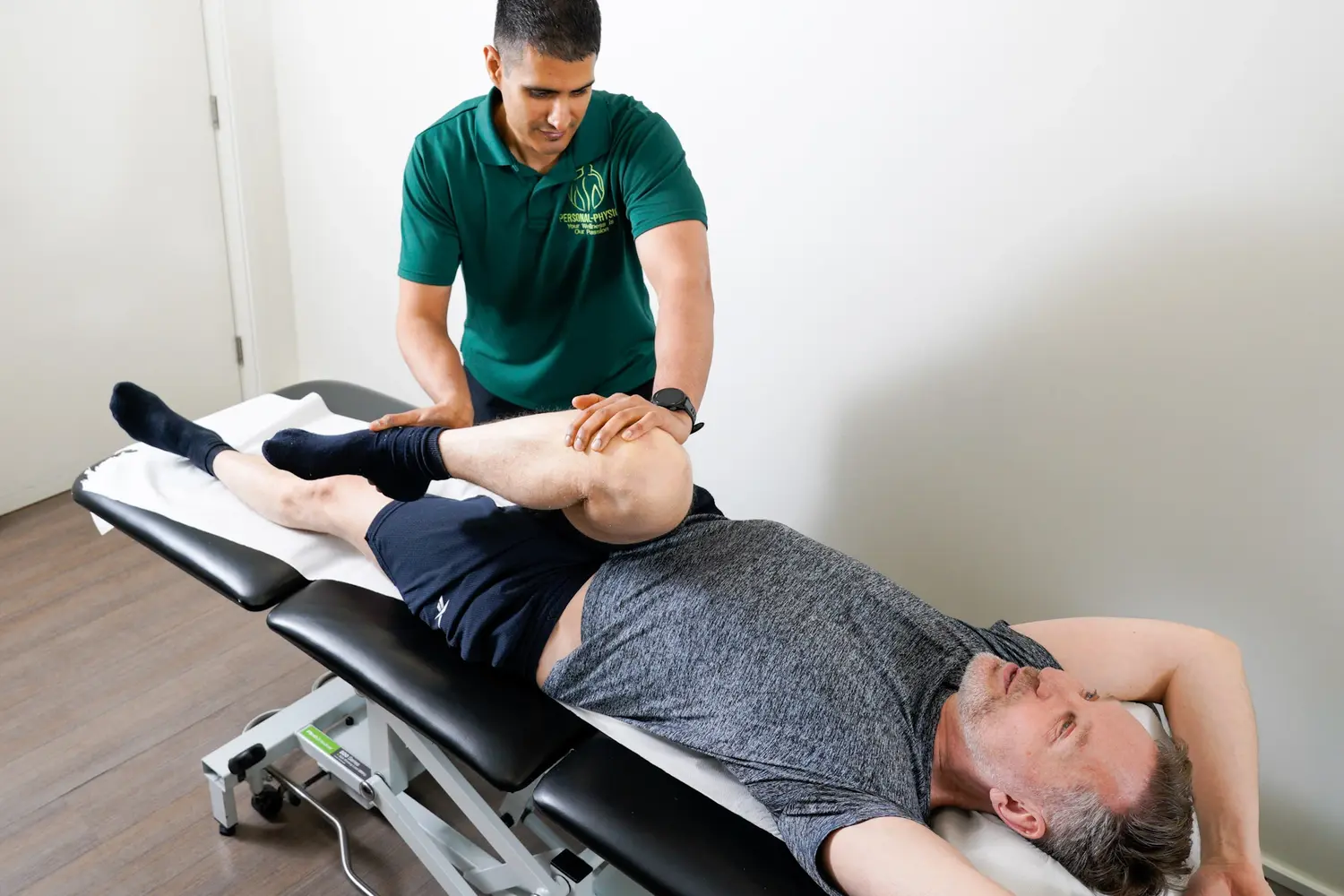
What is sports massage?
Sports massage is a hands-on treatment commonly used by active people as part of their training and recovery routine. The treatment can involve different techniques depending on the individual, their activity levels and the areas they would like addressed.
Despite the name, sports massage is not only for competitive athletes. It can also be relevant to people who run, cycle, attend the gym, play recreational sports or have increased their activity recently.
A session should be based on your individual needs rather than simply following the same routine for everyone.
For people looking for sports massage London services, it is worth considering whether the treatment provider understands your activity, training demands and recovery goals.
How can sports massage fit into a training routine?
There is no single schedule that works for everyone. The timing of a sports massage can depend on your training frequency, upcoming events, workload and how your body responds to treatment.
Some active people may choose to have a session during periods of regular training, while others may prefer treatment around particularly demanding periods.
For example, someone preparing for a running event may have a different approach from someone following a strength-training programme. Someone who trains several times a week may also have different requirements from someone who exercises occasionally.
The important point is that massage should support your overall routine rather than become another activity that your body has to recover from.
Before a demanding training period
If you are increasing your training volume or preparing for an event, it can be useful to consider recovery before your workload becomes difficult to manage.
This does not mean that everyone needs regular massage during training. Instead, consider how you normally respond to increased activity and whether hands-on treatment has been useful for you previously.
If you are considering sports massage Soho services before an important event, avoid experimenting with an unfamiliar treatment immediately before the event. Give yourself enough time to understand how your body responds.
After demanding training
Some people use massage as part of their routine after periods of higher physical demand.
For example, you may have completed a long run, a particularly demanding gym session or a weekend involving several sporting activities. A massage may form part of your recovery strategy alongside appropriate rest, nutrition, hydration and sensible training progression.
However, significant or persistent pain should not automatically be treated as something that needs to be massaged away.
If you have an injury, swelling, significant loss of movement or pain that is affecting normal activity, an appropriate clinical assessment may be more useful.
Sports massage is not the same as injury treatment
One important distinction is between supporting recovery and treating an injury.
Feeling tight after exercise does not necessarily mean that you have an injury. Equally, assuming that all pain is simply muscle tightness can mean that an underlying problem is overlooked.
If you are experiencing ongoing pain, recurrent symptoms or difficulty returning to your normal activity, physiotherapy may be more appropriate.
A physiotherapy assessment can consider your symptoms, activity levels and functional goals before deciding what treatment or rehabilitation approach may be appropriate.
For people training in Central London, combining appropriate rehabilitation with a sensible training programme can be more useful than relying on massage alone.
You can also explore Personal-Physio's sports physiotherapy London if you need support with an injury or return to activity.
How often should you have a sports massage?
There is no fixed answer.
The right frequency depends on factors such as:
- How often you train
- The type and intensity of your training
- Whether you have an upcoming event
- How your body responds to treatment
- Your current recovery routine
- Whether you have any ongoing symptoms
Someone training once or twice a week may not need the same frequency as someone completing a high-volume training programme.
Rather than booking sessions simply because they are recommended at a particular interval, consider whether they provide a useful part of your overall recovery strategy.
What should you do between sessions?
Massage is only one part of recovery. Your regular habits are likely to have a much greater influence on how consistently you can train.
Your routine may include:
- Appropriate rest between demanding sessions
- Gradually increasing training load
- Strength and conditioning work
- Mobility exercises where appropriate
- Adequate nutrition and hydration
- Good sleep habits
- Monitoring how your body responds to training
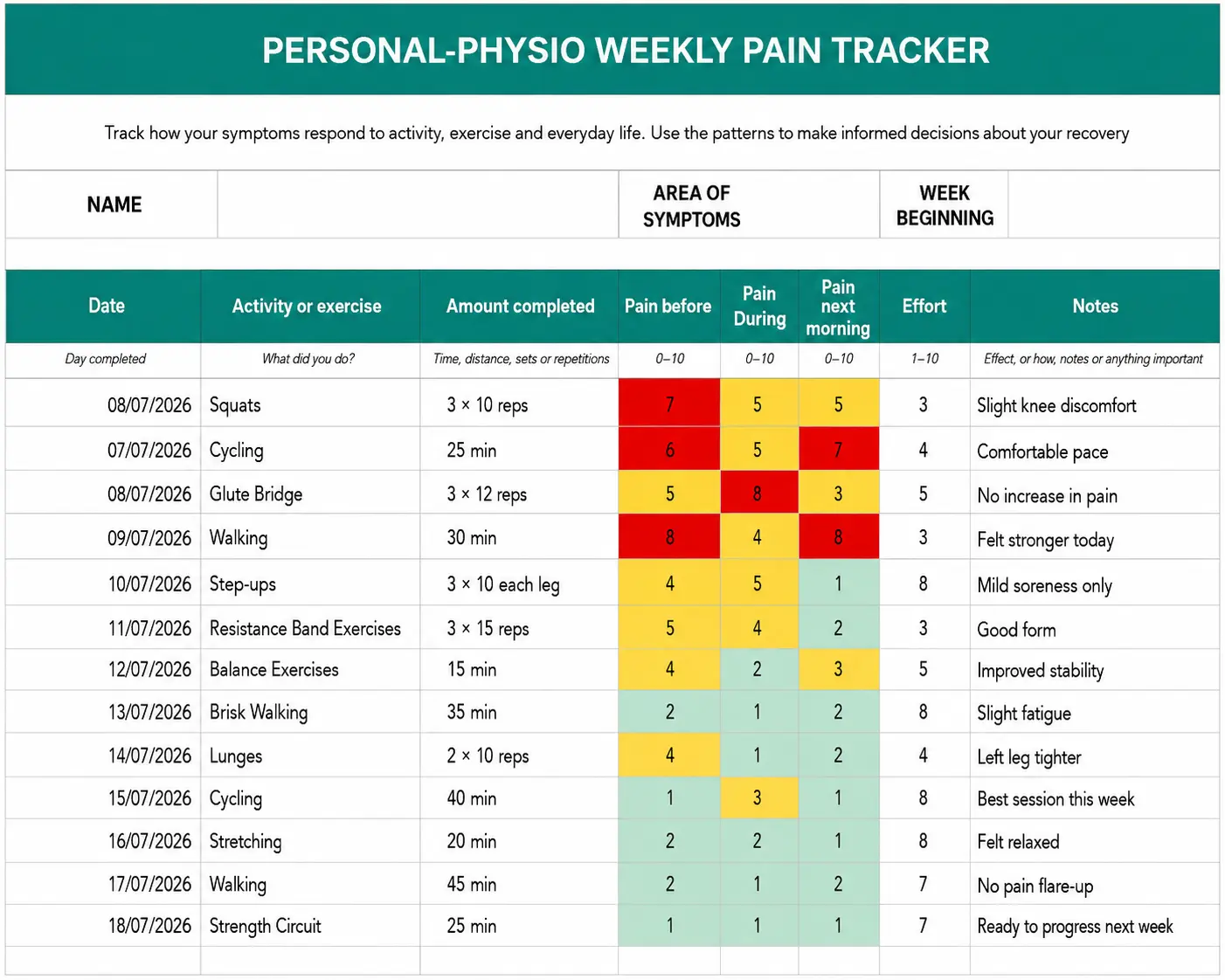
Keeping a record can also help you identify patterns. For example, you may notice that certain training sessions consistently leave you more uncomfortable the following morning.
Personal-Physio's pain and rehabilitation tracker can be useful for recording symptoms, exercise and recovery between appointments.
When should you avoid simply relying on massage?
Massage should not be used as the default solution for every type of pain.
Consider seeking professional assessment if you have:
- Persistent or worsening pain
- Significant swelling
- Reduced strength or movement
- Symptoms that repeatedly return
- Difficulty performing normal activities
- An injury that has not settled
- Symptoms that are affecting your ability to train
The aim is not to avoid activity unnecessarily, but to understand what is happening and choose an appropriate approach.
If rehabilitation is required, strength and rehabilitation support can form part of a structured return to activity.
Building massage into a realistic recovery routine
A useful recovery routine should be realistic enough to maintain.
Instead of thinking about sports massage as something you must have every week, consider where it genuinely fits into your training.
For example, your routine could include regular strength work, rest days, appropriate progression and monitoring of symptoms, with massage used when it provides additional value.
This approach also allows you to adjust your routine when your training changes.
If your workload increases before an event, your recovery needs may be different from those during a quieter training period.
The same principle applies if you develop an injury. At that point, the priority may shift from general recovery towards assessment and rehabilitation.
Choosing the right approach for your training
Sports massage can be useful for active people, but it works best when it is considered as part of the bigger picture.
The goal should not simply be to feel temporarily better after treatment. Your wider routine should help you continue participating in the activities you enjoy while managing training demands appropriately.
For some people, that may mean occasional massage. For others, it may involve physiotherapy, strength and rehabilitation work, changes to their training programme or a combination of different approaches.
If you are unsure what type of support is appropriate, an assessment can help determine the next step rather than relying on treatment based only on where you feel discomfort.
FAQs
Is sports massage only for athletes?
No. Sports massage can be suitable for people with different activity levels, including recreational runners, gym users, cyclists and people who participate in sport occasionally.
How often should I have a sports massage?
There is no standard frequency. It depends on your training schedule, recovery needs and how you respond to treatment. Massage should complement your routine rather than be treated as a requirement.
Can I have a sports massage if I have an injury?
It depends on the nature of the injury. If you have ongoing or significant symptoms, it is sensible to have the problem assessed rather than assuming massage is appropriate.
Is sports massage a replacement for physiotherapy?
No. Sports massage and physiotherapy have different roles. Physiotherapy can involve assessment, rehabilitation and advice for injuries and functional problems, while sports massage may be used as part of a wider recovery routine.
Should I have a sports massage immediately before a competition?
It is generally better not to experiment with an unfamiliar treatment immediately before an important event. If you already use massage as part of your routine, the timing should still be considered around your individual training and competition schedule.
Can sports massage help with recovery?
It may form part of a recovery routine for some active people. However, recovery also depends on factors such as training load, rest, sleep, nutrition and appropriate rehabilitation when required.
