How Small Manufacturers Are Reclaiming Supply Chain Sovereignty
Author : Daniel Sparks | Published On : 03 Sep 2026
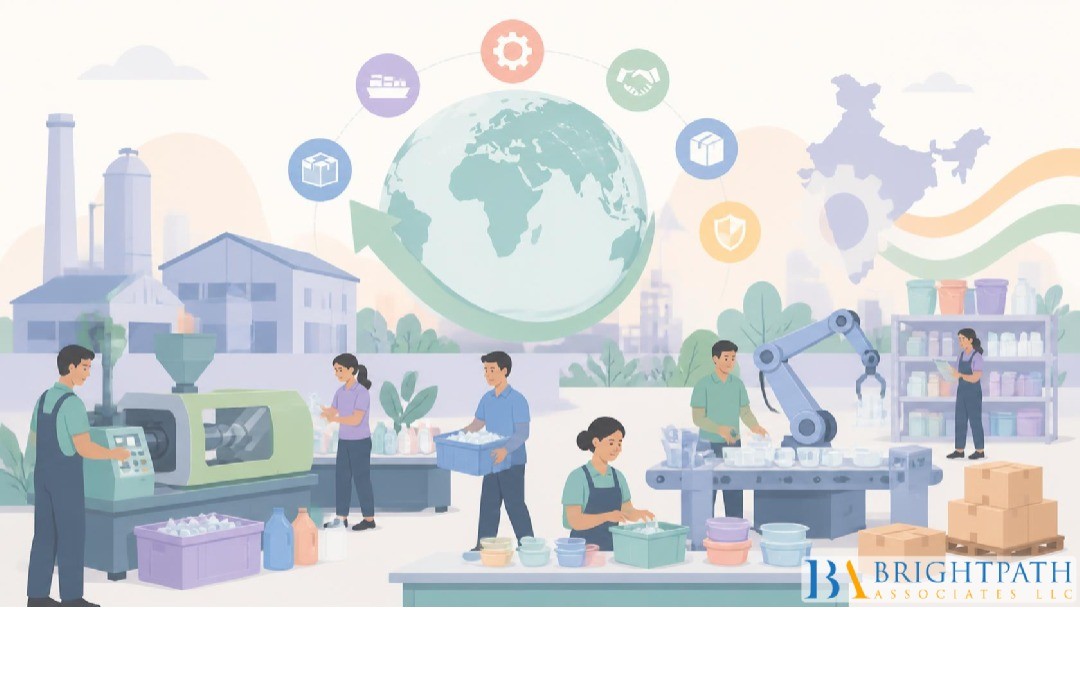
For decades, manufacturing strategy often revolved around finding the lowest-cost supplier, regardless of geographic distance. Global sourcing enabled companies to access specialized materials, reduce production costs, and serve increasingly broad markets.
But recent supply-chain disruptions have changed how many small and mid-sized manufacturers think about that model. For plastics companies in particular, dependence on distant suppliers for resins, additives, packaging materials, components, tooling, and other critical inputs can expose businesses to transportation delays, price volatility, geopolitical uncertainty, and unexpected shortages.
This is encouraging a different approach: building a more localized and resilient supply network. Sometimes described as a “local loop,” this strategy does not mean abandoning global commerce. Instead, it means identifying which parts of the supply chain can be brought closer to the manufacturing operation without sacrificing competitiveness.
Why Supply-Chain Resilience Matters More Than Ever
A supply chain can appear efficient when everything is working normally. A shipping disruption, raw-material shortage, port delay, regulatory change, or sudden price increase can quickly affect production schedules. Large corporations may have multiple suppliers, significant inventory reserves, and greater purchasing power to absorb disruptions.
Small manufacturers often have fewer buffers. A single delayed shipment of a critical resin or additive can potentially affect an entire production schedule.
This is why supply-chain resilience has become a strategic consideration rather than simply a procurement concern. Manufacturers increasingly need to understand not only what they are buying and how much it costs, but also how vulnerable those purchases are to external disruption.
What Does a Local Loop Actually Mean?
A localized supply chain does not necessarily mean sourcing everything within a few miles of the factory. Instead, the concept focuses on creating stronger regional connections between suppliers, manufacturers, distributors, customers, and service providers.
A plastics manufacturer might identify regional resin suppliers, local tooling companies, nearby maintenance providers, domestic compounders, or strategically located distribution partners. The objective is to shorten certain supply routes and create alternatives for critical materials.
Shorter transportation distances can improve delivery predictability. Regional supplier relationships can make communication easier. Manufacturers may have greater visibility into supplier operations. Emergency requirements may also be easier to address when critical partners are geographically accessible. The result is a supply chain designed not only for efficiency, but also for adaptability.
Cost Should Still Matter—but It Should Not Be the Only Metric
The strongest argument against localization is often cost. A local supplier may initially appear more expensive than an overseas alternative. However, comparing suppliers solely on quoted unit price can produce misleading conclusions.
The real cost of procurement includes transportation, inventory carrying costs, customs considerations, delays, quality problems, emergency purchasing, and production downtime. A lower-priced material that arrives three weeks late may be considerably more expensive from an operational perspective.
Small plastics manufacturers can therefore benefit from evaluating suppliers through a broader total-cost framework. This approach does not automatically favor local suppliers. Instead, it creates a more realistic comparison between local and distant sourcing options.
Technology Can Make Local Networks More Competitive
Localization alone does not guarantee supply-chain resilience. Modern supply-chain platforms, inventory-management systems, demand forecasting, connected manufacturing systems, and data analytics can help companies understand material consumption and supplier performance.
For plastics manufacturers, this can be especially valuable when resin prices fluctuate or customer demand changes quickly. Better forecasting can reduce the need for excessive safety stock while helping procurement teams identify upcoming material requirements.
Digital tools can also provide early warning when inventory levels fall below defined thresholds or supplier performance begins deteriorating. A regional supplier network provides flexibility, while digital systems provide the visibility needed to manage that network effectively.
Leadership Becomes a Critical Supply-Chain Asset
Supply-chain resilience ultimately depends on decision-making. Companies need leaders who can balance cost, quality, inventory, supplier relationships, technology, sustainability, and customer requirements.
This is becoming increasingly important across the broader Plastics Industry, where companies are navigating material volatility, automation, sustainability pressures, regulatory developments, and changing customer expectations.
A procurement executive focused exclusively on reducing purchase price may miss resilience risks. Likewise, an operations leader focused only on production efficiency may overlook supplier vulnerabilities.
The most effective leadership approach connects procurement with operations, finance, technology, sustainability, and commercial strategy. That cross-functional perspective can help smaller companies compete more effectively against larger manufacturers.
The Next Stage of Plastics Manufacturing May Be More Connected
The future of plastics manufacturing is unlikely to be completely local or completely global. They will maintain global relationships where international sourcing provides genuine advantages while developing regional alternatives for strategically important materials and services.
Technology will provide visibility. Supplier partnerships will provide flexibility. Data will support better forecasting. Strong leadership will connect these elements into a coherent strategy.
The original BrightPath analysis, How Small Manufacturers Are Reclaiming Supply Chain Sovereignty, explores how smaller manufacturers are reconsidering traditional supply-chain structures and using localized networks to strengthen resilience.
A Strategic Question for Plastics Executives
Supply-chain sovereignty does not mean producing everything internally. It means understanding where your business is vulnerable and taking deliberate steps to regain control over the areas that matter most.
For a small or mid-sized plastics manufacturer, that might mean developing a regional supplier for a critical resin, qualifying a backup source, investing in better inventory analytics, building stronger supplier relationships, or hiring leadership capable of integrating procurement with broader operational strategy.
The most resilient companies will not necessarily be those with the largest inventories or the most suppliers. They may be the ones with the best understanding of their dependencies.
