How PTFE Filters Stand Up to Harsh Chemicals and Solvents
Author : tomasfryklof tomasfryklof | Published On : 12 Oct 2026
You know that moment when a regular filter just gives up? Acids chewing through it or solvents turning the media soft and useless. Happens more than people admit. That’s the point a teflon cartridge filter usually gets pulled in. PTFE – same basic material folks still call Teflon – doesn’t react the way other stuff does. Those carbon-fluorine bonds are stubborn. Nylon softens up. Polypropylene swells. PTFE mostly just sits there and keeps doing the job.
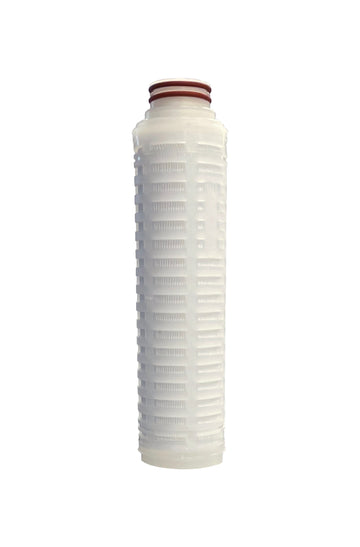
The membrane carries most of the load
The membrane itself does the heavy work. A lot of these cartridges run hydrophobic PTFE so water gets rejected while the solvents go through clean. Switch over to hydrophilic if the stream is aqueous but still aggressive. Resistance doesn’t change much either way. Flow stays decent at low pressure drop because they pleat it tight for surface area and the membrane is thin. No big swelling. Hardly any extractables coming off. In a wet bench or an API step that kind of cleanliness actually saves you from tossing product.
Felt bags still get used – just not for the mean stuff
Felt bag filters still get used plenty, just not for the really aggressive chemistry. They handle paint, water-based coatings, general dirt without much drama. Put one in hot sulfuric or straight acetone though and it starts breaking down faster than you’d like. Some plants run PTFE versions of felt bag filters in high-temp dust collection and those hold up fine. Liquid service with aggressive solvents is a different story. Cartridge with real PTFE membrane usually comes out ahead on how fine it holds and how clean the filtrate stays. Bags cost less day one. Changeouts and lost batches cost more later.
Heat changes the picture
Heat throws another variable in. Full fluoropolymer builds with PFA can sit continuous past 200 °C without much complaint. The ones using polypropylene supports sit lower, maybe sixty to eighty degrees depending what chemical is in there. Still better than most alternatives when the fluid is harsh. I’ve watched plants force a PVDF filter into solvent work and the pressure drop climbs as the media softens. Ugly. Proper teflon cartridge filter keeps the differential more steady over longer runs.
Small construction details that actually matter
Little construction details matter more than the brochure admits. Thermal bonding instead of glue means less junk leaching into the stream. All-PTFE or PTFE with PFA gives the widest chemical window. HDPE or PP cages are common when money is tight and they still cover a lot of ground – MEK, toluene, IPA, hydrochloric, nitric, even HF in plenty of cases. Seals are often the weak point. Viton or the PTFE-encapsulated ones keep things tight. Cut corners there and you get leaks no matter how good the membrane looks.
Where these filters show up in real plants
You see these filters in the places where the chemistry doesn’t forgive mistakes. Fine chemical plants running mixed acids. Pharma steps with methylene chloride or THF. Photoresist and etchant lines. Solvent recovery loops. Anywhere sub-micron retention is needed without the filter itself becoming a contamination source. The hydrophobic ones also work solid on tank vents and gas filtration. Block moisture, let air or nitrogen through. One less place for corrosion or growth to start.
The price question always comes up
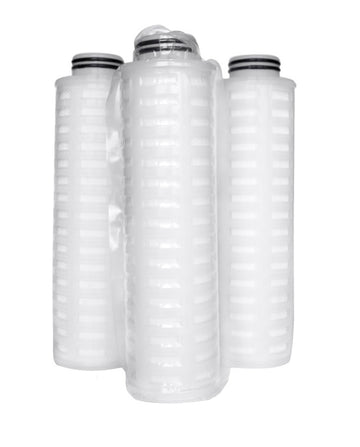
Price question comes up every time someone looks at the quote. When the alternative is frequent changeouts, off-spec batches, or a housing that needs constant attention, the higher cost usually pays for itself. Felt bag filter still makes sense for high-solids loads or milder streams where absolute purity isn’t the main driver. Once the fluid starts attacking ordinary polymers the teflon cartridge filter becomes the default. Process stays steadier. Filtrate stays cleaner. That’s really the whole point.
You still have to match it to the actual process
You still have to match the micron rating and the housing materials to the actual conditions though. Temperature, concentration, whether oxidizers are present – all of it. Charts help some. Running the process for a while helps more. A filter that looks perfect on paper can still let you down if the seals or support layers don’t line up with the duty.
Conclusion
PTFE membrane cartridges earn their spot by staying inert when almost everything else fails. They take the acids, the solvents, the mixed streams that would wreck ordinary media, and they do it without adding much junk or falling apart. A felt bag filter stays useful for a lot of the milder work, but it’s not the right tool once the chemistry gets truly aggressive. Get the construction right, pay attention to the seals and the temperature limits, and these things just keep working. Most plants find that’s justification enough.
FAQs
What makes a teflon cartridge filter better for solvents than other membranes?
Those carbon-fluorine bonds hold up against almost every common organic solvent. Most other polymers swell, soften, or dissolve under the same conditions.
Can PTFE filters handle both acids and solvents in the same system?
Yeah. Properly built ones handle concentrated mineral acids and a wide range of organic solvents, often in the same stream.
When would you still choose a felt bag filter instead?
High solids loading, lower chemical aggressiveness, or jobs where absolute micron retention and ultra-low extractables aren’t critical. Cost and dirt capacity favor bags there.
Do PTFE cartridge filters need special pre-wetting?
Hydrophobic ones for non-aqueous solvents usually don’t. Hydrophilic versions for aqueous chemicals often come pre-wetted or wet-packed so they start quicker.
