How Predictive Maintenance Prevents Million-Dollar Equipment Downtime
Author : Alex Turner | Published On : 17 Aug 2026
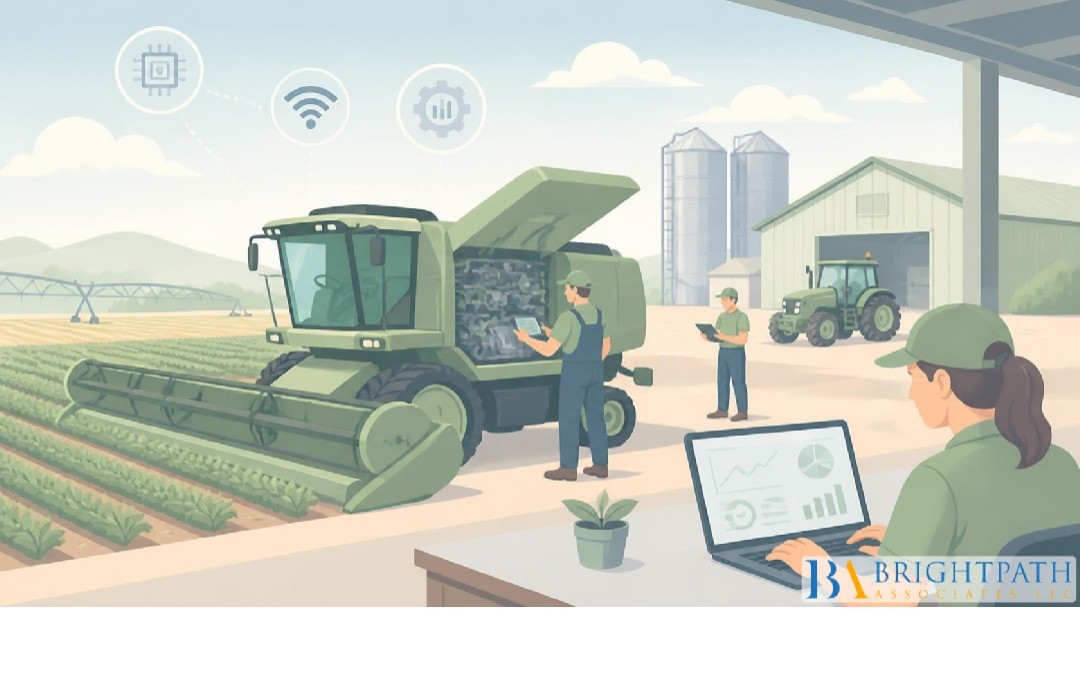
Modern farming is becoming increasingly dependent on sophisticated machinery, connected systems, automation, and data-driven decision-making. Tractors, harvesters, irrigation pumps, grain-handling systems, refrigeration equipment, processing machinery, and storage infrastructure all play critical roles in agricultural operations. When one of these assets unexpectedly fails, the financial consequences can extend far beyond the repair bill.
A breakdown during planting or harvesting can disrupt tightly controlled schedules. A failed irrigation pump can threaten crops during a critical growing period, while malfunctioning processing or refrigeration equipment can create inventory losses, delivery delays, and customer dissatisfaction. For large farms and agribusinesses, the combined impact of lost production, emergency labor, replacement equipment, and missed revenue can become substantial.
This is why predictive maintenance is becoming an important part of modern agricultural strategy. Rather than waiting for equipment to fail, businesses can use sensors, historical data, analytics, and machine-learning technologies to identify early warning signs and intervene before a minor issue becomes a major operational disruption.
The Real Cost of Equipment Downtime
The cost of equipment failure is often underestimated because organizations tend to focus on the immediate repair expense. In reality, downtime can create a chain reaction throughout a farming operation.
Consider a harvester that breaks down during a narrow harvesting window. The organization may need to arrange emergency repairs, hire replacement equipment, reassign workers, and potentially transport machinery from another location. If the delay continues, weather conditions could further affect crop quality or yield.
Similarly, a failure in a grain-handling or processing system can create bottlenecks throughout the operation. Products may accumulate while downstream processes remain idle. A refrigeration failure can create another layer of risk by affecting product quality and inventory.
The true cost of downtime therefore includes lost production, labor inefficiency, emergency maintenance, additional transportation, inventory losses, missed customer commitments, and accelerated equipment replacement. Understanding this broader downtime economics helps business leaders evaluate predictive maintenance as a strategic investment rather than another technology expense.
From Reactive Maintenance to Predictive Maintenance
Traditional reactive maintenance follows a simple model: equipment operates until something breaks, and technicians repair it afterward. Although this approach may appear inexpensive, it exposes businesses to unpredictable failures and emergency expenses.
Preventive maintenance represents an improvement because inspections and component replacements are scheduled at predetermined intervals. However, fixed maintenance schedules have limitations. A component may fail before its scheduled replacement, or a perfectly functional component may be replaced even though it still has substantial useful life.
Sensors can monitor variables such as temperature, vibration, pressure, energy consumption, lubrication conditions, operating hours, and machine loads. Analytics can then identify deviations from normal performance and alert maintenance teams before a serious failure occurs. The objective is not simply to collect more data. The objective is to turn data into an actionable maintenance decision.
How Agricultural Technology Enables Predictive Maintenance
Modern agricultural technology is increasingly connecting physical equipment with digital information systems. Tractors, combines, irrigation systems, pumps, storage facilities, and processing equipment can generate substantial amounts of operational data.
When this information is centralized, managers can monitor equipment performance and identify patterns that may otherwise remain invisible. For example, an increase in vibration could indicate a developing bearing problem. A rise in operating temperature could point toward cooling-system issues. Changes in pressure could indicate a blockage or pump problem, while increasing energy consumption could suggest that equipment is operating inefficiently.
When these signals are identified early enough, maintenance teams can investigate the problem and schedule repairs during a less disruptive period. This creates an important shift from breakdown management to reliability management.
Building the Workforce Behind Predictive Maintenance
Technology alone cannot create a successful predictive-maintenance program. Organizations need professionals who can understand mechanical systems, electrical equipment, automation, sensors, data analytics, reliability engineering, and agricultural operations.
As farming becomes more technologically sophisticated, the traditional maintenance role is also evolving. Agricultural businesses may increasingly require reliability engineers, automation specialists, maintenance managers, data analysts, technology leaders, and professionals capable of connecting equipment performance with broader business objectives.
This makes workforce planning an important part of agricultural technology adoption. BrightPath Associates' Farming Industry recognizes the growing need for professionals who can lead technology adoption, farm operations, precision agriculture, automation, and data-driven transformation.
For executives considering predictive-maintenance investments, recruiting people with both technical knowledge and strategic business understanding can be as important as selecting the right software or sensors.
The Future of Agricultural Equipment Management
The next generation of farming will likely involve increasingly connected machinery, remote monitoring, artificial intelligence, digital twins, autonomous inspection, and real-time analytics. Digital twins can create virtual representations of physical equipment, allowing businesses to study performance and identify potential problems under different operating conditions. Remote monitoring can also be valuable for agricultural organizations managing multiple farms or geographically dispersed facilities.
These developments are moving farming toward a model in which equipment health can be monitored continuously rather than assessed only during scheduled inspections. The original BrightPath Associates analysis, How Predictive Maintenance Prevents Million-Dollar Equipment Downtime, explores how predictive analytics, connected agriculture, precision maintenance, and specialized talent can help agricultural organizations protect production and improve operational reliability.
Conclusion: Reliability Is Becoming a Competitive Advantage
Predictive maintenance is no longer simply a technical strategy for preventing mechanical failures. For modern farming businesses, it can become an important component of operational resilience, capital efficiency, sustainability, and production planning.
The companies that benefit most will be those that connect equipment data with practical maintenance decisions and strong technical leadership. Rather than waiting for expensive machinery to fail, agricultural businesses can increasingly identify warning signs, prioritize critical assets, schedule repairs strategically, and protect valuable production windows.
As agricultural technology continues to evolve, the competitive advantage may belong to businesses that treat equipment reliability as a measurable business objective rather than an unavoidable maintenance expense.
